There are few people on this planet that would consider me a “wine expert”, far fewer would call me a “South American wine expert” an I can assure you that not one single person would contend that I am a “Uruguayan wine expert.”
But.
I like to think of myself as a pretty good student (the University of Pennsylvania does not dole out Ph.D. degrees to just anyone), so when I was sent a slew of wines from the rather tiny country of Uruguay (it is roughly the same size as Wisconsin or Washington), I decided that I would try to find out a bit more.
Uruguay is sandwiched between the much larger Brazil to the northeast and Argentina to the west, and has been an independent country since 1828. Generally known for its progressive politics, the country did go through just over a decade of oppressive military rule (1973-85).

From blog.usac.edu
A football (soccer) crazed country, Uruguay has as many World Cup victories (2) as the French. Sure, those include the very first World Cup (1930) and another two decades later (1950), but the country just won the Under-20 FIFA World Cup this past Sunday in neighboring Argentina, so…
When it comes to wine, about 75% of Uruguayan wine production comes from the two wine regions right around the country’s capital Montevideo: Canalones (roughly 60% of production) and Montevideo (yes, the same name as the capital, with about 15% of total production).
Tannat, which was brought to the country in the 1870s by French Basque immigrants, constitutes close to 40% of the vineyards planted today, with other international varieties becoming increasingly important.
I was sent nine wines from Uruguay for a Zoom call a few months ago, and I published the notes on the white wines last week. Here are the notes on the reds, which, not surprisingly, included several Tannats.
 2020 Artesana Tannat – Zinfandel – Merlot, Canelones, Uruguay: Retail $26. Under cork. 55% Tannat, 35% Merlot, 15% Zinfandel. Aged 12 months in French and American oak. I continue down my Uruguayan road with this unusual blend of three varieties that one does not normally see together. Medium color with dark fruit aromas (plum, blackberry, maybe cassis), black pepper, sage, and dark earth, this odd mélange of varieties seems to work quite well together. Bright and tart, but the fruit is really the story here, this really is a surprising wine on several levels. Excellent. 90 Points.
 2018 Antigua Bodega Stagnari Tannat Prima Donna Riberas del Santa Lucia, Canelones, Uruguay: Retail $23. Under cork. Dark, on the verge of *really* dark in the glass with dark and brooding fruit, mostly blueberry and cassis with earth, some pencil shavings, a touch of earth, and a floral component that comes in at the end. And there is an ounce or two of funk–I love the funk. The palate is fruity, even *quite* fruity with the earth and funk coming through on the mid-palate. There is also a slight stewed aspect that is not off-putting even in the slightest. I am not a huge Tannat guy, but this is likely a crowd-pleaser kinda wine. Very Good. 89 Points.
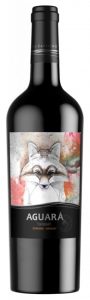 2018 El Capricho Tannat Aguará Special Reserve, Durazno, Uruguay: Retail $55. Big ass bottle. I have stated many a time that I am not a Tannat guy; they are usually dark, brooding, heavy, and can verge on tannic monsters. This wine? Kinda none of the above. OK, well it is rather dark in both color and aromas with blackberry, blueberry, cassis, graphite, and even some funk, barnyard funk. I love the funk. The palate is wonderfully subdued, however, or, more precisely, not nearly as dark as the nose portended. Plenty of fruit, nice tartness, and an earthy finish. Very nice. Excellent. 91 Points.
 2020 Bodega Garzón Tannat, Single Vineyard, Maldonado, Uruguay: Retail $35. Big. Ass. Bottle. A few months ago, I received several wines from Uruguay, including a few Tannats. While this one was middle of the road at least price-wise, this was clearly my favorite of the three. I am no Tannat fan as it tends to be rather brutish, dark, brooding, and tannic. Not here. Sure, the wine is fairly dark in the glass and there is a host of dark fruit, some potting soil, even a bit of graphite, but there is also a balancing tartness, an earthiness, and a whole lot of verve. I was ready to not like this wine, but it is fantastic. Excellent. 92 Points.
 2020 Viña Progreso Cabernet Franc, Canelones, Uruguay: Retail $22. Agglomerated stopper. Fairly dark and quite fruity in the glass with loads of dark and blue fruit: plum, blackberry, blueberry. There is also a bit of clove and an herbal aspect way at the back of the nose. The palate is initially quite fruity, almost coming off as sweet until a bit of acidity comes through on the mid-palate. Surprisingly, there is little to no green pepper that I usually associate (fondly) with the variety. Not an overly complex wine–the fruit is the story here, but it is certainly a pleasant quaff. Excellent. 90 Points.







 the drunken cyclist