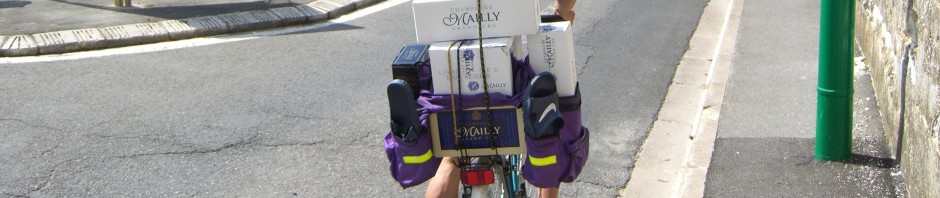
I am currently experiencing a phenomenon that I could not have fathomed a decade ago: I am awash in samples. According to my inventory, I am currently hovering around 200 bottles that were sent to me to taste. Since I am a bit of a math geek, I did some calculations: If I average going through 15 bottles a week (three a day—I try not to “work” on the weekend), that comes out to about 13 weeks of wine.
A quarter of a year.
But that does not tell the whole story as they also keep coming, day after day, week after week. I do not recite this as a sort of “ humble brag” but rather to point out that I had no idea it would ever get to this point—I am having to tell people that I can’t try their wines for the time being. That is a tough pill since many of them have supported me from the beginning.
There is an additional issue: often suppliers send two bottles of the same wine (essentially, it is sent in case the first bottle is flawed in some way). I have no idea what to do with those bottles (there are currently close to an additional 200 bottles that fit that description). Most of the time, I just toss them into the cellar, hoping I figure it out at some point.
Then, one day it hit me: I should drink them. Yeah, I know, a radical concept.
Despite adding roughly 13 weeks to the above timeline, I am determined to catch up by the end of the year (I am not quite sure what being “caught up” will look like yet, but that’s immaterial at this point since I am certainly not there right now) and in that vein, while trying to keep up with current samples, I have begun to pop the second bottles that were sent for my Second Annual Blind Tasting of American Pinot Noir which occurred in the Fall of 2019 and included 100 different wines, about half of which also included a second bottle. I toned it down a bit the following year (100 wines is just too many) for the Third Annual World’s Largest Blind Tasting of American Pinot Noir when we tasted “only” 54 wines, with again, about half sending a second bottle. And then there have been two more tastings after those.
So, I needed to have a plan. The best that I could come up with? Stop yapping and pull some corks. So here are a few of those second bottles of Pinot that have accumulated over the last handful of years.
 2018 Cultavin Cellars Pinot Noir 99 West, Willamette Valley, OR: Retail $20. Under agglomerated stopper. I liked this, even really liked this when I tasted it blind for the Fourth Annual Blind Tasting of American Pinot Noir, but based on the note then, this is a bit of a different animal nearly two years later. While it was meaty and brooding on the nose then, it is floral, even perfumed today, with rose petal and dark cherry predominate. The palate is initially quite fruity and tart, so much so that it borders on “sweet” but shortly after the mid-palate, a flinty, mineral, almost dirty or stemmy element comes in, suggesting some whole-cluster fermentation, but I could not verify that. Very Good. 89 Points.
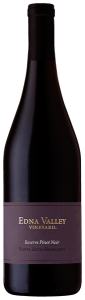 2013 Edna Valley Vineyard Pinot Noir Reserve, Santa Lucia Highlands, CA: Retail $50. Heavy bottle. Under cork. I really have no idea how I acquired this bottle. My notes say this was a sample second bottle (producers occasionally send two bottles as samples, in case the first bottle is flawed), but I can not find any notes on the first bottle. Nonetheless, I “found” this while doing inventory and thought it was time to pull the cork. Quite dark for a Pinot both in color and aromas with much more of a Syrah vibe than Pinot. That theme continues on the palate: rich, layered, but als tart and spicy, this is certainly on the “big” side of Pinot, maybe even “really” big, particularly for the Edna Valley. Excellent. 90 Points.
2021 Emery Grant Pinot Noir Estate, Anderson Valley, CA: Retail $50. Heavy Bottle. Under cork. I first tasted this for the Fifth Annual Blind Tasting of American Pinot Noir and I really liked it then (91 Pts.). It was made by the Pinot-Whisperer, James MacPhail, and this reminds me of many wines James has produced: big and dark. The color is dark, as are the aromas and flavors, so much so that it would be understandable if at least a few would confuse this with a Syrah. Red and dark fruit (blackberry, black cherry, raspberry), with plenty of earth and hints of spice. As I said, this is big and that tends to turn off Pinot traditionalists (particularly those that lean heavily to Burgundy). But why do all Pinots need to try to replicate Burgundy (of course, I wish they did, but, wait, I am getting off-track)? Sure. Big. Dark. Maybe even brooding, but this is a fantastic wine. Excellent. 92 Points.
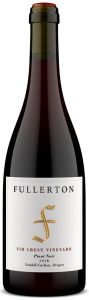 2018 Fullerton Wines Pinot Noir Fir Crest Vineyard, Yamhill-Carlton, Willamette Valley, OR: Retail $65. I first tasted this wine as part of the Fourth Annual World’s Largest Blind Tasting of American Pinot Noir and I liked it (90pts). Here is what I wrote then: “Light to medium color with a rather muted nose but some spice and a bit of heat. The palate is much more expressive with good, but subtle fruit, more than ample acidity, and an earthiness that is often lacking in American Pinot.” While most of that is true today, the wine is much more than that. There is a richness, layers, and even chutzpah that I did not pick up two years ago. Certainly big and rich for an Oregon Pinot, but this is stellar. Excellent. 92 Points.
 2018 Hyland Estates Pinot Noir Single Vineyard Old Vine, McMinnville AVA, Willamette Valley, OR: Retail $45. Heavy bottle. This is a holdover from the Second Annual Blind Tasting of American Pinot Noir and I really liked it four years ago (92 Points). I still like it, even a lot, but perhaps not quite as much as the first go around. Dark, even very dark (particularly for a Pinot) in the glass with plenty of dark berry fruit, but also some secondary aromas of cedar, spice, and just a hint of earth. Nice. The palate is subtle with hints of fruit coming through on the midpalate, but also a balancing zinginess that rounds out the wine nicely. Excellent. 91 Points.







 the drunken cyclist