The first post on this blog was on January 12th, 2012 and shortly thereafter I started pointing out that some wines are bottled in ridiculously heavy bottles. I even came up with what I considered a rather pithy term: B.A.B. or “Big Ass Bottle.”
In the now close to a dozen years that have followed, while hopefully providing a few interesting viewpoints and compelling stories, I have continued to sound the alarm when it comes to excessively heavy bottles in the wine industry, often to the consternation of others.
As 2023 nears its end, it seems as though the anti-heavy bottle crowd has grown to include Decanter, Dave McIntyre at the Washington Post, and Jancis Robinson among a slew of others. So while it is safe to say a decade ago that I felt I was a tree falling in a forest, it is becoming more mainstream to decry heavy glass. People are realizing that not only are heavier bottles more expensive, they also have a needlessly higher carbon footprint.
There are still some producers who believe that consumers equate a heavy bottle with a higher quality wine and while that might be true with a few people, I tend to believe that the consumer is driven by other forces. I have been in countless wine shops and I have yet to see anyone make a decision between two wines by trying to determine which bottle weighed more.
Imagine two displays at a winery, both with the exact same wine, same label, but one was populated with heavy bottles. The other had lighter bottles, a sign that said “better for the environment” and the price was $1 cheaper per bottle.
Which would you buy?
That brings me to the reason for my little rant today. Let me say right away that this is my first experience with Linne Calodo of Paso Robles even though they have been producing wines since 1998. And, based on what I could glean from their very well-done website, they state to be farming their land “within the bounds of their land’s limited resources, relying on natural solutions and manual labor in contrast to chemicals and carbon-burning machines.”
Fantastic. Truly.
But.
I received four bottles of fantastic wine from the winery and the bottles were among the heaviest I have ever tried to lift. And to me that is a disconnect. I understand that there is a bottle supply problem in the U.S. and that wine producers often don’t have much choice, but here I am talking about bottle weight (again) instead of the incredible wines contained within.
 2020 Linne Calodo Cherry Red, Paso Robles Willow Creek District, CA: Retail $95. Simply put, this has to be in the top 10% of heaviest bottles on the market. And that might be an understatement. 68% Zinfandel, 18% Syrah, 12% Mourvèdre, 2% Tempranillo. Hey, I get it. There are those who still think that bottle weight translates in some convoluted way to quality but it does not take much thinking to figure out that the heaviness of the bottle has absolutely nothing to do with what resides inside. Yet here we are. Dark, stormy, even brooding in the glass with blackberry, cassis, and plum the predominant fruits, paired with black pepper, dark earth, and even anise on the nose. The palate is slightly into the “big” range with tons of black fruit, remarkable acidity, and chutzpah. All cards on the table? This is not my style of wine, but if you like a bigger, juicier, on-the-verge-of-jammy style? Yeah. Wheelhouse. Excellent. 92 Points.
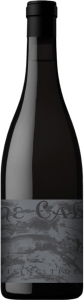 2020 Linne Calodo Rising Tides, Paso Robles Willow Creek District, CA: Retail $95. Really Big. Ass. Bottle. 69% Grenache, 31% Syrah. This is now my second wine from this Paso producer and the heavy bottle seems to be a theme. The website indicates that this is the “flagship wine” of Linne Calodo and “embodies all that [they] strive for in blending”. Medium crimson in the glass with a gorgeous nose of cherry and blackberry pie with a hint of à la mode. There is also a bit of spice and the slightest of herbal notes (sweet basil). The palate is loaded with big fruit, tons of fruit, but an intense acidity tempers it, and beneath all of that fruit, there are several layers of complexity, but patience is required to get there. Another big boy from winemaker Matt Trevisan and I would suggest putting this down for at least a couple of years as there are some grippy tannins to help this age as the fruit calms down a bit. That is unless you like big fruit and if that’s the case? Grip it and rip it! Excellent. 93 Points, with a possible 94-95 in 3-5 years.
 2020 Linne Calodo Overthinker, Paso Robles Willow Creek District, CA: Retail $98. Really. Big. Ass. Bottle. Under cork. 52% Syrah, 40% Grenache, 8% Mourvèdre. “Known as a liquid photograph of [the] estate” according to the website, this bottle (along with being just as ridiculously heavy as the others) is clearly the darkest and most ominous of the three reds I tried. Dark in both color (deep magenta, on the verge of black) and aromas (black currant, dark plum, blackberry, black pepper, with a subtle basil note as well as some earth), this wine almost begs for a gloomy afternoon or a thick Texas ribeye. Or both. The palate is on the verge of brooding with some healthy (albeit mostly silky) tannins that indicate this is a wine made for the long haul. I would certainly suggest a bit more cellar time (4-7 years, ideally) or at least a healthy decant (or two). Fantastic now but that would likely go up (perhaps considerably) with more cellar time. 93+ potential? Excellent. 91 Points.
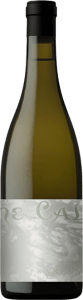 2022 Linne Calodo The Contrarian, Paso Robles Willow Creek District, CA: Retail $68. This is becoming redundant, but the bottles from Linne Catoldo should be classified as environmental hazards. Yeesh. 47% Grenache Blanc, 35% Viognier, 18% Picpoul Blanc. Linne Catoldo winemaker/owner Matt Trevisan states this on the website: “Once upon a time, I swore I would never make a white wine—I didn’t have the equipment or the inclination.” And as far as I can tell, this is the only white (along with a rosé that I hwould love to get my hands on) among twelve (!) reds. Well, Mr. Trevisan should consider adding a few more whites to the lineup as this is delicious. Sure, this is on the big side of white Rhône-style wines, but Trevisan does not seem to go as full-throttle with this wine as he did with the reds. Yes, there is plenty of fruit, but there is also nuance, verve, and, dare I say “restraint” here that does not come through in the reds (although each of those I tried could use some cellar time to mellow out a bit). I shy away from superlatives, but this is one of the best white Rhône blends I have tried outside of France. Just please consider using more responsible glass–no one still thinks that “heavy bottle” means “great wine.” Most people just think “environmentally reckless.” Outstanding. 96 Points.







 the drunken cyclist
Totally agree. Glad you called out the hypocrisy.
LikeLike
I’m not sure where the hypocrisy you speak of is. 4 of my employees and myself live on the winery property. Thus no carbon to get to work. We no till farm, sequestering carbon in our soil and increasing water penetration into our soil. We dry farm both grapes and olives reducing reducing our use of the most important resource on Earth, WATER. Late mow our vineyards and orchards for viable seed populations, this acts as a green mulch increasing the organic content plus both competing and covering invasive weed species. Reducing tractor passes, saves carbon, reducing the distance your employees travel saves carbon. Remember acceleration a 120-200 lbs person takes energy and the math is different for all weights. Processing only estate fruit or from your local neighborhood saves travel because 2000 lbs of fruit produces about 1250 lbs of wine so moving fruit, skin and stems is a waste product, the farther you travel the more carbon. Corks traveling from Portugal take energy and aluminum mined and processed into a cap with a poly liner take both energy and fossil fuel for the polymer liner. Corks are a renewable product. I’ll improve my glass weight. But picking on one item is lame. I still will minimize my hot water usage both at the winery and personally, wasted energy. I think it’s just too easy to pick on one thing. Look, all the wine stored under refrigeration, as well as cheeses and any other product has an increased carbon footprint. The longer you store it, the higher the carbon footprint, solar, wind and nuclear reduce that footprint, but if the energy is not coming from there these, a massive continuous carbon footprint is created. All that energy used, even if green, could be used to offset more important energy needs., like replying to this blog.
LikeLiked by 1 person
Wow! I’m not really sure how to respond. I use a glass called Bodega and Cabo LT, the LT is for lightweight but obviously not according to this. I never thought I was a villain. I will ask my sales rep for all the mold data sheets that they produce. The gram weight will be there. I have used this for 25 years. I have never thought of it as heavy. Having dumped empty glass on bottling lines hundreds of times. The producers, mold numbers have changed over the years, but this is a stock glass that cost less and readily available because they produce a lot of it. I’m a small fry producing 4-5K cases a year. Changing to another glass is a possibility, if the circumference is different it will require the production of a new label. I’ll need to check the star wheels on the bottling line for compatibility. See, I’ve been more concerned about water resource conservation, minimized tractor passes to reduce fuel consumption, grazing our flock for weed and fire abatement. Solar production, that has its own carbon footprint. Reduction of fossil fuel usage is a big part, we minimize the use of hot water which burns propane. I currently working on moving barrels underground to utilize the earth for cooling. This the best way to store wine without an artificial cooling footprint. I’m moving in that direction. I’ll get around to bottles, but it might not be the most powerful immediate action. If we all personally lose a little weight that would help the planet too. We really are talking about a physics and chemistry problem. Right up my alley. I’m not sure if we are talking an 80% reduction or a 5% reduction. I’ll know more once I have the data. I do know that the density of wine will not dramatically change from vintage to vintage.
Thanks for the nudge.
Matt Trevisan
LikeLiked by 1 person
First, I want to sincerely thank you for stopping by and leaving such a comprehensive response. Second, I want to emphasize that I really enjoyed your wines and I do not see you as a villain. But the bottles I received, as I mentioned in the article, are some of the heaviest that I have opened this year. I understand that the issue is much more complex than I presented and that you have far more to consider than I realized. The fact remains, however, that heavier bottles have a larger carbon footprint than lighter bottles. It seems as though, based on your response, that your use of these bottles was not driven the perception that consumers see heavier bottles as an indication of quality. And that is the issue that I am trying to address: the weight of the bottle has no impact on the wine, but it does have an impact on the environment. Again, I really appreciate your comment and I really enjoyed your wines, particularly the white blend. Thank you for sending them to me and I hope or paths cross at some point.
LikeLiked by 1 person
Unfortunately it seems that a true leapfrog on this on-going topic will only be achieved by legislation.
A “good” example is the Province of Quebec, Canada, where the SAQ has the monopoly of wine&spirit distribution. Step by step, they are introducing rules limiting bottle weight, category by category.
And they strongly communicating about it, hoping to change the customer’s perception; see for example:
https://www.saq.com/en/content/about-us/responsibility/lightened-glass-myth
LikeLike