As many of you know, I was once a cycle tour guide in Europe (which was the genesis of this blog). The company where I worked for all those years, Blue Marble Travel, has shaped my life in countless ways but sadly no longer exists. A couple months ago, I was back in France, riding one of those Blue Marble routes, but not as a guide; this time I was riding solo.
The past few weeks I have been posting a lot about my day with the kind folks at the IGP Méditerranée, but I never really addressed what it is (or at least not really). Not too long after Europe became a Union, the wise folks in charge decided that there needed to be some commonalities for the various wine classification systems across the different countries.
One of those changes was the introduction of the IGP (Indication Géographique Protégée) designation. Briefly, in France, this covers wines that were previously called Vin de Pays (a “Country Wine”) that was nestled above Vin de Table (table wine) and below the Appellation d’origine contrôlée” (AOC) in the classification game. An IGP, while considered less prestigious in many instances, also provides some freedoms and benefits.
What are some of those freedoms? Glad you asked. First (and perhaps obviously), to be part of an AOC, your vines have to be within the delimited borders of AOC. Some producers are literally across the street from an AOC, but are simply out of luck. The individual IGPs are much larger areas and try to incorporate all those in a given area that want to produce wine.
Second, there is much more freedom when it comes to varieties that are allowed in the blend. Without getting too much into it, the Côtes de Provence appellation, for example, there are five principle varieties allowed (Cinsaut, Grenache, Mourvèdre, Syrah, Tibouren) and at least two of those must be used and no single variety can be more than 90% of the total. There are also some secondary varieties permitted, but those are limited to either 10% (for the red varieties) or 20% (for the whites allowed) of the total blend.
Confused yet (and I barely delved into the intricacies of the Côtes de Provence)?
Not so in the land of IGP. Sure, there are some restrictions on varieties allowed, but no where near as strict as the AOCs. Thus, we get to taste Caladoc, Marcelan, and Alphonse Lavallée (all three of those were new to me before this tasting) along with more familiar names such as Merlot, Muscat, and Cabernet Sauvignon (which is allowed in the Côtes de Provence, for example, as long as it does not exceed 10%).
Last, there are incredible bargains to be had with IGP Méditerranée Rosé. Although it was often difficult to find what the actual retail prices of these wines would be in the U.S., they tend to be at least 10-20% cheaper than their AOC counterparts. Perhaps the best example of the value to be had is Studio, by Miraval. Again, without getting into the whole Bragelina melodrama, Miraval, from the Côtes de Provence AOC, has a suggested retail of $25, while Studio, the IGP Méditerranée Rosé from the same house, retails at about $20.
Sure, it is but one example, but illustrates the difference between the two appellations in the market (for the record, I have rated Miraval slightly higher, on average, than Studio, but the difference is minimal).
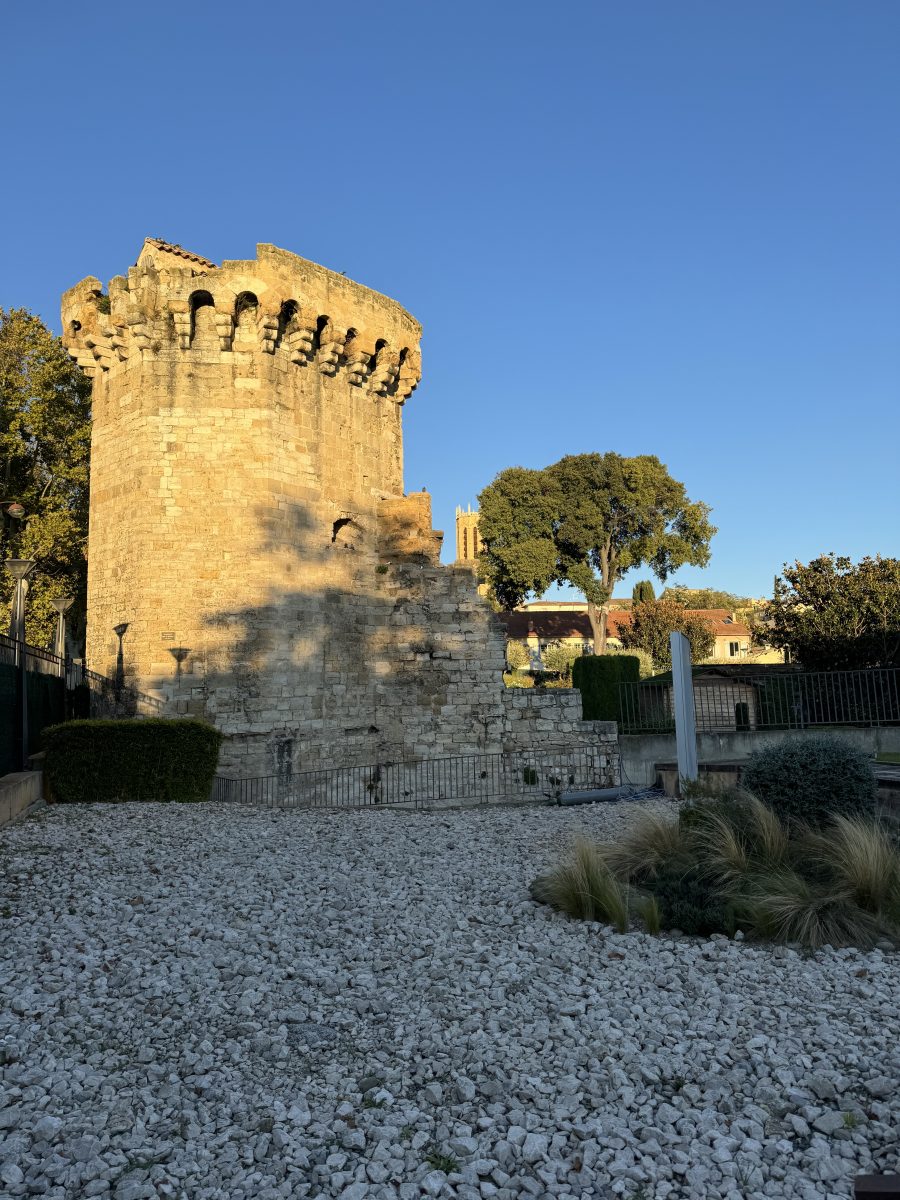
The Tourreluque, on the edge of town, is part of what remains from the city’s medieval fortifications.

Of course I had snails. You don’t when you go to France??
As many of the readers of this space know, while I am far from an “expert” when it comes to rosé wines, I have tasted my fair share of them through both personal consumption and my annual “World’s Largest Blind Tasting of American True Rosé” (which will have its ninth iteration this May).
While my tastings focus on American pink wines, today’s tasting will obviously be of their French counterparts, specifically those produced under the Méditerranée Indication Géographique Protégée (IGP) designation.
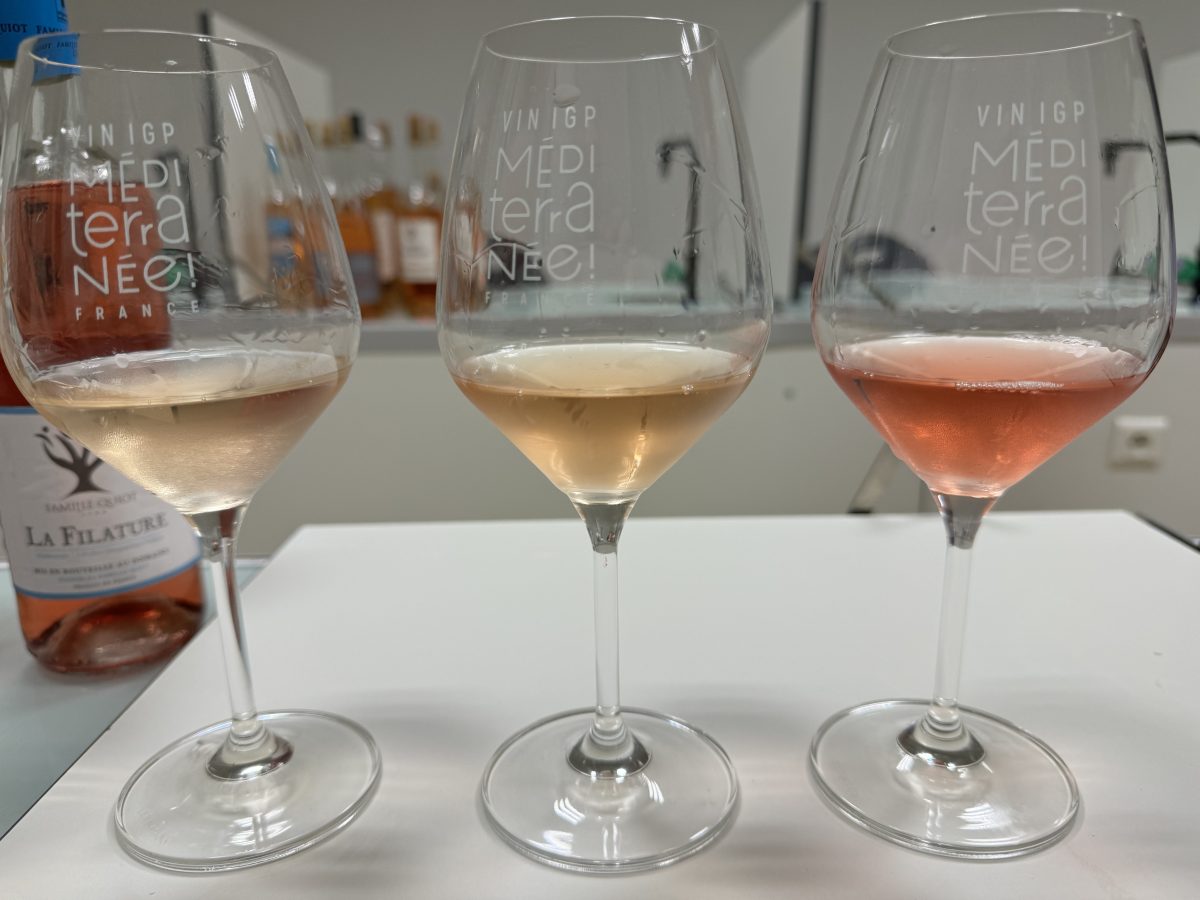
So what is it like to taste 71 rosés? Well, there is no easy way to answer that question, but here is a video, just over a minute long, that tries to convey the chore.
Here are the next dozen wines of the tasting, I will do my best to get up the remainder over the next few days or so…

2023 Domaine Galévan Léon & Lili Rosé, IGP Méditerranée Rosé, France: Retail $18. Grenache, Cabernet Sauvignon. Dark. As in really dark. As in not quite a red dark. There is an enticing nose of raspberry with a floral aspect. Fruity, tart. Fun. Not a lot of depth here, but a pool pounder, for sure. Very Good. 88 Points.
2023 Domaine de la Camarette Tentation, IGP Méditerranée Rosé, France: Retail $19. 50% Grenache Gris, 50% Cinsault. Medium pink color in the glass. Meaty and smoky on the nose with hints of fruit. Some tree fruit on the palate with that salty smoky thing going on, too. While most dismiss rosé as a serious food wine, this Camarette Tentation would easily recenter that notion. Excellent. 90 Points.
2023 Vignerons du Roy René Florie, IGP Méditerranée Rosé, France: Retail $16. 50% Caladoc, 20% Grenache, 20% Cinsault, 10% Syrah. Under screwcap. Medium to light color, probably closer to the latter. Loaded with tree fruiton both the nose and the palate: peach, pear, and bruised yellow apple. There’s a good balance between fruit and acidity throughout. More of a subtle pleasure than a world-beater, and that is just fine with me. Excellent. 90 Points.
2023 Vignerons du Roy René Terre De Passion, IGP Méditerranée Rosé, France: Retail $18. 35% Caladoc, 20% Cabernet Sauvignon, 15% Syrah, 15% Grenache Noir, 15% Alphonse Lavallée. Medium color in the glass with tree fruit (peach) on the nose and a touch of salinity. Good fruit from the jump on the palate and the ample acidity does a nice job balancing the fruit. Nice job and I believe this is the first time I have had Alphonse Lavallée, which is more commonly served as a table grape, in a wine. Excellent. 91 Points.

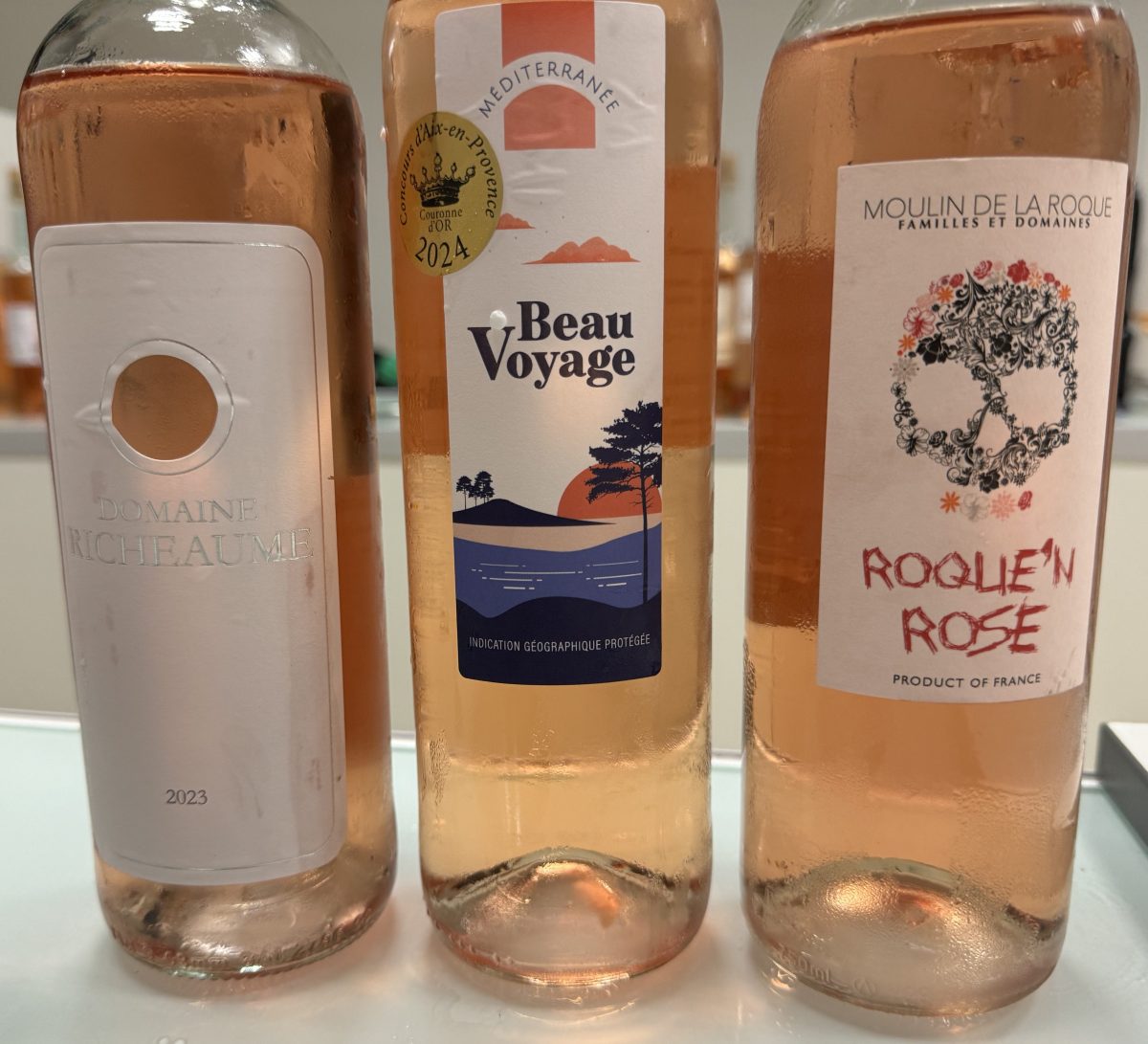
2023 Domaine Richeaume Rosé, IGP Méditerranée Rosé, France: Retail $24. 50% Syrah, 50% Grenache. Certainly medium in terms of color in the glass with some ripe cherry but also a meaty/smoky component that works here. Lovely red fruit and zing on the palate with balance and depth. Classic. Fantastic through the finish. One of the best wines of the tasting for sure. Outstanding. 94 Points.
2023 Hostellerie des Vins de Rognes Beau Voyage, IGP Méditerranée Rosé, France: Retail $18. Caladoc, Grenache. Medium color in the glass. The nose is, um, a bit worrisome as there is a subtle burnt hair going on. VA? Sulfur? The palate is better with good fruit and a nice texture. But the nose is hard to get past. They did send a second bottle, however, and that one was perhaps worse. Nonetheless, I am assuming this wine was flawed. Not Rated.
2023 Moulin de la Roque Roque ‘N Rosé, IGP Méditerranée Rosé, France: Retail $17. Mourvèdre, Grenache, Merlot, Cinsault. Medium color in the glass. Bright and cheery cherry with a dash of strawberry on the nose. Lovely. Tons of fruit on the palate as well with ample acidity. Nice. Very Good. 89 Points.
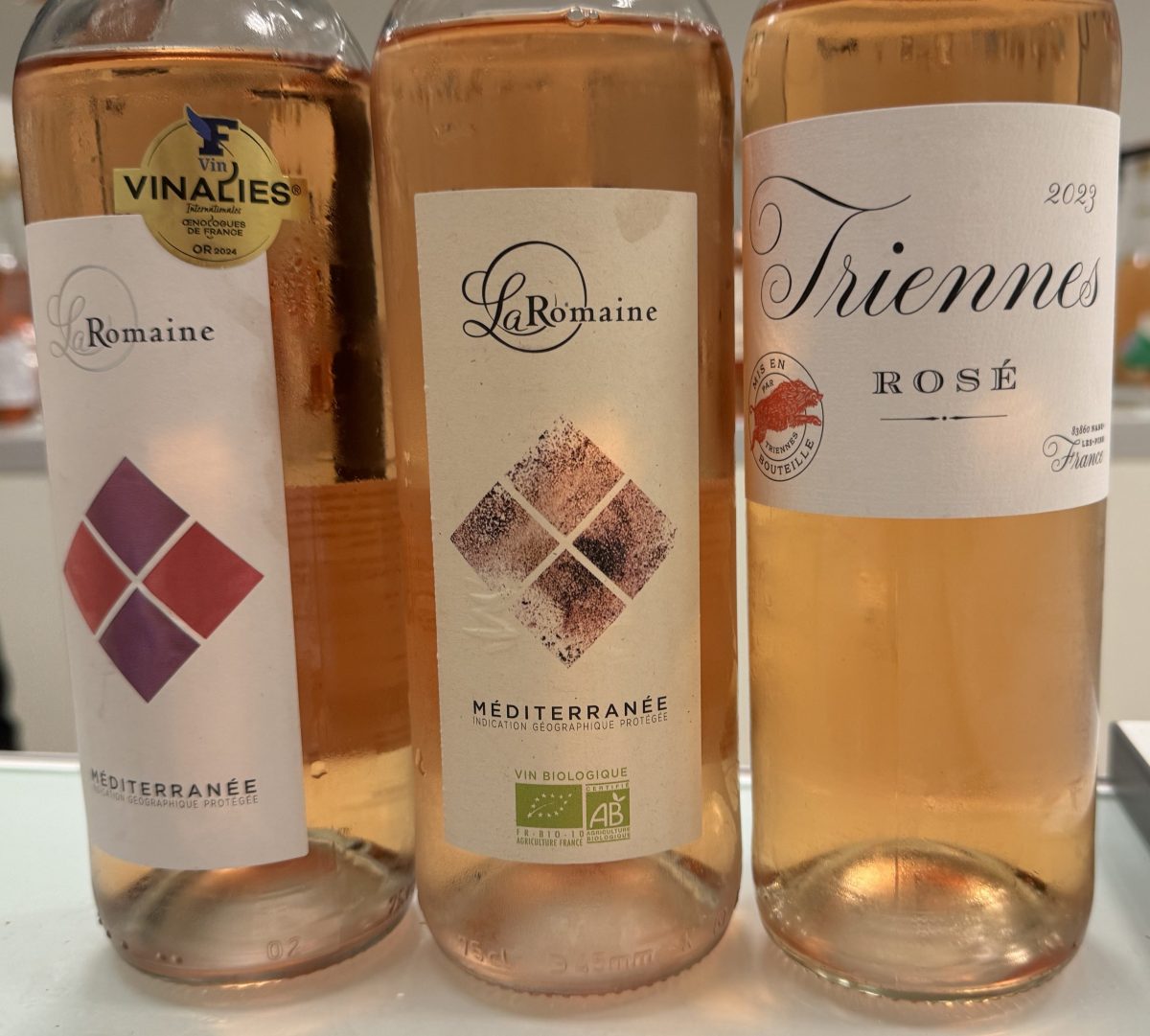
2023 Cave La Romaine Méditerranée, IGP Méditerranée Rosé, France: Retail $14. Grenache, Cinsault, Caladoc. Under Screw cap. Classic nose of subtle fruit and touches of minerality and white flower. Medium color, a delicate pink. The fruit is a bit lacking on the palate, however, but the vibrant acidity is refreshing. Fine. Very Good. 88 Points.
2023 Cave La Romaine Méditerranée Bio, IGP Méditerranée Rosé, France: Retail $16. Grenache, Cinsault, Caladoc. Under screw cap. Perhaps for obvious reasons, this wine was similar to the non-Bio (“Bio” in France means “organic”) version of the wine (hopefully it will all become Bio soon?) with medium color and a classic rosé nose of subtle wild strawberry, a touch of minerality, and some impressive floral notes. All this persists onto the palate with good fruit and balance thanks to a zingy tartness. While similar, this has more chutzpah than the non-Bio iteration. Excellent. 90 Points.
2023 Triennes Rosé, IGP Méditerranée Rosé, France: Retail $22, Cinsault, Grenache, Syrah, Merlot. Under screw cap. This seems to be one of the more widely available wines here in the U.S. Under screw cap with a medium color and a nose of what I call “A dirty strawberry” (i.e., it is a bit “stemmy”). There is even a little funk on the nose (which is fine by me: I like the funk). Salty and meaty on the palate with plenty of tartness; this wine, perhaps more than any other on the list, needs food. Very Good. 89 Points.

2023 Château La Coste Lady A Rosé, IGP Méditerranée Rosé, France: Retail $25. Grenache, Merlot, Carignan, Marcelan, Caladoc, Ugni Blanc, Muscat. Light to medium color in the glass with dirty (i.e., a bit stemmy) red fruit (cherry and strawberry) on the nose. Good red fruit on the palate with zing and depth. A classic rosé from one of the bigger producers in the region. Excellent. 91 Points.
2023 Château La Coste Lisa, IGP Méditerranée Rosé, France: Retail $25. Grenache, Merlot, Carignan, Marcelan, Caladoc, Ugni Blanc, Muscat. Same price, same blend (apparently), and pretty much the same result as with the Lady A. If anything, a slight shade darker, more of a medium pink. This Lisa is a bit of a wallflower initially, however; the nose is a bit muted and shy. Subtle cherry and light acidity define the palate, but with time it comes around. Lovely. Excellent. 90 Points.







 the drunken cyclist