
Three days. That was it. That was all I had planned for my stay on Lago d’Iseo, on the edge of perhaps Italy’s finest region for sparkling wine. A region that struggles with two behemoths: Prosecco just to the south and West, which dominates the Italian sparkling wine scene, and Champagne, the benchmark for sparkling wines worldwide.
The first day, I spent driving up from Umbria and immediately hopped on my bike for a quick ride. The second, I also rode, circumnavigating the lake (which sounds like a big deal, but it really isn’t). So, on the third day, I decided to visit a couple of wineries.
The plan was simple: Goldilocks. That Monday morning I set out to visit one large producer, a tiny producer, and one right in between. Well, the huge producer was closed, as was the medium-sized winery, and the small outfit was not only hard to find but seemingly abandoned.
In the end, I found another large producer, Barone Pizzini, who was not only open, but they provided me with a fantastic tasting and informed me that that particular day was a national holiday, which would explain why several wineries were closed.
Hrumph.
Undeterred, I sent out a slew of emails that night, determined to make at least one (if not two) stops on my way out of Franciacorta the following day. Ferghettina responded almost immediately to my email and provided a wonderful experience on Tuesday morning, and Corte Fusia said they would be happy to meet me at 2:00 Tuesday afternoon.
Knowing that I had a bit of a drive (and I also wanted to ride), 2:00 would be a bit tight, but it ended out being perfect.
As I mentioned above, Franciacorta as wine regions go, is pretty darned small with only about 20 million bottles produced (Champagne is around 300 million and Prosecco is a whopping 800 million plus bottles a year). So yeah, tiny. And within the tiny Franciacorta appellation is the almost minuscule Corte Fusia, which only makes around 30k bottles (“in a really good year”). Despite its size, Corte Fusia has quite the reputation, with Decanter, among other publications, championing their wines and espousing their approach.
I left Ferghettina and found a quick bite to eat at Dispensa Franciacorta, a nice wine bar a few kilometers away, and then it was off to Corte Fusia. And it was a good thing that I had been there the day before, since it is not that easy to find (at least for me, but I admit I stink at navigation).
This time, I rang the bell, and within moments, Daniele Gentile, one of the owners of Corte Fusia, opened the gate, and within a minute, we were in his truck, driving off to the vineyards.
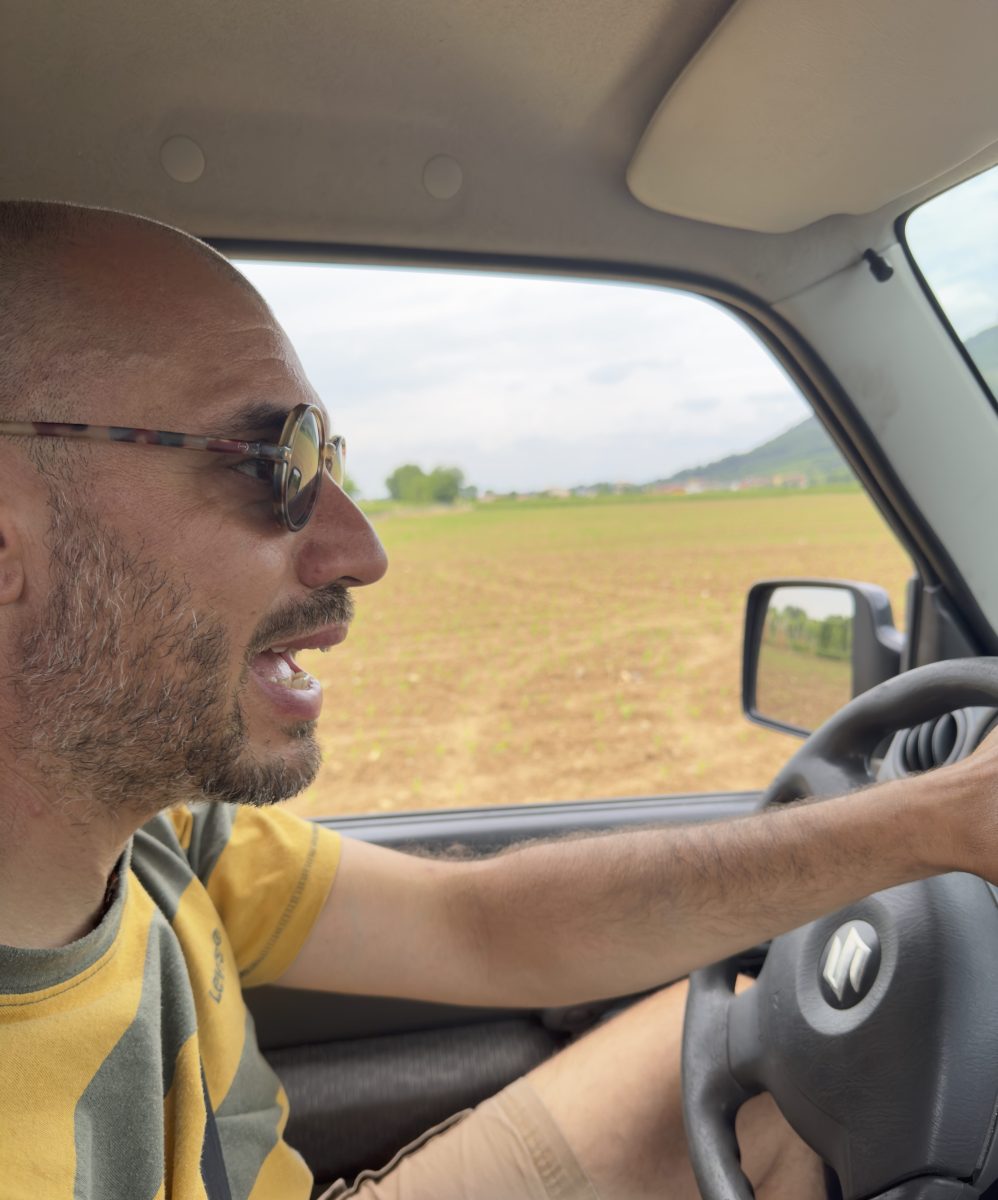
It is a good thing that Daniele’s English is fantastic because my Italian is not.
On the way to the first vineyard, Daniele gave me a brief rundown of the history of the winery. Daniele and his business partner, Gigi (short for Gianluigi, I later found out) Nembrini, have been friends since grade school, growing up just a few kilometers away from where the winery is located.
At some point in school, the two, according to Daniele, got a bit drunk and decided they wanted to open a winery even though neither family had any history in either farming or winemaking. They decided then that Daniele would make the wine and Gigi would focus on the vineyards and the marketing.
As I mentioned, Corte Fusia is small, but like many producers in Franciacorta, they get all of their grapes from vineyards that they manage themselves. They started leasing two vineyards in 2010, with a total of 9 hectares (just over 20 acres), all on the historic Monte Orfano, in the southern part of the appellation, and all south-facing.
Monte Orfano has a long history of winemaking, but most of the vineyards had been largely abandoned due to the difficulty of growing grapes on the steep slopes. While the duo was able to manage a crop on the lower vineyard in 2010 (their first commercial vintage), it took several years of hard work for Daniele and Gigi to revitalize the upper vineyard, and 2014 was the first vintage incorporating that fruit.
I walked the lower vineyard with Daniele, and I have to say the hillside vineyards are nothing short of breathtaking. Most of the vineyard is trained to a pergola system, which I have only seen in the Trentino region of Italy. Here, however, the canopy is much higher, as I was able to easily walk underneath the vines (which was not the case in Trentino). Daniele intimated that the vineyard was started in the 14th Century and had always been trained to the pergola system even after the vines had been grafted over to Chardonnay in the 1980s.
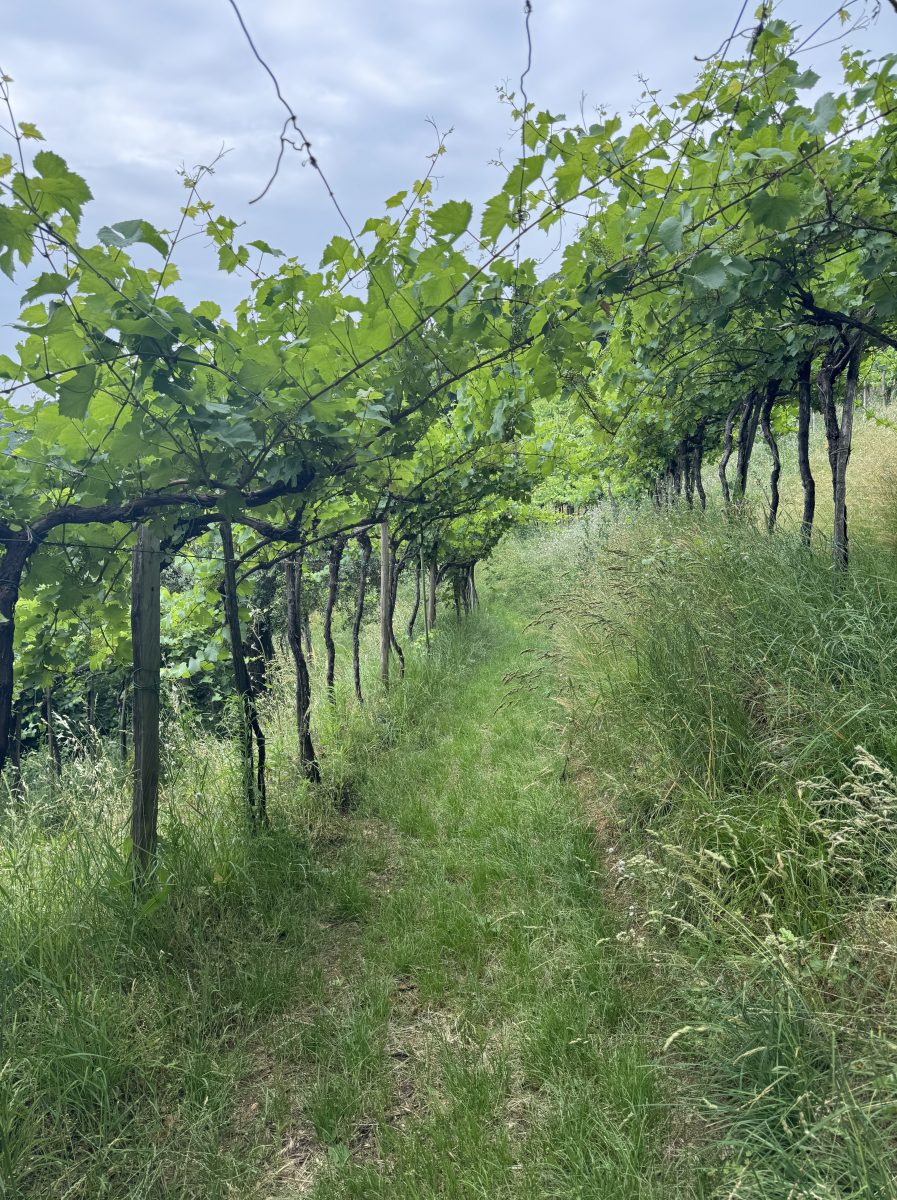
Even on the lower slopes of Monte Orfano, the incline was steep, and these vines are easily 7-8 feet tall.
When I asked about his winemaking philosophy, Daniele stressed that their approach is very minimal intervention: “I want to put the fruit in the bottle. We are not the best Franciacorta, but I don’t want to make champagne in Italy. I want to make Franciacorta.”
Daniele added a bit more about what he and Gigi were trying to do: “Franciacorta, there is no concept of ‘crus’ as all the wine is simply ‘Franciacorta’.” But Daniele and Gigi are hoping to change that as they are producing wines from specific plots, wines that show the uniqueness of their terroir. That comes at a cost, however, as vineyards on the plain can throw 15-20 tons per hectare, while on Monte Orfano, they are lucky to get four tons per hectare. But since all wines are considered “Franciacorta” by law, it is harder to charge what it really costs to make the single vineyard wines.
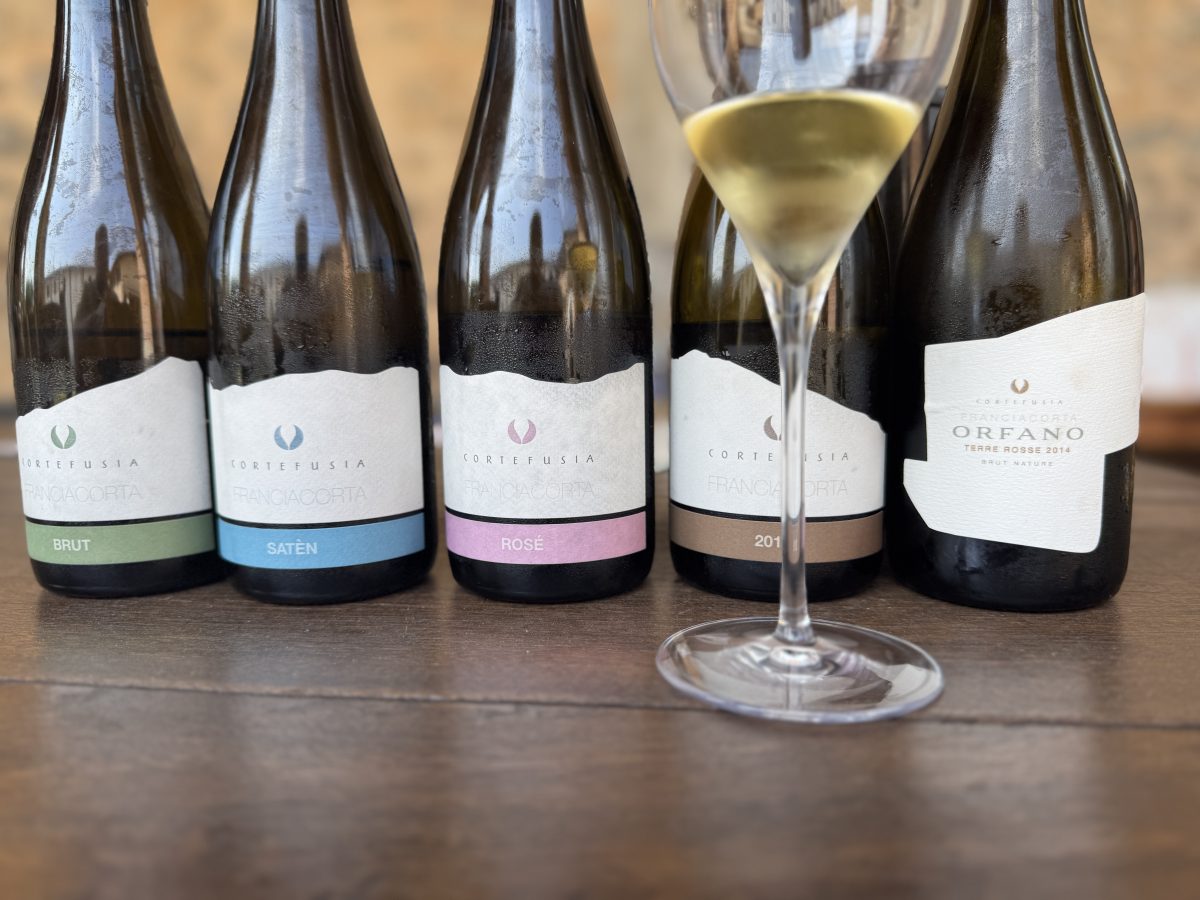
We found our way back to the winery, a transformed 17th-century castle, which they also lease, and we sat down to go through the wines. All of which are zero dosage (no sugar added after the secondary fermentation).
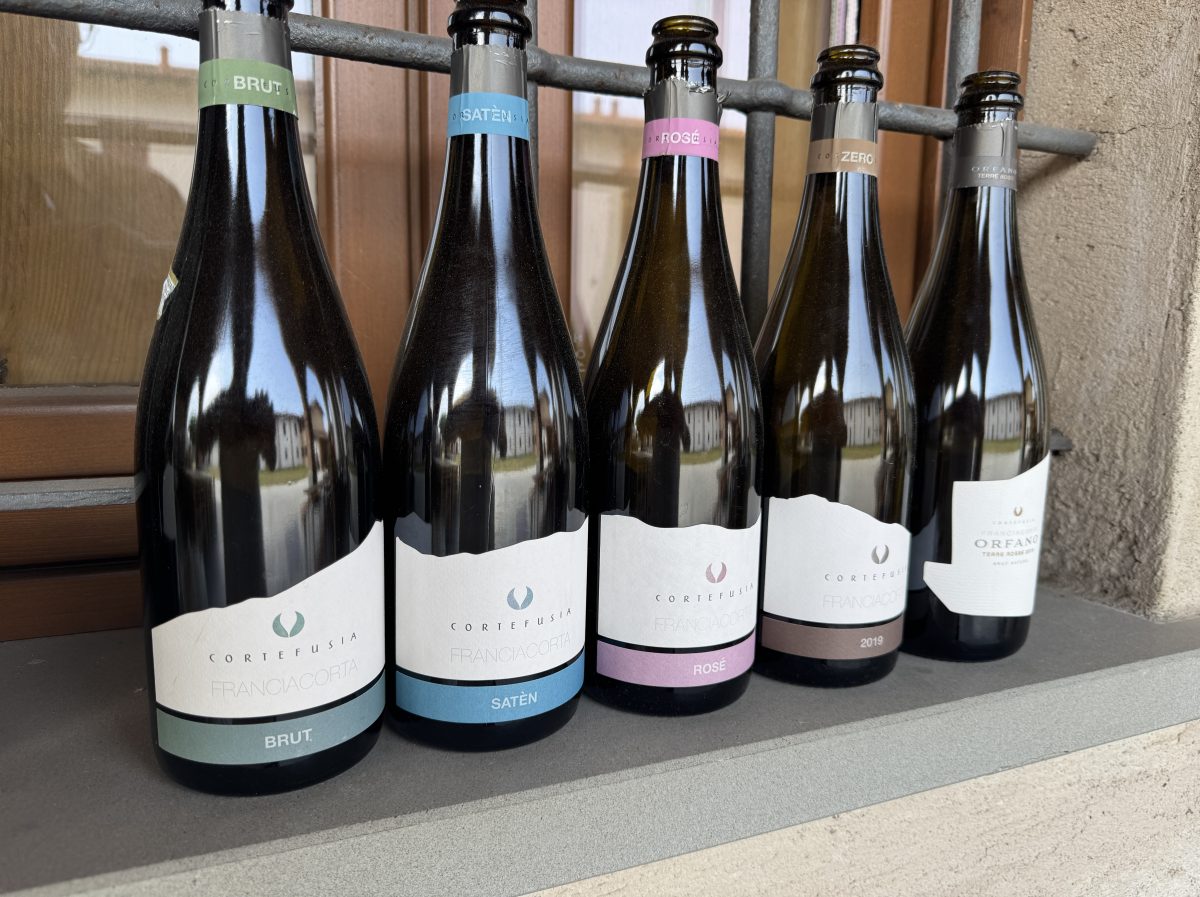
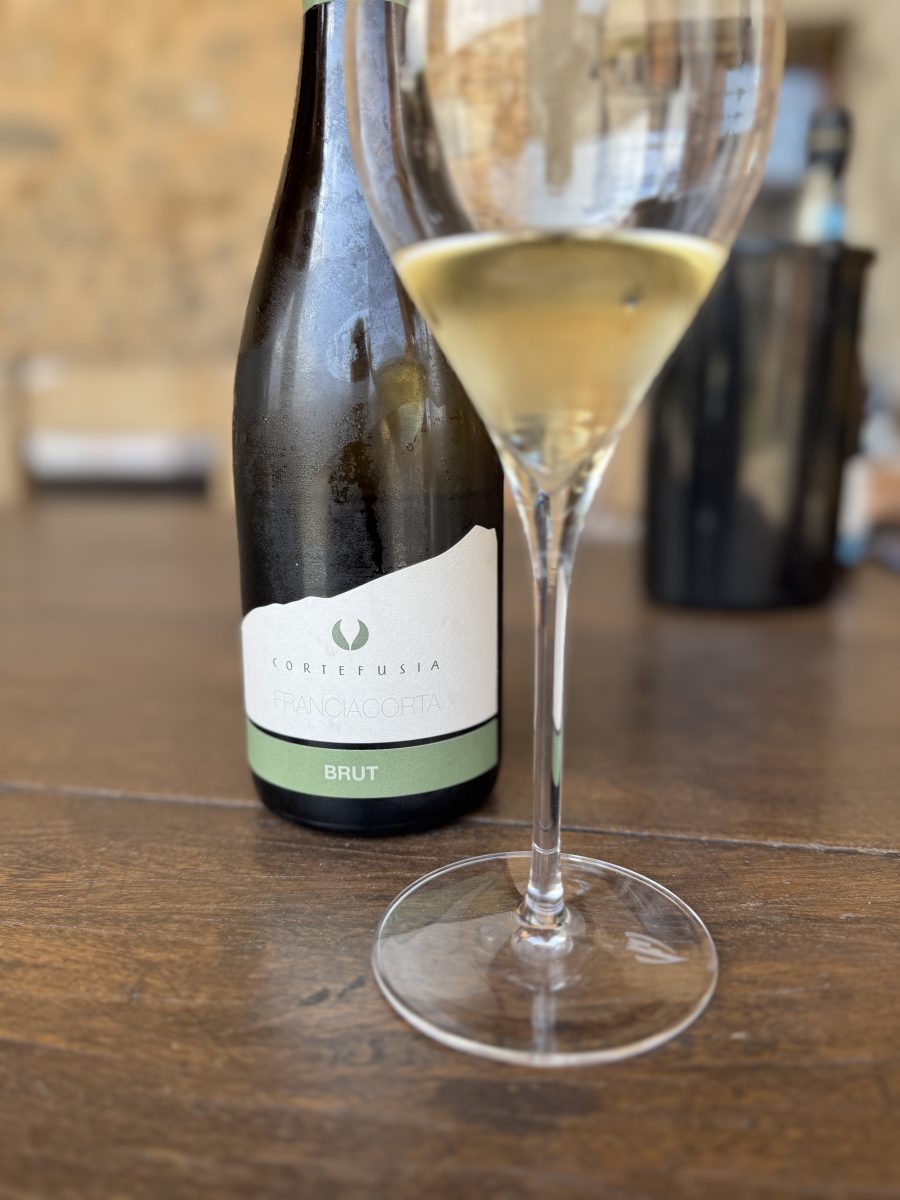
Corte Fusia Brut, Franciacorta, Italy: Retail 24€. 70% Chardonnay, 20% Pinot Nero, 10% Pinot Bianco. From 2022, but labeled as a Non-Vintage. 24 months on lees, a blend of the four vineyards. 2022 was a really tough year, according to Daniele, as it was “very dry, no rain.” Brilliant yellow in the glass and yeasty and vivacious on the nose with hints of lemon. Bright and clean on the palate with as much yeastiness as I have encountered in Franciacorta. Salinity a go-go and the finish lasts forever. Outstanding. 93 Points.
Corte Fusia Satèn, Franciacorta, Italy: Retail 28€. 90% Chardonnay, 10% Pinot Bianco. 8k bottles. From 2021, but not vintage. “Best vintage ever”, according to Daniele. Certainly brilliant yellow with another outstanding nose. Salty and fruity. More of a lemon curd, which is surprising since there was no malolactic fermentation. Rich and tasty from the jump with that salinity and fruit. Daniele says it’s not very yeasty, but I disagree. Elegant and racy. Whoa. An even longer finish than the Brut, if that is possible. Whoa. Outstanding. 94 Points.
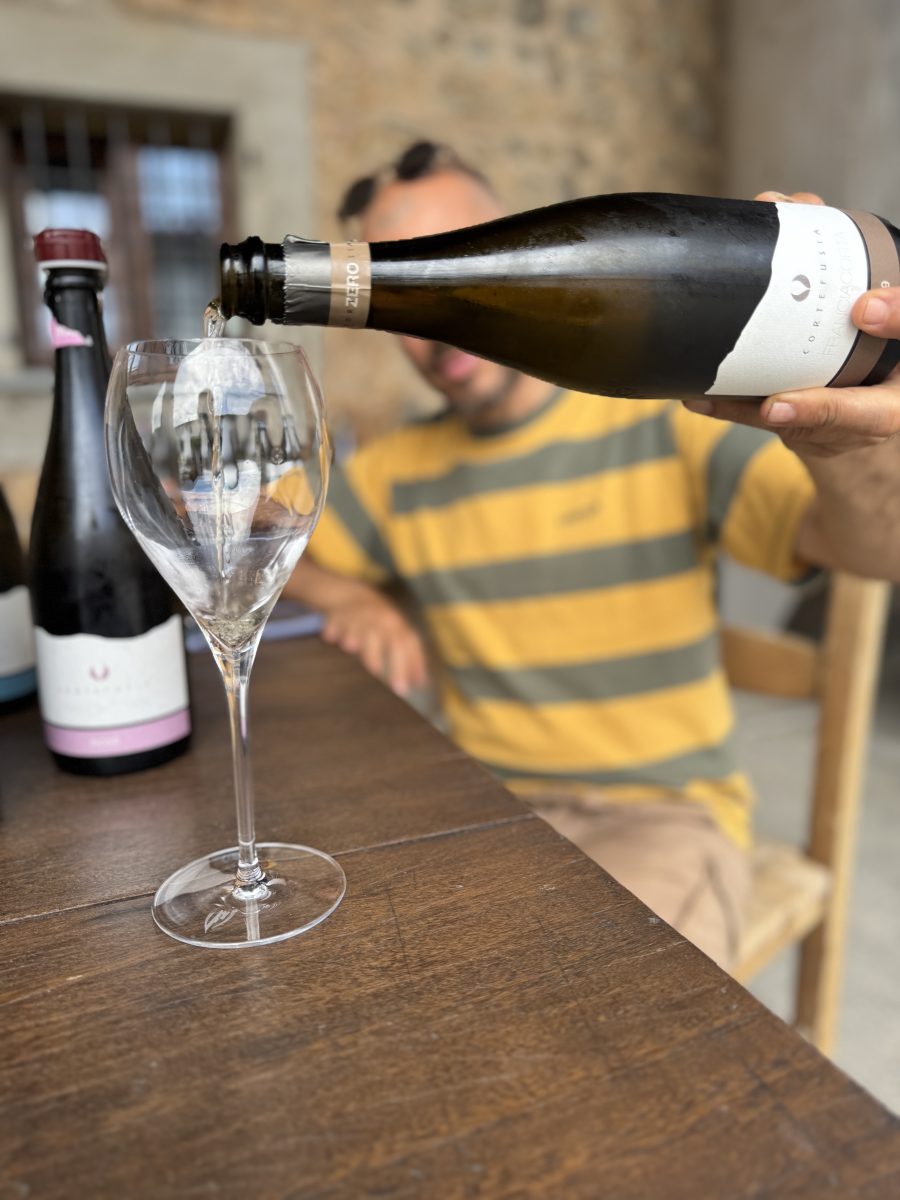
2019 Corte Fusia Millesimato Dosaggio Zero, Franciacorta, Italy: Retail 35€. 80% Chardonnay, 20% Pinot Nero. 3,500 bottles produced. 55 months on lees. Vintage is only made in the best years. A bit lighter in color with a brilliant straw and a familiar salinity/yeasty note, but here is also nutty and again, citrus. Palate is refined, elegant, gorgeous. Richer and a tad heavier than the Satèn and right in line with the house style, but cranked up a notch. Holy cow. Outstanding. 96 Points.
Corte Fusia Rosé, Franciacorta, Italy: Retail 28€. 100% Pinot Nero. 2,000 bottles produced. 100% maceration (no blending of red still wine for color). Dark, even really dark salmon with the characteristic salinity and some subtle red fruit. The palate is dry, really dry, but loads of red fruit, a zingy acidity, and another killer finish. Outstanding. 94 Points.
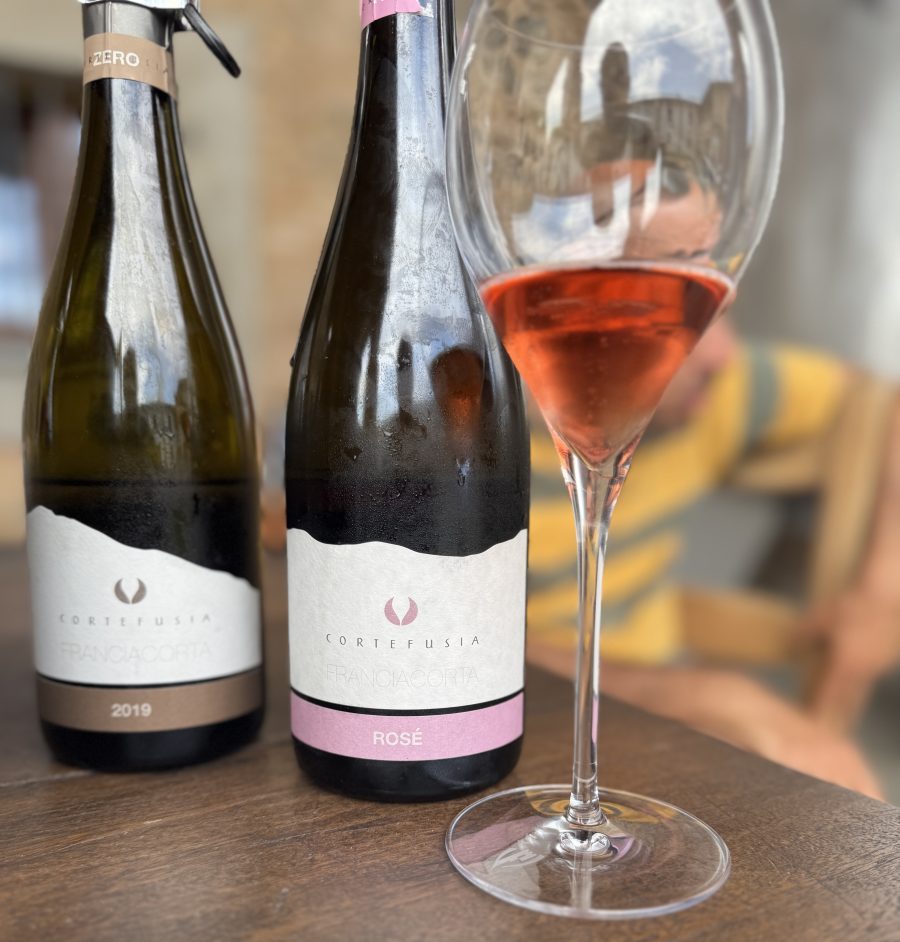
2014 Corte Fusia Orfano Terre Rosse Riserva, Franciacorta, Italy: Retail 65€. 100% Chardonnay. 1,000 bottles produced. The first of their “vineyard designate” wines, this comes from a terraced 1.7-hectare (about 4 acres) plot at 200 meters. 75 months on yeast. 4.5 years after disgorgement. From the second vineyard I visited, but from only the oldest vines. Whoa. The nose of this brilliant yellow wine stopped me in my tracks. Rich, layered, unctuous, lemony, a tad oxidative, and yes, salinity. Yowza. Holy cow. The palate is even more worthy of note. All of their above with incredible balance, depth, and breadth. If you don’t like this, you can’t like Franciacorta, as this is the best wine from the region I have ever tried. Extraordinary. 98 Points.






 the drunken cyclist