OK, I’ll admit it. Even though I author of one of this country’s preeminent wine blogs (haha), until relatively recently, when I heard “Australian wine” I couldn’t help but immediately think “Shiraz”. And while it is true that what just about everyone else in the world calls “Syrah” is Australia’s most-widely planted grape (and grown in just about all of the country’s 65 wine regions), there is obviously much more to Australian wine.
While the origins of “American” wine can be debated, a British resident, living in New Zealand, James Busby, is the father of Australian wines. In 1832, he brought about 650 vine cuttings from Spain and France to Australia, including the first Grenache and, yes, Shiraz, enriching the continent’s genetic pool of vines severalfold.
Work.
Today, wine is made in all six Australian states (although it is a bit anecdotal in Tasmania and Queensland), with South Australia dominating production with more than half of the country’s acreage under vine, followed by New South Wales (24%), Victoria (15%), and Western Australia (7%). [There, now you know all six states in Australia, you’re welcome.]
Over the past couple of years, I have been fortunate enough to learn much more about the wines of Victoria, but talking about “Victorian wine” as one cohesive unit is akin to talking about “Californian” or even “West Coast” wine in the same way. There are 21 different distinct regions in Victoria, Australia, with about 650 total producers, and while I in no way claim to be an expert at all, through several tastings (both online and in person), I am at the very beginning stages of being able to say with some confidence that even if one ignores Shiraz, a lifetime of studying just the wines of Victoria would not be close to enough time.

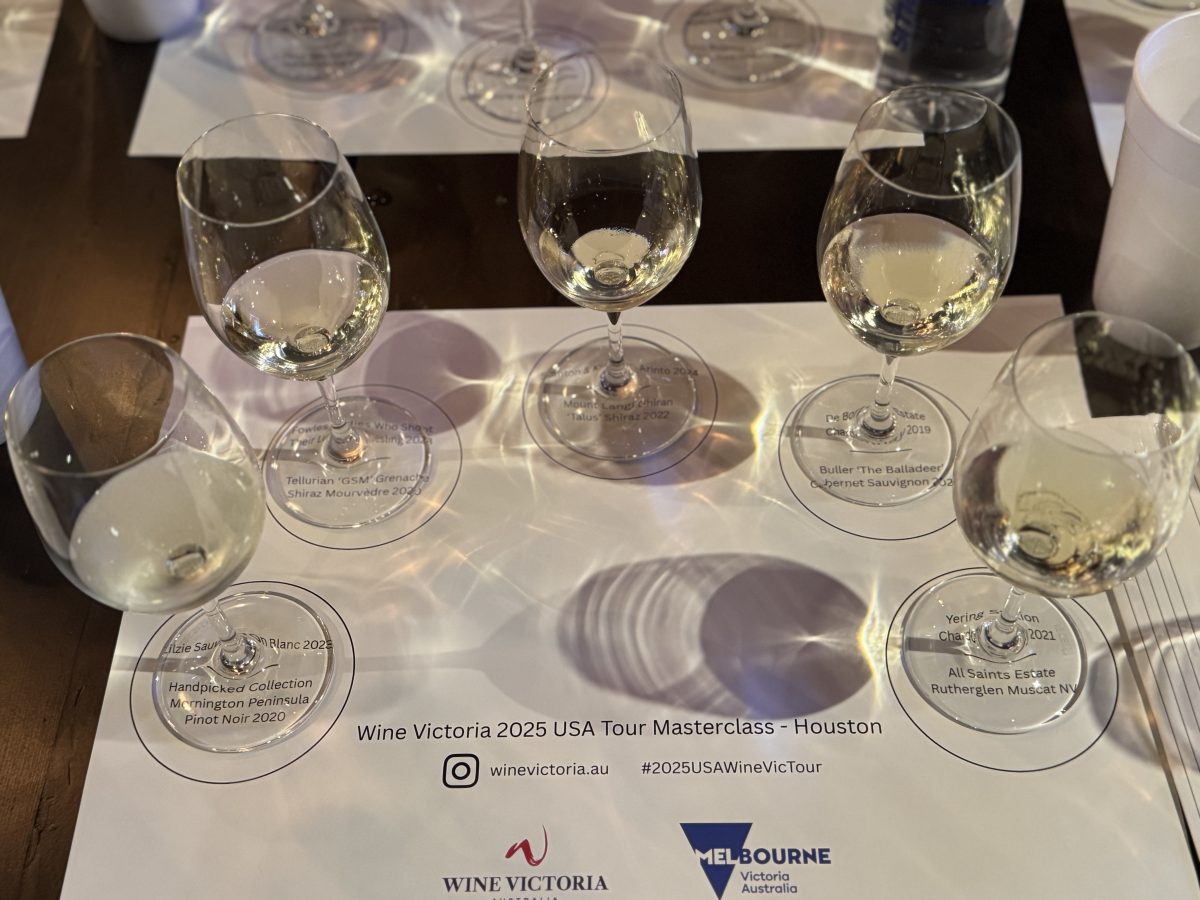
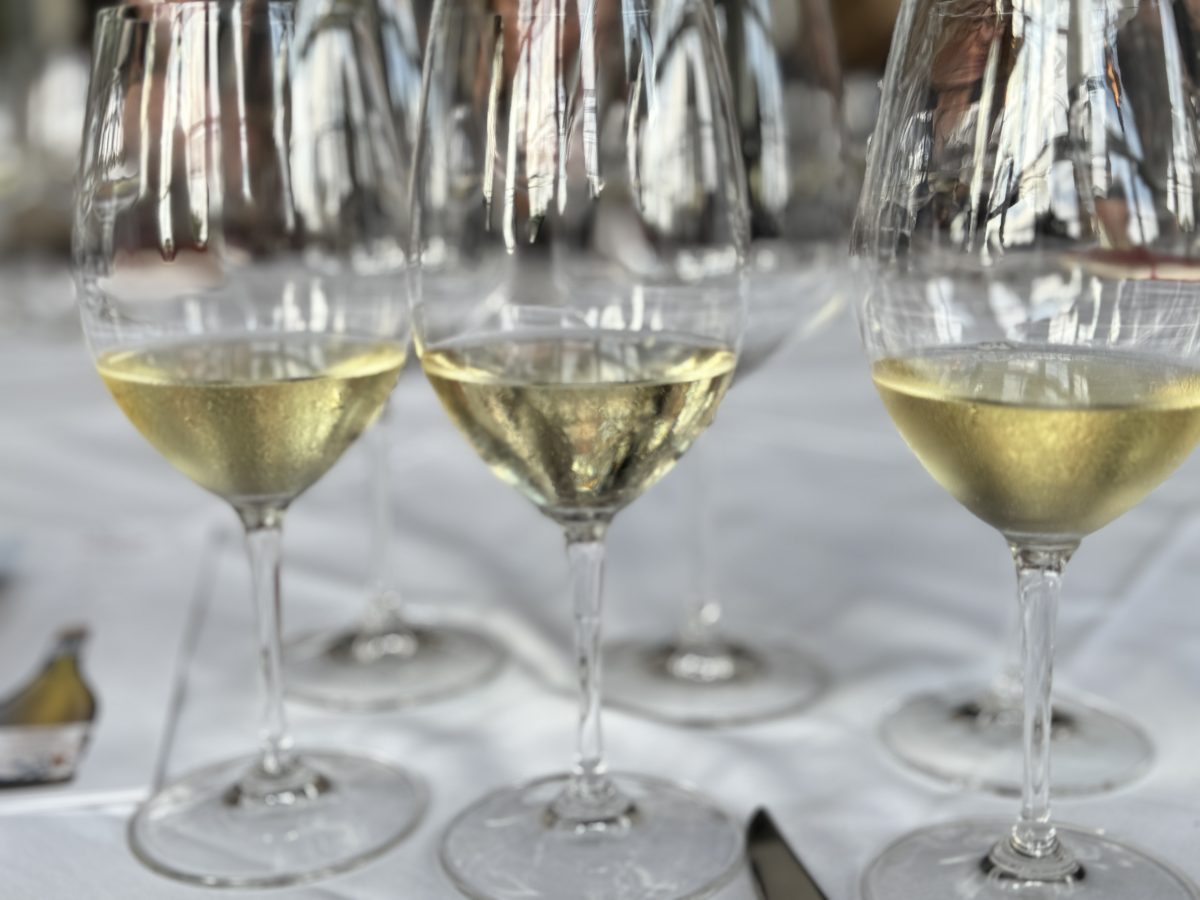
A few months ago, I joined a few other wine writers at B&B Butchers here in Houston for a wonderful evening of Victorian Wines and Texas beef. Here are the notes from the first flight, all white wines.
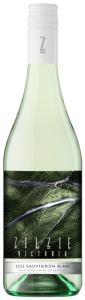 2023 Zilzie Sauvignon Blanc, Victoria, Australia: Retail $15. Under screw cap. It seems as though every time I come into contact with a wine from Victoria, I smile. Not only are the wines so fun and tasty, the names of the producers and regions are just so joyful. Zilzie is located in the Murray Darling region of Victoria. I mean, are you kidding me? Quite tropical on both the nose and the palate with oodles of guava, passionfruit, and even grapefruit. At the same time it is both mineral and some grassy notes come through (but no where near the wines of its neighbor). Great weight and body. Nice. A bit round. Very Good. 89 Points.
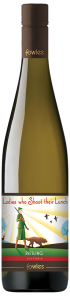 2023 Fowles Ladies Who Shoot Their Lunch Riesling, Strathbogie Ranges, Victoria, Australia: Retail $35. Screw cap. This wine comes from the Strathbogie Ranges (what an awesome name), which Matt Fowles, CEO at Fowles Wine and part-time Russel Crowe stand-in, describes as “out in the middle of nowhere” in an Australian accent to die for. The Strathbogie Ranges have an incredibly cool climate, are characterized by their ancient granite soils, and are known for producing perhaps the best Riesling in Victoria, if not all of Australia. Fermented in oak casks with great, intense lime on the nose but also a bit of petrol and even a slight nuttiness. Nice. the palate is round and creamy, but also quite tart, particularly on the finish. Bone dry. Excellent. 91 Points.
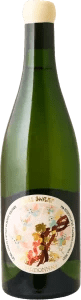 2023 Patrick Sullivan Bull Swamp Chardonnay, Gippsland, Victoria, Australia: Retail $50(?). Another wine that comes from a region (Gippsland) that demands that I visit someday. Right from the jump, I could tell this is a big boy and more of a traditional style of Chardonnay. Full malolactic fermentation in barriques, 30% new. This immediately presents a somewhat smoky nose with some lemon zest, white peach, a touch of white flower, and hazelnut. Tart and steely on the palate with noticeable oak. Even on the verge of too oaky. At least for me and that is a rare thing, I typically love a bit of wood on my Chards. By the end of the mid-palate and onto the finish, the fruit comes through. Again, not necessarily my style, but a pleasant quaff. Excellent. 89 Points.
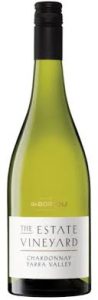 2019 De Bortoli Estate Chardonnay, Yarra Valley, Victoria, Australia: Retail $20. Of all the AVAs within Victoria, Yarra Valley might be the one that Americans could say they have heard of the most. Known for world-class Chardonnay, there are more than 80 wineries in the region, who also produce Pinot Noir, Cabernet Sauvignon, and, yes, Shiraz. This De Bortoli Chard has a very enticing nose with equal parts citrus and tree fruit, but is also nutty and some evidence of wood. Round and full on the palate with good fruit, and a racy acidity that holds it all together. Very nice. Excellent. 90 Points.
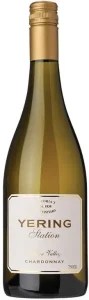 2021 Yering Station Chardonnay, Yarra Valley, Victoria, Australia: Retail $25. Under screw cap. Over the last several months, I have tasted more than my fair share of wines from Victoria, Australia. I have been fortunate to learn more about the region, which, if I am being honest, I knew nothing about prior. Although not explicitly stated, it seems this push to extend into the American market is due, at least in part, to the volatility with Australia’s relationship with China, historically on of the biggest markets for Aussie wine. Bright, linear, focused, with subtle but present fruit, an impressive zinginess, and significant minerality. Yup. Pretty fantastic. Very Good. 89 Points.







 the drunken cyclist
Looking forward to your take on the Reds, especially the Pinots. A shame that Crawford River was not being tasted.
LikeLike