A few months ago, I was sent a few wines from Austria to sample. I immediately recalled my only trip to perhaps Austria’s most famous wine region, the Wachau Valley (even though none of the wines I received were from that region, but why get bogged down in details?). So, I thought I would republish the story of that fateful day along with the tasting notes of the wines (those are at the bottom of the page if you want to skip over my inane drivel).
The following is the second half of the story of our trip down the Danube back in April when my wife and I were in Salzburg for a conference. After much debate, we decided on the trip to the Wachau to try some of the local wines, instead of visiting Vienna (a city my wife has never seen, and really wanted to visit). The first half of the story included a rather uninspired tasting at a “friend’s” winery…
After our rather unfortunate tasting at the first winery, I was hesitant to try again. It was not that I did not want to go to another winery—I would happily taste wine all day, even if each tasting were as painful as the experience at Weingut Hick (think “root canal”). No, the problem was convincing my wife that an additional tasting (or two) was a worthwhile endeavor.
It was past noon at this point and quickly approaching 1:00. I knew that if I were to have any chance of seeing the inside of another tasting room, I’d better get my wife lunch—she is the only person on the planet that can rival me when it comes to hunger-induced grumpiness.
Having visited Europe countless times (mostly in France), I have developed a rather straightforward approach to European dining: You have to try rather hard to eat poorly in Europe. I have never really tried to disprove the axiom, since, well, why would you ever try to eat poorly? With one notable exception (at a rest stop on the freeway in France), I really have not had a bad meal in Europe, and we are likely talking well into thousands of meals….
You know what’s coming.
We were cruising down the banks of the Danube, realizing that all of the interesting-looking towns were on the other side, tantalizingly close, but with no bridge in sight. By a quarter past one, I was desperate for a restaurant (or a marriage counselor), and I pulled into the first restaurant I saw, even though it appeared to be closed.
I try the door and it swings open.
Phew.
I think.
We walked in, and it was a bit of a time warp, back to at least the early 1970s (at least how I imagine 1973 Austria), and it was clear that the dining room had not been renovated for, well, ever. The wait staff was wearing “traditional” Austrian outfits–the men in lederhosen, the women in dirndls–that were so faded that a grey switch would have resulted in adding color.
Oh boy.
Since our restaurant options were limited (there were no other options, as far as I could tell), we asked to be seated, and the waitress smirked a bit and waved her arm across the room, as if to say “sit where you like.” As I have mentioned before, my wife is Asian, and when she walks into an Asian restaurant, she immediately assesses the quality of the restaurant by the number of Asian diners. Well, this restaurant was not only devoid of “locals”—it was completely empty.
Dubious, I ordered Wiener Schnitzel–I figured if I were going to go down, I would do so eating the de facto national dish. Of course, I ordered a glass of the house Grüner Veltliner, which the waitress assured me was made just up the road and was as local as you get.
The wine was decent, and things were looking up.
Then the food came.
It looked edible, albeit unappealing….

As we dug in, it was clear that my wife was not happy. Me? It takes quite a nasty plate to get me to balk, so, while it was not stellar, I did manage to choke it all down (#CleanPlateClub). It appeared as though my wife might have thrown up a little in her mouth on the first bite, and therefore quickly backed away from her deep-fried chicken cordon bleu (why she ordered a French-sounding meal in a German-speaking country is still a mystery to me), but being the good Asian she is, she finished her rice (and mine).
I paid the bill and we were out of there rather quickly–although there were dirndls available for purchase, my wife was not interested (we did not bother to ask if they had lederhosen). We hopped into the car without as much as a word and headed back down the river.
A quick recap of the day: Instead of heading off to the country’s capital by train (as my wife had wanted), I convinced her that we should rent a car and drive to the Wachau for some wine tasting. It was now past two o’clock: we had been lost for over an hour looking for a place where we tasted exactly three wines at a less-than-inspiring winery, found perhaps the least appetizing restaurant in all of Austria, had no real plan for the rest of the afternoon, still faced a three-hour drive back to Salzburg, and, as we approached a bridge to finally cross the Danube, we see a sign for “Vienna”.
Yeah, things were going swimmingly.
In a last-ditch effort to save the afternoon (and a considerable amount of face), I decided to stop just before Dürnstein to visit one of my favorite Austrian winemakers, Alzinger. I had emailed them a few weeks before to try to set up a tasting, but had not received a response (why this made me think they would welcome me with open arms, I have no idea…).
 Nonetheless, I pull into the small town of Unterloïben, find Alzinger rather quickly, and discover the door to the tasting room was open.
Things were looking up!
The only problem? There was no one in the place. Not a soul. After about five minutes, we eventually found Leo Alzinger’s son, who ran the entire production. He said he remembered my email, meant to respond, and would love to give us a tasting, but they were busy getting ready for that weekend’s wine festival (it was Wednesday) and had no time to walk us through their wines.
I dared not glance at my wife, for fear that she might be writing V-I-E-N-N-A across her forehead in lipstick.
Instead, I asked if he could recommend another local winery where we could taste a few wines. He mentioned both of his neighbors made very good wine, but added that they were probably in the same boat–preparing for the weekend.
I wondered how much prep was actually needed for an event that was still a couple of days away, but I kept that to myself–no need to give my wife any more reason to use that lipstick to write “I-D-I-O-T” on my own forehead.
We went next door and found the same scenario: Door open, no one around, wife getting visibly more exasperated. This time, though, no one showed up—I contemplated pouring our own tasting (as the wines were just behind the counter), but quickly came to my senses (shortly after my wife said “Are you serious?”).
I convinced her that we should try one winery before giving up.
 We went to the winery on the other side of Alzinger, Weingut Knoll. I rang the bell. Nothing. I rang again. Still nothing. I knocked several times. Nada. Zilch. Zero. By this time, my wife had wandered off, down the street, likely looking for a weapon with which to bludgeon me or for someone to give her a ride to Vienna.
Just as I was turning to go back to the car and contemplate my life as a single man, the door opened. There I saw a woman, perhaps 85-90 years old, with a kind face and a warm smile.
At last.
“Hi, I was wondering if my wife and I might taste a few of your wines?”
A forgiving smile, followed by: “No English.”
Desperate, I gave the universal sign for “Can I have a drink?” (which also could have been interpreted as “I am contemplating drinking arsenic as a way of avoiding the wrath of my wife—can you help a poor guy out?”). When she smiled and motioned to follow her, I think I almost passed out. I certainly spaced out for it was at least a half a dozen steps before I realized that my wife was not with us.

Pass Interference
What followed was a 13-second pantomime trying to convince the kind woman to wait a few moments. This involved a pass interference signal, pointing to my wedding ring, a two-second “running man”, and a quick “OK” hand gesture. She looked at me oddly, and as I ran off to find my wife, I worried for a moment that she thought I was trying to grope her, suggesting we get married and run off together.
Yeah, that’s what I thought.
We ran back to the winery and we were led through the building, out through the back door, across the street, and to another large house where men were working furiously laying sod and planting flowers.

Anja Knoll
We were invited in to this second house by who turned out to be Anja Knoll, the wife of the winemaker Emmerich. It turned out that this second building was in the final stages of being built, and the tasting room, although impressive, was not close to being finished. Anja explained that they were struggling to get everything done for the festival that weekend.
I knew what was next—”Sorry, no time for a tasting”, my wife was going to come close to passing out from rolling her eyes with as much force as she could muster.
As I headed for the door, tail between my legs, Anja suggested that we go into another room for the tasting.
Huh?
I gave my wife the “I told you so” look, spun on my heels (so as not to see her response), and followed Anja into her family’s kitchen.
 What followed was one of the best tastings I have ever had. We sampled 15 wines in just over two hours, and the wines, top to bottom, were impressive. The winery has existed for centuries, and Anja’s husband has clearly benefited from all the local experience accrued.
I was looking for a few bottles to buy to take back to the States, so we focused on Knoll’s Smaragd offerings. The Wachau has its own classification for wine based on grape ripeness at harvest (similar to the German system), with Smaragd the highest level of ripeness (the other two classifications are Steinfeder and Federspiel, both with lower levels of ripeness and alcohol).
Much to my surprise, when it came time to select the wines to buy, my wife kept adding bottles to the list. We ended up with three bottles each of the 2012 Grüner Veltliner, Riesling, and Chardonnay, all from the local Loibenberg vineyard. She also felt compelled to buy a couple of bottles of the ’06 Beerenauslese (a dessert wine made from Botrytized grapes).
That left us with a total of 11 bottles to take home (Anja also gave us a very nice shipping container). Why did we not just buy one more bottle to make it an even case?
A very good question. One that I was about to ask when…
…my wife took out her lipstick.

On the way back, we stopped in Dürnstein…

…and visited the Abbey at Melk.
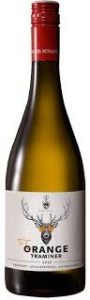 2020 Peter Schandl Traminer Strange, Burgenland, Austria: Retail $20. Responsible Bottle (535g; 18.8oz). Under screw cap. I am no aficionado of orange wine, and I doubt that I would ever look one out, but when I have one in my glass, I actually kind of like it. And this is more of the same. A bit, well, orange, in the glass with an oxidative nose of tangerine rind and minerality. The palate is pretty much classic orange wine with an astringent base, some dried fruit, plenty of tartness, and a lingering acidity. Perhaps it is my inexperience with the genre, but for the most part, orange wines seem pretty similar, regardless of variety, and I struggle with that. I also struggle with food pairings, but these wines are adored by the sommelier crowd, and that must mean something, right? Very Good 88 Points.
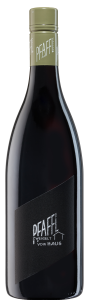 2024 Weingut R & A Pfaffl Zweigelt Vom Haus, Weinviertel, Austria: Retail $20. Very Responsible Bottle (415g; 14.6oz). Under screw cap. I received this bottle as a sample from Wine Austria, and I immediately had to laugh. I had won a bottle of the 2017 vintage of this wine while on a river cruise on the Danube through Hungary, Austria, and Germany. I liked that bottle (89 Points), but I lamented that Zweigelt is not my favorite variety. Not even close. But it was a solid effort. Dark in the glass with plenty of dark fruit, a smidge of spice, and a touch of mocha. The palate is surprisingly bright and tart, with fruit, depth, earth, and a whole lot of fun. Am I coming around to Zweigelt? Nah… Excellent. 90 Points. Extra kudos for having reduced the bottle weight (of an already light bottle) of this wine by nearly 100 grams! Excellent. 90 Points.







 the drunken cyclist