After my first, and somewhat failed, attempt to do some wine tasting in Franciacorta, I had set up a couple of appointments for the following day, a day I also had a three-plus-hour drive to Alba, my next destination.
The first stop was at 10:00 at Ferghettina, a medium-sized (for the region) family-run producer with a stellar reputation. I arrived to the welcoming sign of wide open gates and my host, Daniele, waiting outside to greet me.
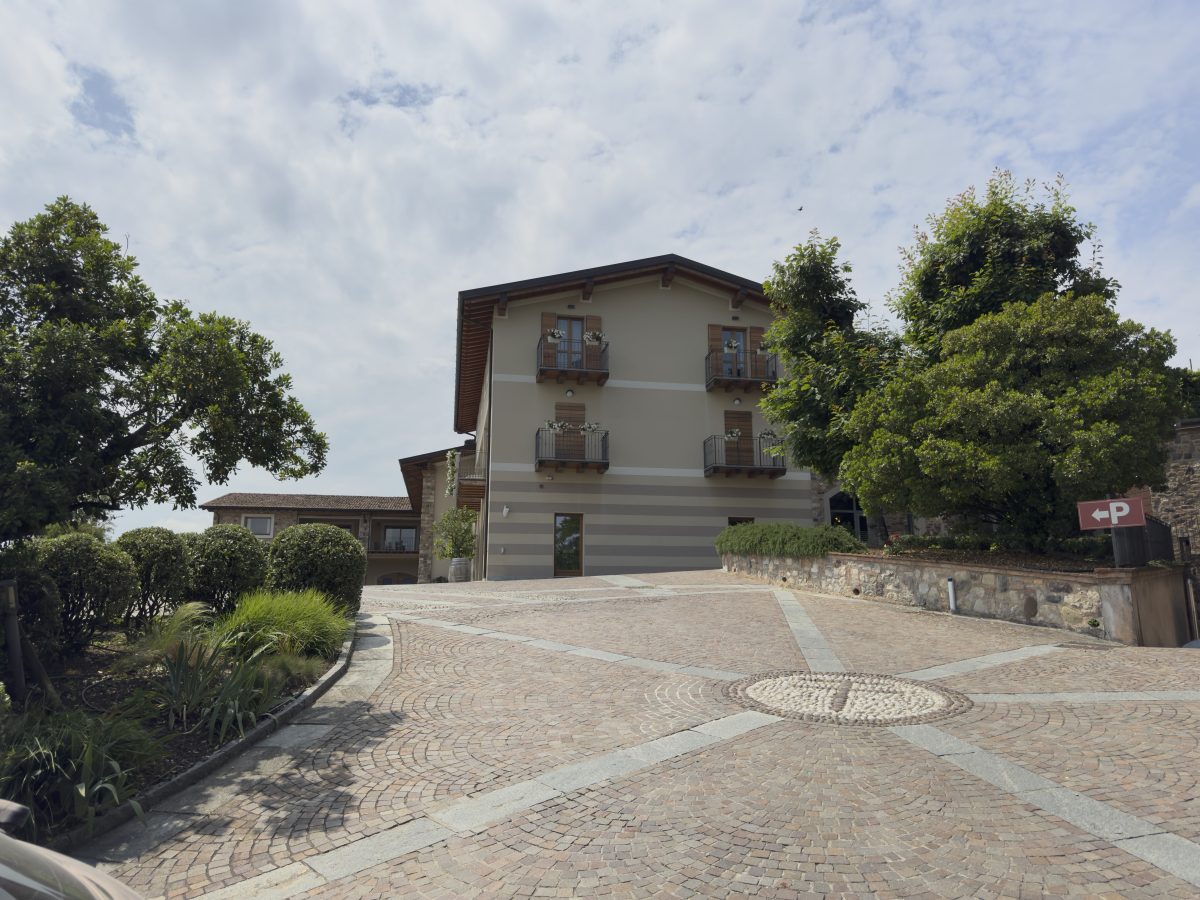
After the previous day’s debacle, just getting through the gate was a relief.
A couple from the Netherlands joined us, and we were off on a brief tour of the winery, during which Daniele also provided a quick history of Franciacorta as a wine-producing region.
While the history of many wine regions in Italy goes back centuries, Franciacorta’s wine production essentially started in the 1960s when Guido Berlucchi started planting grapes in what was otherwise a poor area for farming.
Today, Franciacorta has 2200 hectares (5400 acres) under vine (75% of which is farmed organically), encompassing 19 communes and 123 wineries, which produce a total of 20 million bottles annually. There is the potential to increase that number by about 20%, but Franciacorta will always remain one of Italy’s smallest producers by volume.
Roughly 70% of the vines planted in the region are Chardonnay, and 15-20% are Pinot Noir. The rest is Pinot Blanc and Erbamat, a variety that has been brought back to the region to help with the effects of climate change, as it is naturally much higher in acidity.
Ferghettina was started in 1991 by Roberto Gatti, the first winemaker at Bellavista, one of the larger producers in Franciacorta. Today, Roberto and his wife, Andreina, are still very much involved, but the viticulture and œnology are handled by their two children, Laura and Matteo.
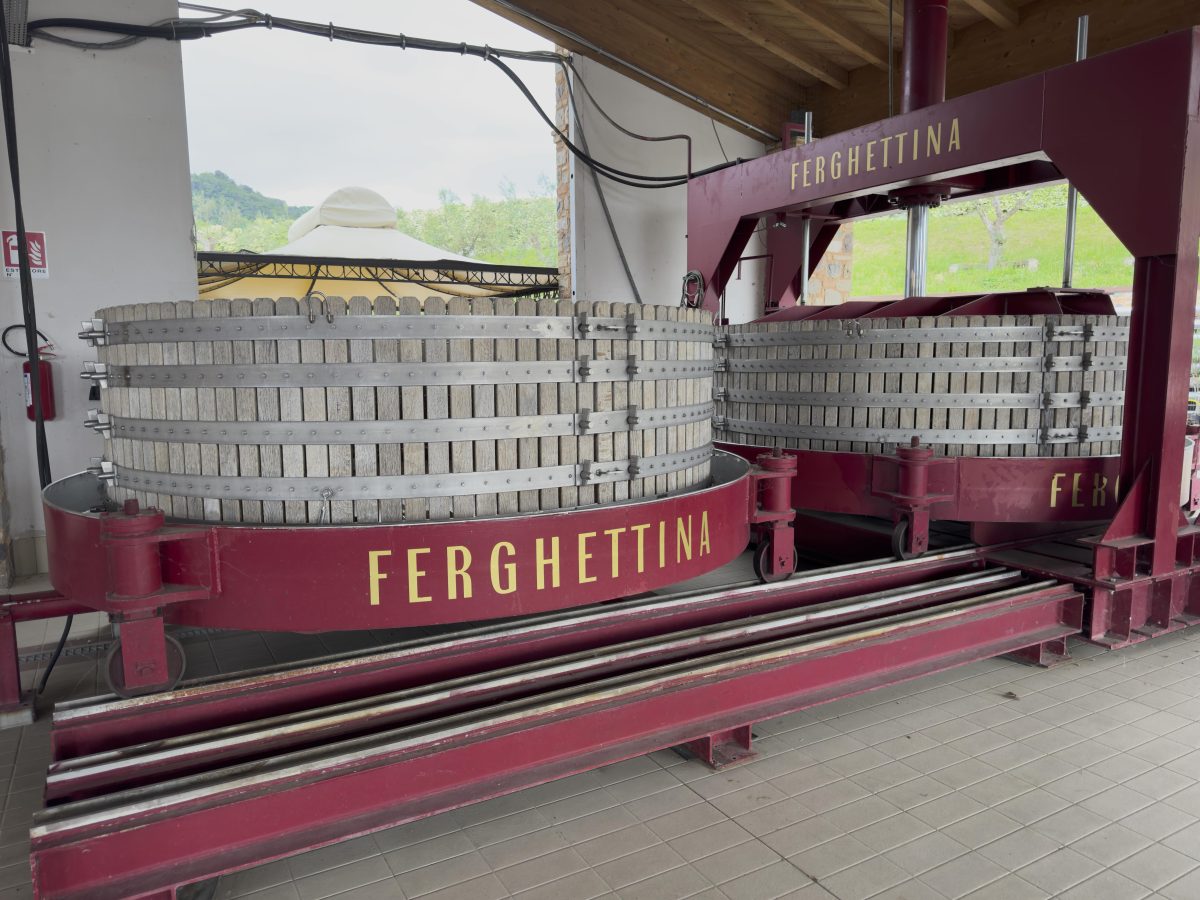
Ferghettina still uses a “traditional” basket press for some of the fruit.
While Roberto and Andreina started with a mere four hectares (under ten acres), they expanded as their reputation grew, and Ferghettina (taken from the name of the immediate area) now manages close to 200 hectares in all, across 13 municipalities in Franciacorta. Ferghettina only uses about half of the fruit for its own production, selling the rest to some of the larger producers in the region.
Harvest is typically in the middle of August (so any day now), and is only done by hand, with a maximum yield of only 2 kilos per plant. By law, producers can use only the first 65% of the juice, with the rest sold to a distillery.
Ferghettina has 150 different tanks, so all plots can be kept separate, with 98% in Inox (stainless steel) and only 2% in oak, since they try to maintain a crisp and fresh “house style”. 85% of the production is sparkling wine, while 15% is under the “Curtefranca DOC”, a still wine appellation which is largely Cabernet Sauvignon and Merlot.
In the mid-2000s, Ferghettina started experimenting with its now-famous square bottle (designed by Roberto’s son, Matteo), which provides more surface for the yeast to spread out and impart complexity into the wine. The initial problem with the design was the pressure of the wine in the bottle. Square bottles are considerably weaker than their round counterparts so the bottles had to be made much heavier. In fact, the weight is double that of a normal bottle. [Ugh.]
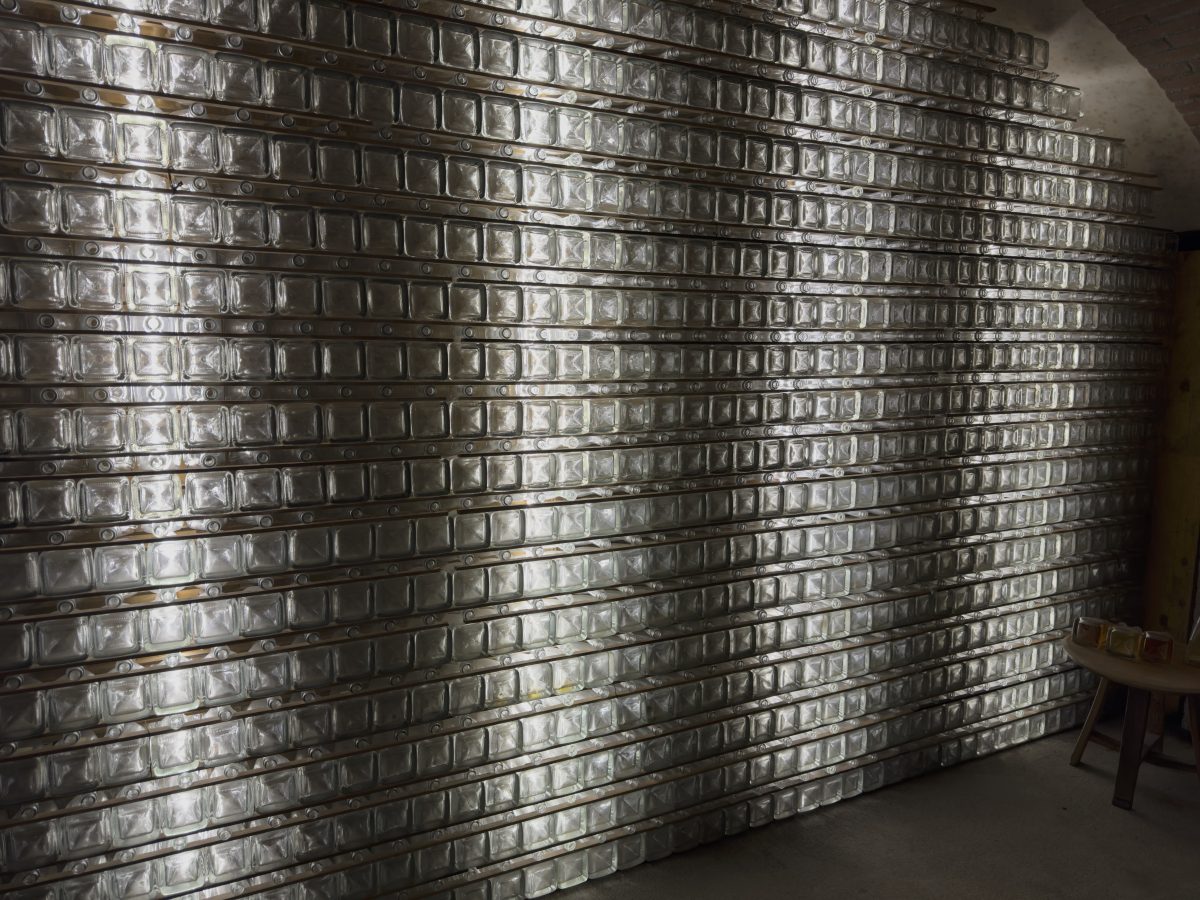
The first try at the square bottle exploded. They used those bottles to create a decorative wall in the cellar.
After the tour, we made our way to the tasting room to sample some wines.
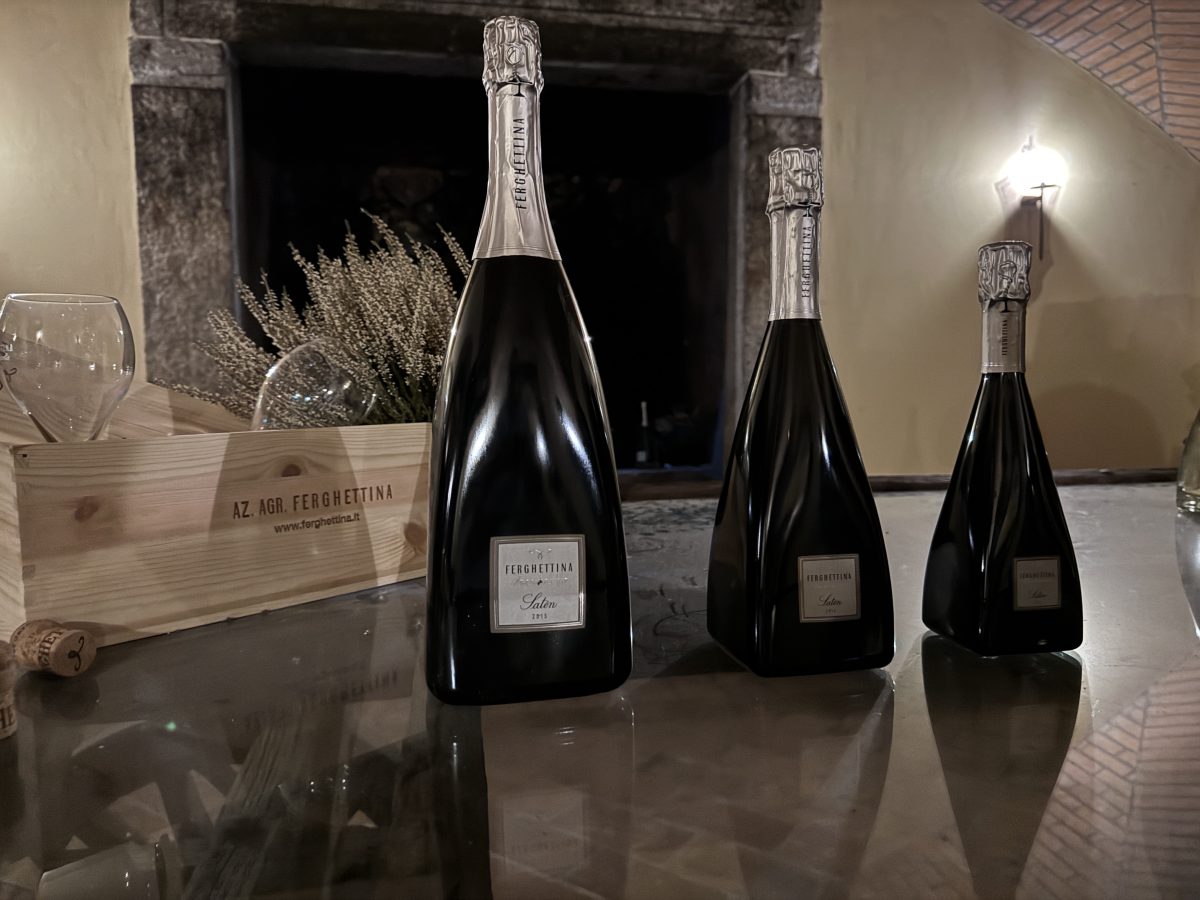
I loved the wines. But the bottles? They are certainly cool-looking, but so, so heavy.
NV Ferghettina Brut, Franciacorta, Italy: Retail 18€. 85% Chardonnay, 15% Pinot Noir. 5 g/l dosage. From 55 vineyards across 11 communes. Light straw with a fine sparkle. Clean and crisp on the nose with plenty of citrus, some pear, and a noticeable yeasty component. All those themes continue on the palate. With a bright and cheery composition. Light, focused, and very easy to drink. Excellent. 91 Points.
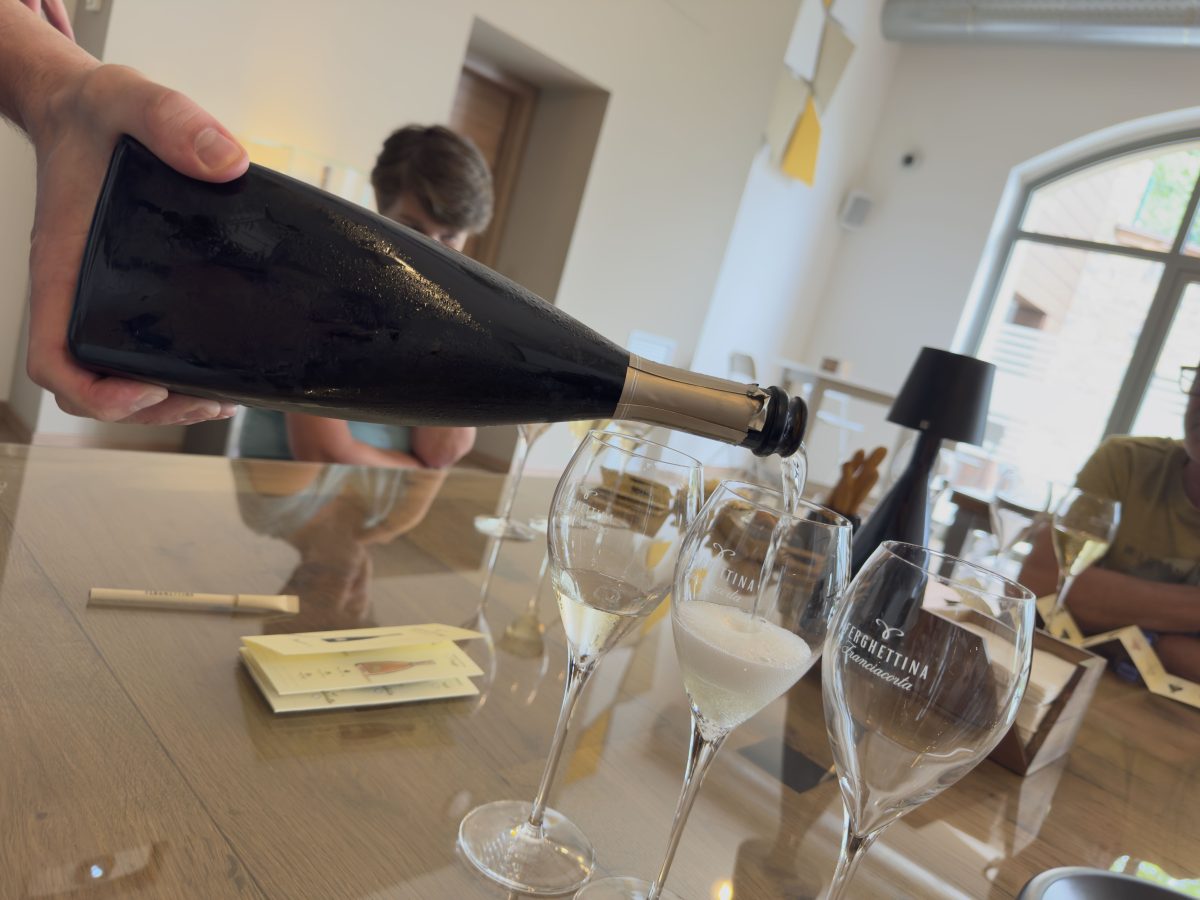
2021 Ferghettina Saten, Franciacorta, Italy: Retail 25€. 6g/l dosage. Saten is always 100% Blanc de blancs, always Brut, and always less pressure (max 5 BAR [as compared to 6 for standard]—less sugar is added during second fermentation). Heavy square bottle. Pale straw. Fine, consistent sparkle. More of a lime nose here, with a nutty and slight vegetal component. 1998 was the first time Saten was produced in Franciacorta, taken from the French word “satin”–the aim was to produce a softer, silkier style. Silky and smooth. Bright and tart on the palate with that nuttiness coming through. Great balance. A lovely wine. Outstanding. 93 Points.
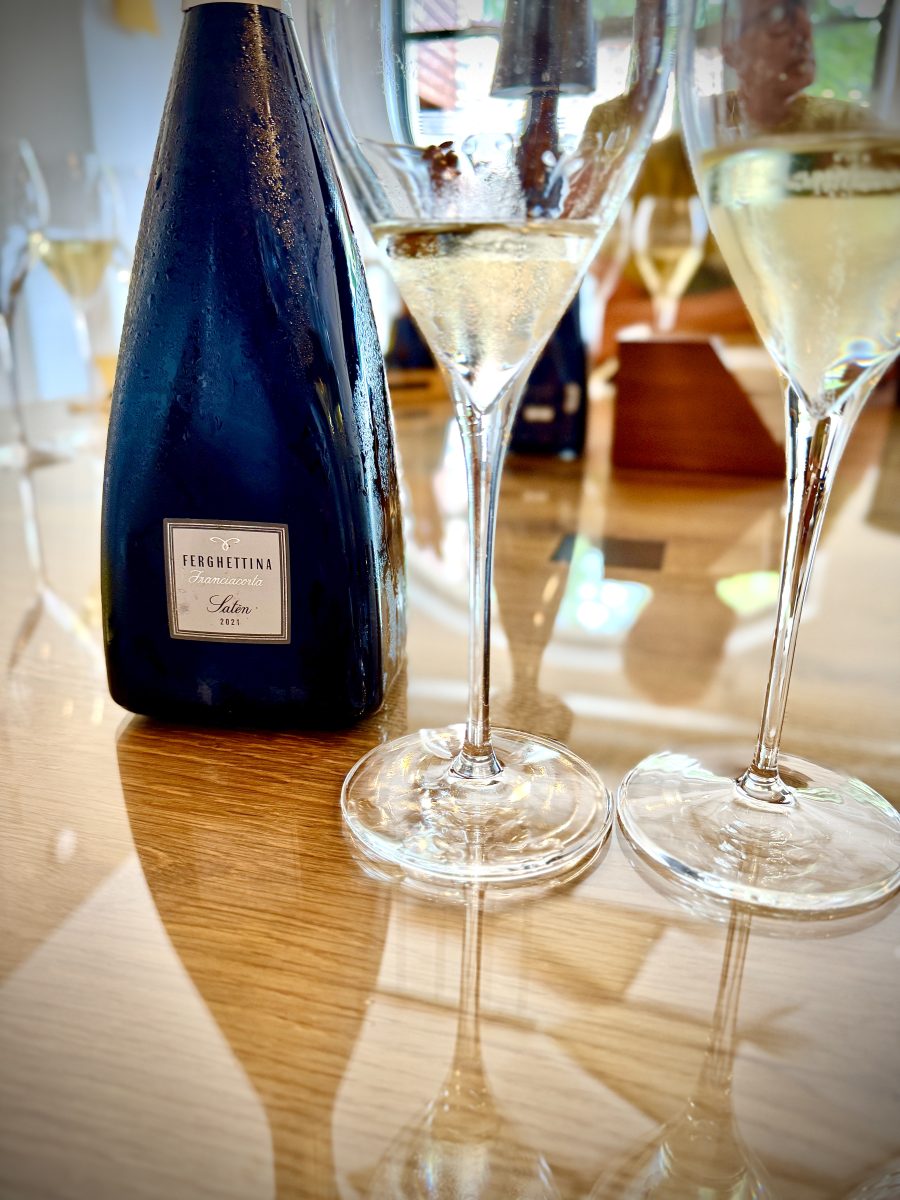
2021 Ferghettina Milledi, Franciacorta, Italy: Retail 25€. Blanc de blancs (100% Chardonnay). 3.5g/l dosage. The Milledi (1000 days) spends an extra 12 months on the lees to build more complexity. From eight communes that are all higher up on the hill than the fruit used in the Saten. More lemon with a richer nose in a brilliant straw. Richer but also more mineral with a salinity that is really compelling and screams for food. A yeastiness comes in on the finish, further solidifying this as a fantastic food wine. Outstanding. 94 Points.
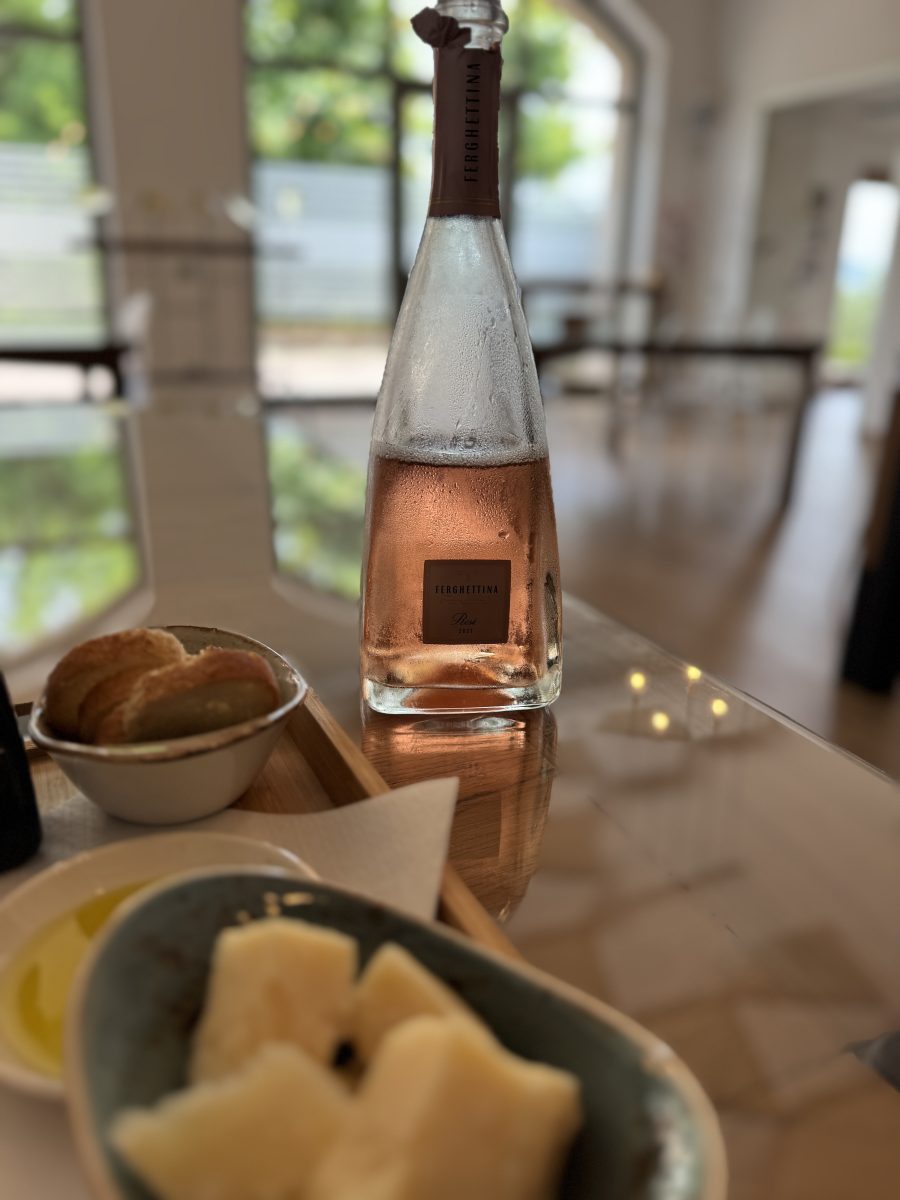
The lighting was not great, but the wines were gorgeous.
2016 Ferghettina Riserva, Franciacorta, Italy: Retail 38€. 100% Chardonnay. Zero Dosage. Riserva is usually only 5-6k bottles, and is not made every year. Brilliant yellow-straw. With a vibrant sparkle. More citrus but also a gorgeous yeastiness on the nose. Yowza. Wow. The best nose of any wine from Franciacorta that I have witnessed. Rich, vibrant, fruity, nutty, and incredibly layered, this is fantastic. But also still quite young. This could use another decade easily. Whoa. Outstanding. 96 Points.
2021 Ferghettina Rosé, Franciacorta, Italy: Retail 27€. 4g/l dosage. In Franciacorta, one can only get color through maceration; no blending of red still wine is allowed, and a minimum of rosé must be 30% Pinot Noir. This is 100% Pinot Noir. Brilliant salmon pink with a vibrant sparkle in the glass. Whoa. Cherry, strawberry, and even some rhubarb here on the nose. Yowza. A touch of yeastiness and a hint of minerality. Fruity and Rich on the palate with plenty of gusto and intensity. A finish that is tart but also a bit flinty. Lovely. Outstanding. 94 Points.
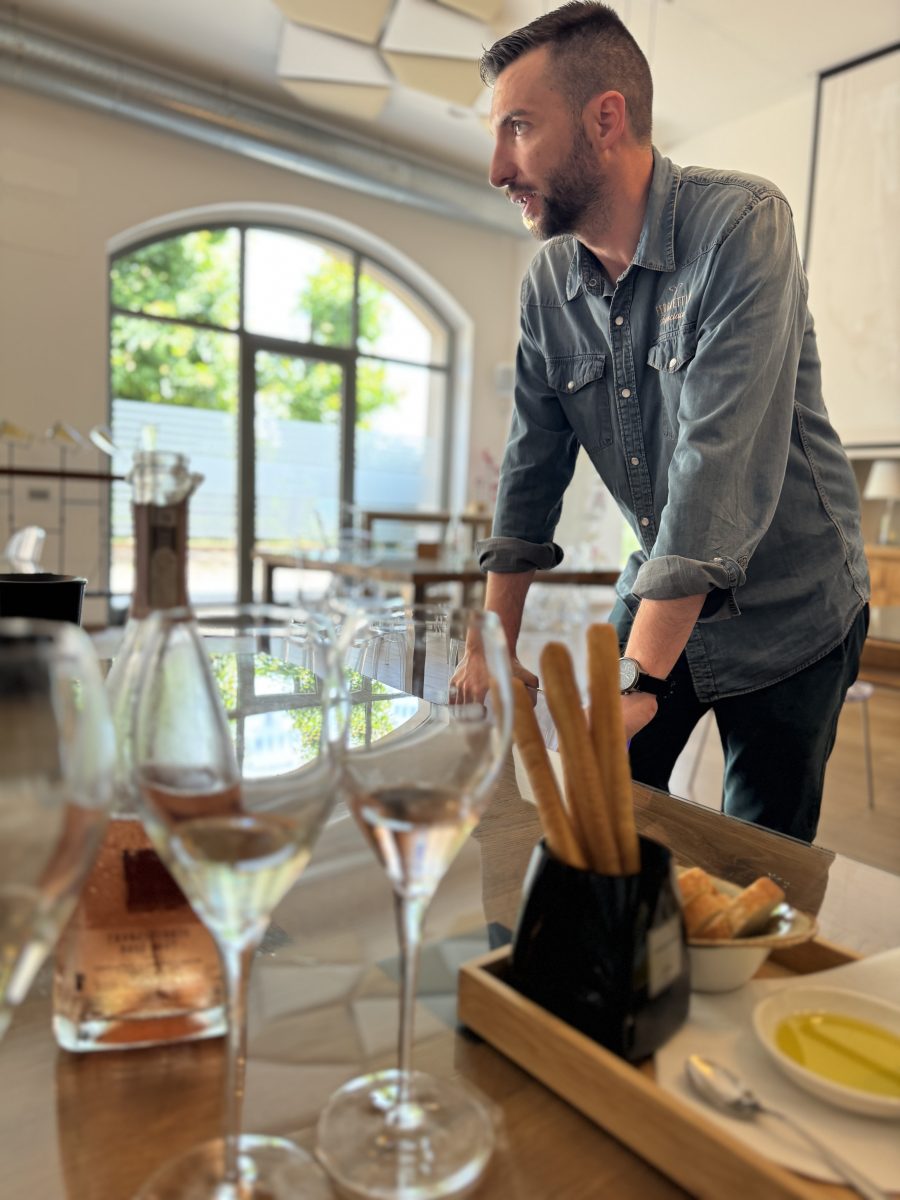
Many thanks to Daniele for the wonderful tasting!





 the drunken cyclist