As many of you know, I have been writing this blog for twelve and a half years and during that time, I have been invited to numerous wine regions and events. While I decline many of them, a few months ago I agreed to attend a tasting led by Antonio Galloni here in Houston.
Antonio Galloni is largely regarded as one of the leading wine writers/critics in the country today. He is most widely known, perhaps, as the lead critic at Robert Parker’s The Wine Advocate for a decade before leaving to create his own site, Vinous, in 2014.
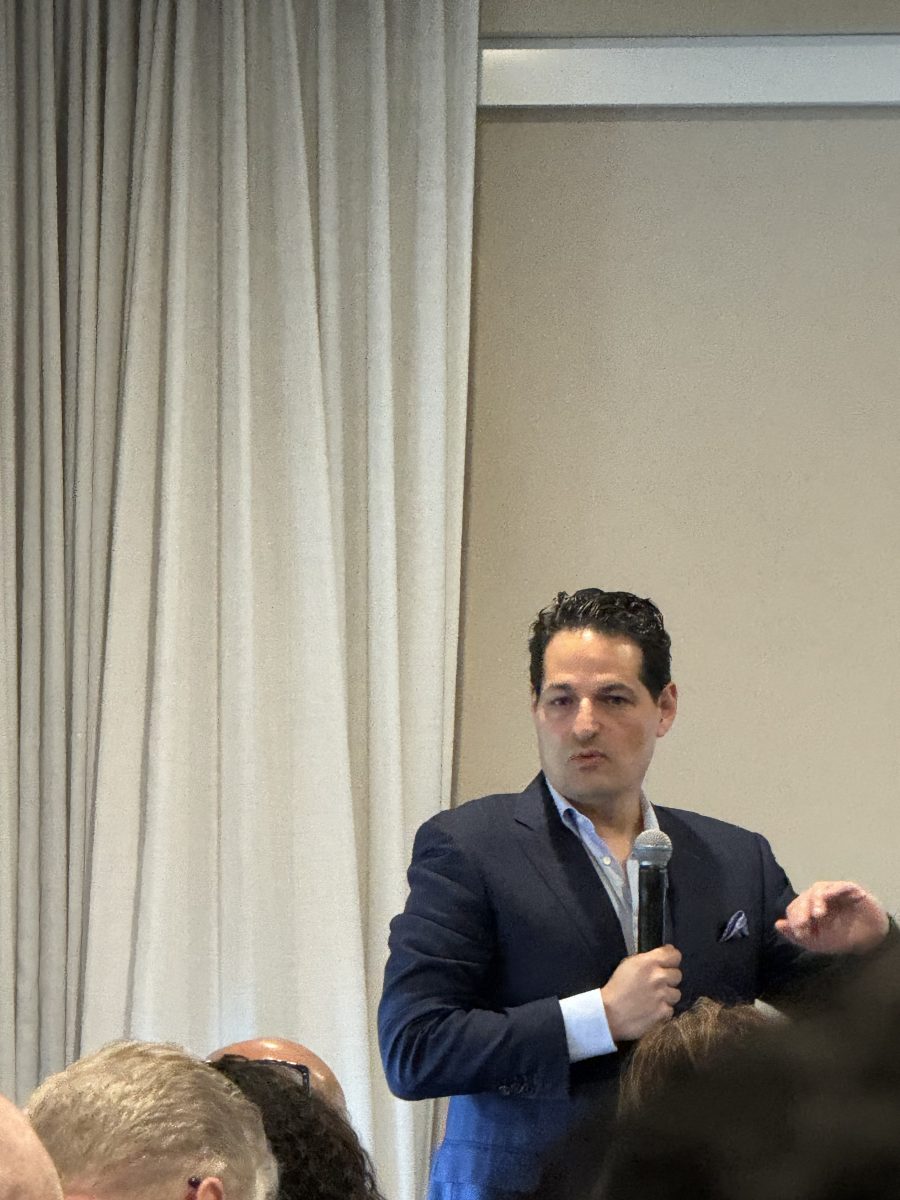
The room was crowded and I was way in the back, but there is Antonio.
While I do not read a ton of his writing (Vinous is a pay site and I am, well, cheap), I was eager to hear him speak. He was in town to discuss the wines from the Vino Nobile di Montepulciano appellation, perhaps the red-headed stepchild in Tuscany (Brunello and Chianti are often cited as the wines of Tuscany).
The wines from the appellation, which is located in the southern part of Tuscany, like those from its more renowned cousins from the region, are made with Sangiovese (70% minimum). Montepulciano (which, to make it a bit more confusing, is also the name of the major town in the region and the name of a grape variety that is grown in the Abruzzo, which is unrelated to the wines made in Tuscany), produces roughly 10 million bottles annually, 75% of which is Vino Nobile di Montepulciano, the rest classified as “Rosso di Montepulciano”.
While many of the wines were excellent and a couple were outstanding, I was less than whelmed with the presentation. I get it, Antonio Galloni was there as a bit of a hired gun to present the wines. But come on. He repeated several times that “these are wines of place” a mantra that many in the wine business repeat ad nauseam.
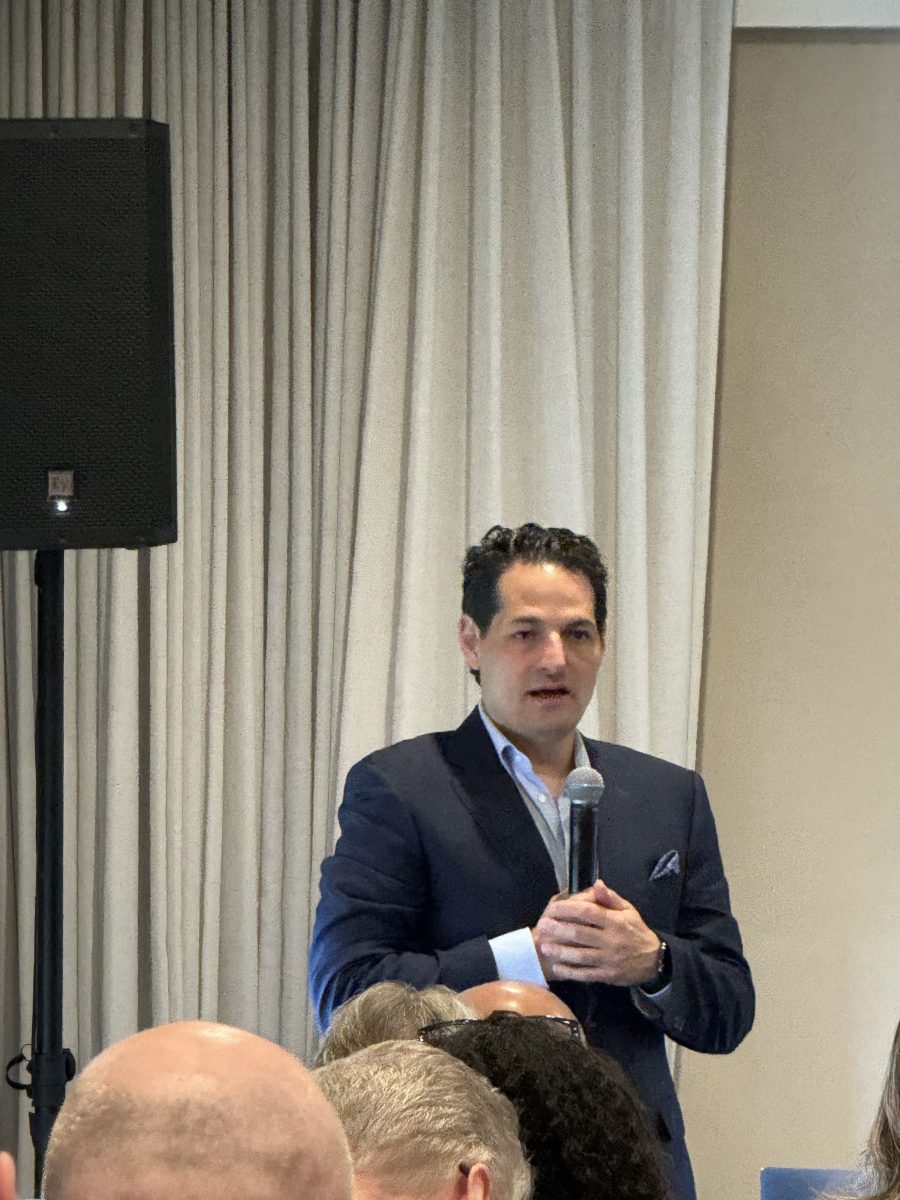
Surprisingly, it seemed like at least a few in attendance did not know who Antonio Galloni is.
I get it. Wine, more than really any other product, comes from a place. Essentially, that means that champagne only comes from Champagne, Burgundy from Burgundy, and in this case, Vino Nobile di Montepulciano from the Southern part of Tuscany.
But does the modern wine consumer care? Few would argue that some of the top-selling wines in this country (La Marca, Caymus, Meomi, etc.) have a sense of place. So as wine geeks, are we discussing the wrong thing? Instead of focussing on “sense of place” should we instead underscore what makes a “good wine” in general and, in this case, a “good Sangiovese”?
As the wine industry goes through a bit of a down turn and new generations seem less interested in wine, shouldn’t we be making wine appreciation simpler? I mean, how many people who have had a glass of champagne have actually been to the region? Can you understand a particular “sense of place” without having ever been there?
I don’t know.
But listening to Antonio Galloni go on and on about Vino Nobile’s “sense of place” really did not hit home with me, and I am one of those who actually knows what he is talking about. Again, some of the wines were fantastic, but the tasting as a whole was disappointing.
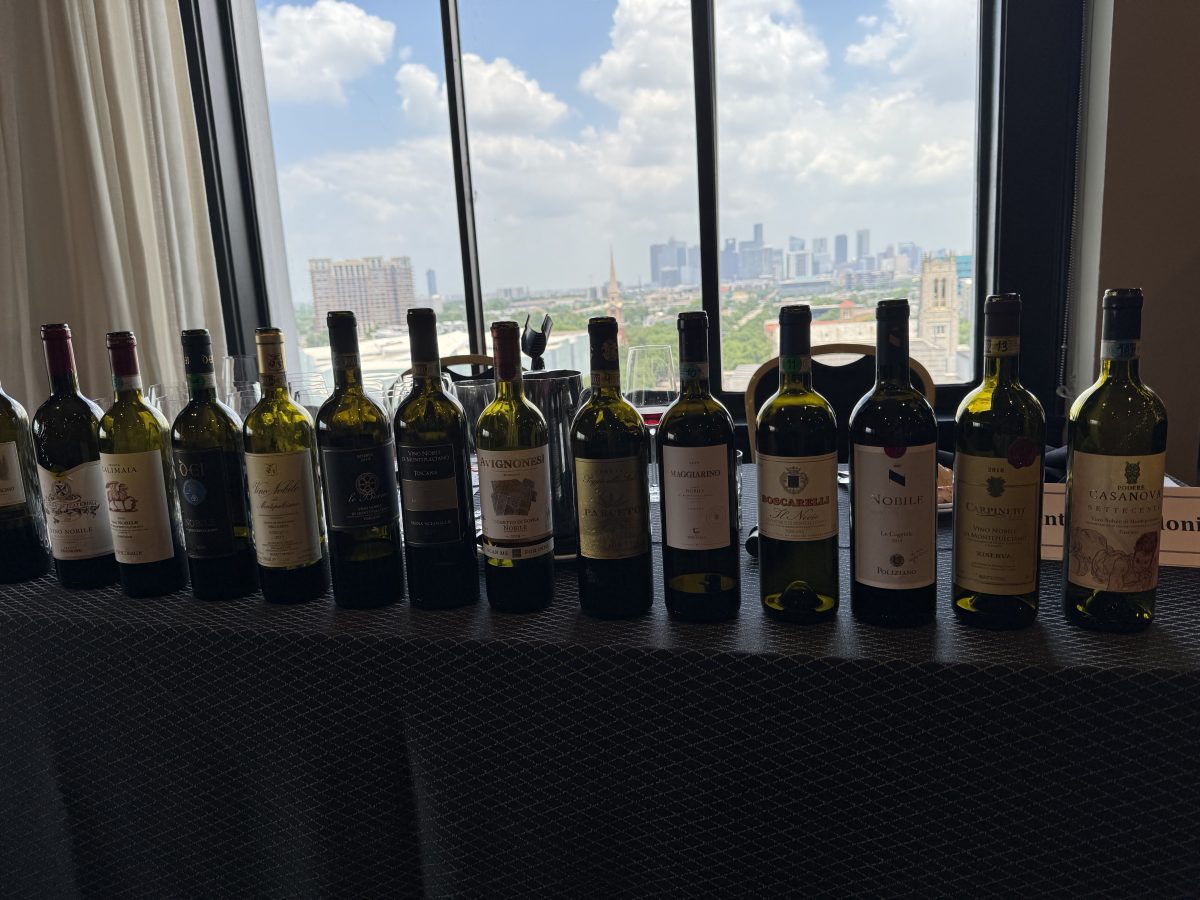
Terrible lighting, but a nice view of the Houston skyline.
2020 Fattoria del Cerro Vino Nobile di Montepulciano Silineo, Tuscany, Italy: Retail $25. 100% Sangiovese. Transparent deep ruby rich red and dark fruit. Plenty of spice with good fruit and tartness. Surprisingly weighty. Excellent. 91 Points.
2020 Tenuta Trerose Vino Nobile di Montepulciano Santa Caterina, Tuscany, Italy: Retail $40. 100% Prugnolo Gentile (Sangiovese). A rich translucent ruby in the glass with more floral and red fruit aromas. Lighter and more delicate on the palate than expected with nice spice on the finish. Excellent. 90 Points.
2020 Marchesi de’ Frescobaldi Vino Nobile di Montepulciano Tenuta Calimaia, Tuscany, Italy: Retail $40. “90% Sangiovese, 10% complimentary varieties.” While still translucent (barely), this is considerably darker in color, a rich ruby with a meaty, salty nose. This is a bit austere on the palate, searching for the fruit and also noticeable tannins on the finish. Very Good. 89 Points.
2020 Cantine DEI Vino Nobile di Montepulciano, Tuscany, Italy: Retail $30. 90% Sangiovese, 10% Canaiolo Nero. Lighter in color with a bit of bricking on the rim. Quite shy on the nose with a bit of tobacco smoke and dried red fruit. Well-balanced on the palate with noticeable but appropriate oak. Yeah, dried fruit a go-go here. Excellent. 92 Points.
2019 Tenuta di Gracciano della Seta Vino Nobile di Montepulciano, Tuscany, Italy: Retail $40. 100% Sangiovese. Light ruby in the glass with red and blue fruit on the nose. Fairly light initially with subtle fruit but considerable tannic structure on the finish. Excellent. 90 Points.

2019 Le Bèrne Vino Nobile di Montepulciano Riserva, Tuscany, Italy: Retail $35. 97% Sangiovese, 3% Colorino. Dark and viscous in the glass with black fruit and black pepper dominant. An herbal note on the verge of medicinal. Mint? Rich and fruity on the palate, this really delivers on several levels. Another wine with some healthy tannic structure. Quite nice. Outstanding. 93 Points.
2019 La Ciarliana Vino Nobile di Montepulciano Vigna ‘Scianello, Tuscany, Italy: Retail $48. 100% Prugnolo Gentile (Montepulciano). 5,000 bottles produced. Medium color and quite spicy and peppery on the nose. Surprisingly fruity initially until an intense spiciness comes in on the mid-palate. Finishes with silky tannins. Outstanding. 93 Points.
2019 Avignonesi Vino Nobile di Montepulciano Poggetto di Sopra, Tuscany, Italy: Retail $65. 100% Sangiovese. 4,000 bottles annually. 24 months in oak. Light to medium in color, meaty and smoky on the nose with some faint red berry. Lighter than the nose portended with subtle cherry and a hint of spice and maybe basil. Excellent. 90 Points.
2019 Poggio alla Sala Vino Nobile di Montepulciano Parceto, Tuscany, Italy: Retail $55. 100% Sangiovese. 10,000 bottles produced. Intense translucent ruby in the glass with both fruity and minty aspects on the nose with some oak coming through. Luscious fruit initially with waves of complexity and intensity. Whoa. The most concentrated thus far. Outstanding. 95 Points.
2019 La Braccesca (Antinori) Vino Nobile di Montepulciano Maggiarino, Tuscany, Italy: Retail $65. 100% Sangiovese. 5,600 bottles produced. Perhaps the darkest thus far in both color and aromas with dark ripe fruit, and intense herbal notes (basil, mint). Smoky and minty. Bigger, fruitier and rounder with also the most intense tannins thus far in the tasting. A bit disjointed. Not a fan but it has its place. Excellent. 90 Points.
2019 Boscarelli Vino Nobile di Montepulciano Il Nocio, Tuscany, Italy: Retail $130. 100% Sangiovese. Medium to dark in color with dark and blue fruit with a salinity and meaty note. Rich and focused on the palate with impeccable balance and silky tannins. Wonderful. Whoa. Outstanding. 95 Points.
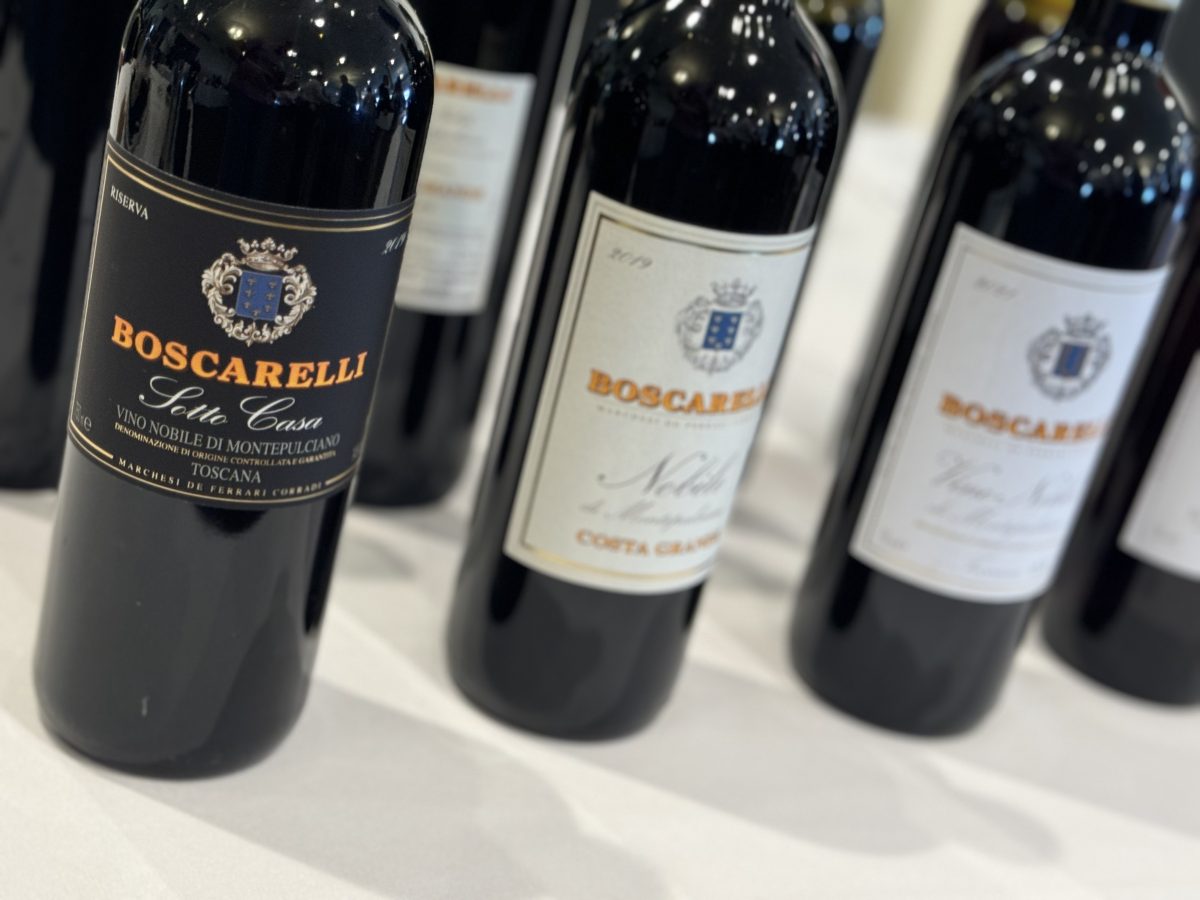
2019 Poliziano Vino Nobile di Montepulciano Le Caggiole, Tuscany, Italy: Retail $100. 100% Sangiovese. 6,000 bottles produced. Medium color with loads of black and red cherry. Intense black cherry with a zingy tartness on the palate as well, this is refreshing yet also intense and powerful. Lingering finish. Whoa. Outstanding. 94 Points.
2018 Carpineto Vino Nobile di Montepulciano Riserva, Tuscany, Italy: Retail $39. 70% Sangiovese, 30% Canaiolo “and other authorized grape varietals [sic].” 150,000 bottles produced. Quite dark in color but still translucent. Meaty and minty with dark fruit on the palate. Solid and tasty but it pales compared to the previous two. Excellent. 90 Points.
2016 Podere Casanova Vino Nobile di Montepulciano Settecento, Tuscany, Italy: Retail $39. 100% Sangiovese. Medium to dark in color. This is the first with some rhubarb on the nose. Plenty of mint as well with a hint of spice. Rich and big. Really New World in style on the palate, quite chewy and woody. Does not really fit here with the rest of this tasting. Very Good. 89 Points.





 the drunken cyclist
You will probably enjoy this article: https://www.linkedin.com/pulse/rethinking-wine-tasting-notes-priscilla-hennekam-8j2ic/?trackingId=PvWx9pFfRrGDJokBOSmTwg%3D%3D
LikeLike
Very interesting article, thanks! While I don’t agree with all of her points, she does make many interesting/valid ones about tasting notes. I hate writing tasting notes. During my blind tasting of American Pinot Noirs, for example, there are only so many ways to describe “cherry” which is a very common note in Pinot. Well, when you taste 65-70 Pinots in one sitting, many of the notes sound similar. In my opinion, the average consumer wants to know two things: how much is the wine and is it any good? That’s it. That is why I still score all the wines I taste. Is it somewhat arbitrary? Perhaps, but a score is the easiest way to determine which wines I think are better than others (I contend that 80-90% of the wines produced today are “good”; you may not like the wine, but it is technically “good”). So what does it all mean? I see my role primarily as a story teller around wine and thus I try to make my notes, if nothing else, and interesting read.
LikeLike
Without comparing other wines made from the same varietal but from different regions, I agree, what’s the point of knowing the “terroir”.
I had the good fortune to visit Boscarelli and what stuck out the most was that the improvement the Italians have made in recent history now allow them to showcase pure Sangiovese. No more “Super Tuscan” needed!
He should have thrown in a Cal-Italian for comparison for those getting the hang of the varietal.
LikeLike
Sorry! This comment got lost in my approval queue! I just think the wine industry would possibly attract many more consumers if it just got over itself. Yeah, sense of place is cool but 90% (or more) either don’t get it or don’t care. They come away thinking we wine geeks are stuck up snobs (which we are, but that is not the point!).
LikeLike