This is the continuation of an article I published a couple of weeks ago…
OK, I’ll admit it. Even though I author of one of this country’s preeminent wine blogs (haha), until relatively recently, when I heard “Australian wine” I couldn’t help but immediately think “Shiraz”. And while it is true that what just about everyone else in the world calls “Syrah” is Australia’s most-widely planted grape (and grown in just about all of the country’s 65 wine regions), there is obviously much more to Australian wine.
While the origins of “American” wine can be debated, a British resident, living in New Zealand, James Busby, is the father of Australian wines. In 1832, he brought about 650 vine cuttings from Spain and France to Australia, including the first Grenache and, yes, Shiraz, enriching the continent’s genetic pool of vines severalfold.
Today, wine is made in all six Australian states (although it is a bit anecdotal in Tasmania and Queensland), with South Australia dominating production with more than half of the country’s acreage under vine, followed by New South Wales (24%), Victoria (15%), and Western Australia (7%). [There, now you know all six states in Australia, you’re welcome.]
Over the past couple of years, I have been fortunate enough to learn much more about the wines of Victoria, but talking about “Victorian wine” as one cohesive unit is akin to talking about “Californian” or even “West Coast” wine in the same way. There are 21 different distinct regions in Victoria, Australia, with about 650 total producers, and while I in no way claim to be an expert at all, through several tastings (both online and in person), I am at the very beginning stages of being able to say with some confidence that even if one ignores Shiraz, a lifetime of studying just the wines of Victoria would not be close to enough time.

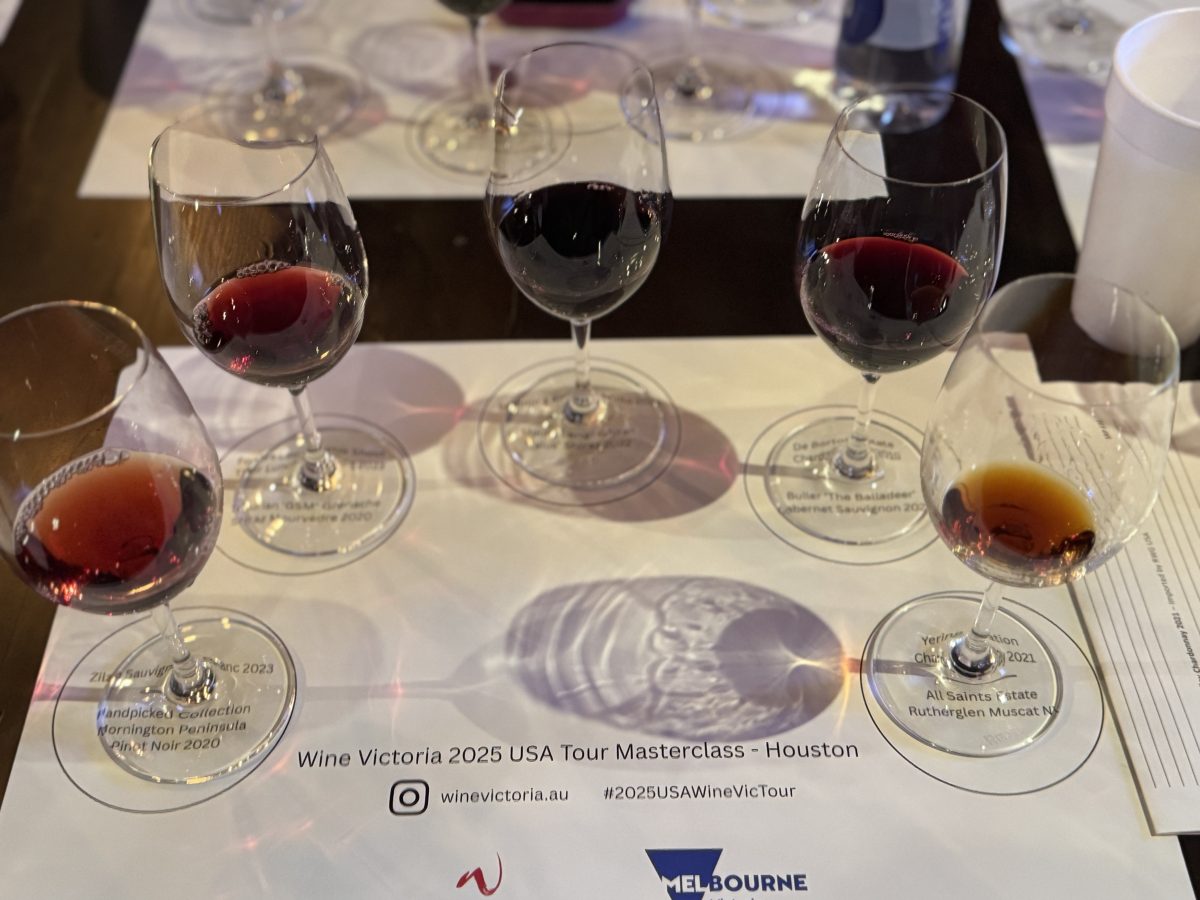
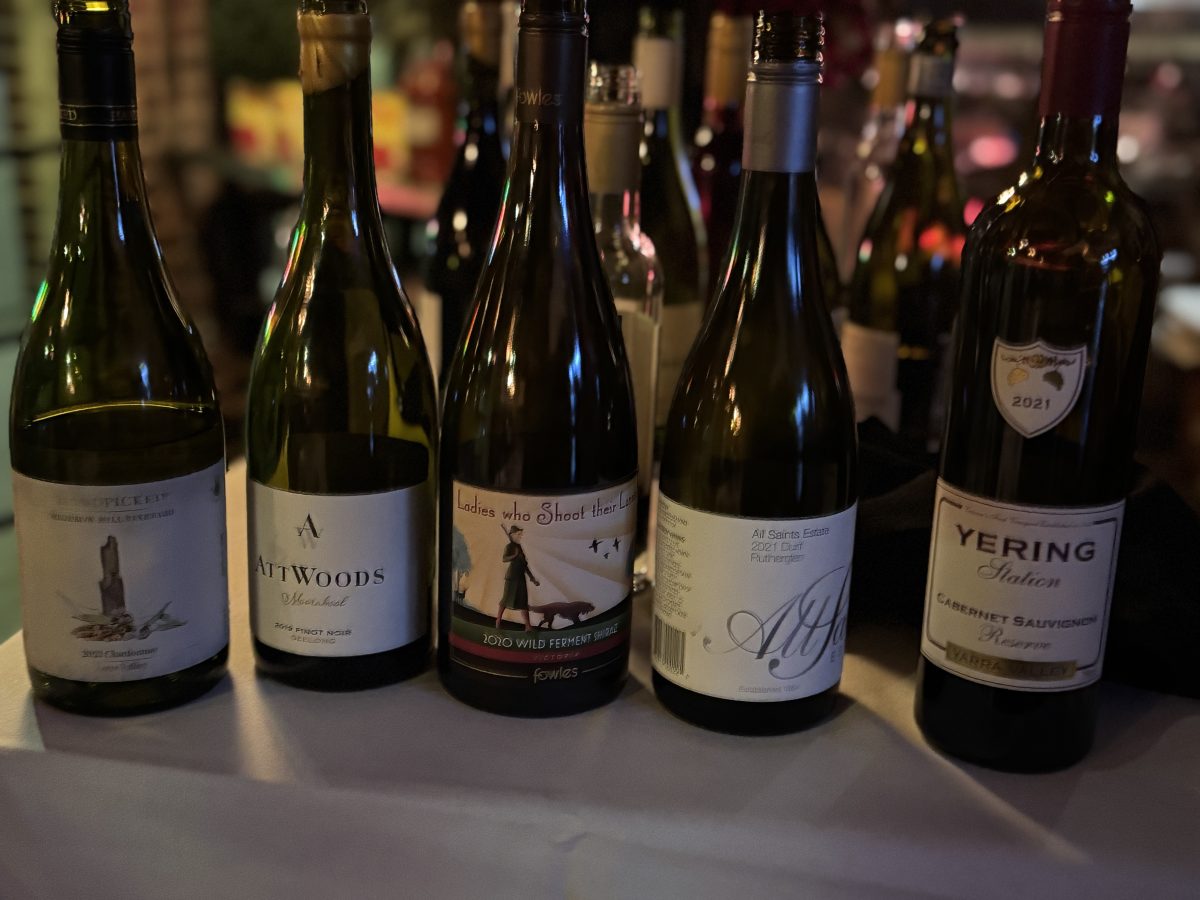
A few months ago, I joined a few other wine writers at B&B Butchers here in Houston for a wonderful evening of Victorian Wines and Texas beef. Here are the notes from the first flight, all white wines.
2020 Handpicked Collection Pinot Noir, Mornington Peninsula, Victoria, Australia: Retail $50. OK, a bit to unpack here. Most Australian Pinot Noir comes from Victoria, and within Victoria, the highest concentrations of Pinot come from Clone MV6 (“Mother Clone 6” which likely originated from Clos Vougœt plantings brought to Australia by James Buzby in the 1830s). It is the most planted Pinot Noir clone in Australia and on the Mornington Peninsula, where 50% of plantings are Pinot. Light in color with bright cherry aromas (both red and black), but this is certainly subtle, with even more delicacy on the palate. Light fruit and good acidity (my next band name). This is certainly subtle, but I like it. A lot. Excellent. 90 Points.
2020 Tellurian Grenache Shiraz Mourvèdre, Heathcote, Victoria, Australia: Retail $30. 50% Grenache, 39% Shiraz, 11% Mourvèdre. Certified organic fruit. The fruit for this wine comes from the northern area of Heathcote, which tends to be a bit warmer, thus allowing for riper fruit. Medium to dark color in the glass, with oodles of red and dark fruit, a bit of mocha, and hints of oak and smoke on the nose. The palate is rich, even a bit jammy, but still well balanced from the zingy acidity, and tasty with subtle tannins and a lengthy finish. Certainly, there are tons of fruit here, which could mask the underlying complexity, but this is a lovely wine. Excellent. 92 Points.
2022 Mount Langi Ghiran Shiraz Talus, Grampians, Victoria, Australia: Retail $57. 100% Shiraz. Inky dark in the glass. The nose is loaded with violet and intense blackberry and plum, with just a subtle hint of spice. Yowza. On the palate, there is plenty of fruit, which I certainly expected based on the nose, but the acid is dormant until well into the midpalate. Then it makes up for it in a hurry, quickly combating and ultimately balancing all that fruit. Savory and delicious. Outstanding. 93 Points.
2021 Buller Cabernet Sauvignon Balladeer, Rutherglen, Victoria, Australia: Retail $25. 100% Cabernet Sauvignon. This wine comes from the Rutherglen region of Victoria, long known for its fortified, dessert-style wines. As one might expect, there has been a pivot to producing more dry wines as sweeter styles have, well, become a harder sell. Medium to dark color in the glass with dark fruit aromas (boysenberry, raspberry, and maybe some cassis), noticeable wood, and a bit of campfire smoke. Rather thin and easy-drinking on the palate, this is a wine that does not require a ton of thought. Finishes with some spice and good acidity. Very Good. 88 Points.
NV All Saints Estate Muscat, Rutherglen, Victoria, Australia: Retail $18. From 375ml. 100% Muscat. Just about every tasting I have had with the Wines of Victoria has included a Muscat from All Saints, a classic wine from a storied producer. Dark in color and aromas in the glass, with rich, caramelized orange peel, some toasted walnut, Yowza. The palate continues that theme: Rich, sweet, cloying, and intense caramel flavors with a hint of citrus on the palate. I do not drink many dessert wines these days, but this is a fantastic iteration of the genre. The problem is that I just can’t drink that much of it… Excellent. 92 Points.









Yes some excellent wines from Victoria. Bass Phillip pinot noir would top my list. I was born in Melbourne and sure miss the Yarra Valley wineries.
LikeLike
Pingback: The Random Samples—1/9/2026 | the drunken cyclist
Pingback: The Random Samples—1/16/2026 | the drunken cyclist
Pingback: The Random Samples—2/6/2026 | the drunken cyclist
Pingback: The Random Samples—2/27/2026 | the drunken cyclist
Pingback: The Random Samples—5/8/2026 | the drunken cyclist
Pingback: The Random Samples—5/22/2026 | the drunken cyclist
Pingback: The Random Samples—9/4/2026 | the drunken cyclist