A few months ago, I introduced this “musgo” concept, which is essentially like leftovers piling up in your refrigerator; at some point, all those leftovers need to be either eaten or thrown away.
Well, there is a similar phenomenon when it comes to my wine writing. I am constantly taking notes on various tastings, random bottles of wine, and even a one-off rant here and there. They exist in the notes app on my phone (I learned writing my dissertation that hand-written notes no longer made any sense whatsoever), and they stay (and sometimes die) there, hoping to be published at some point.
That brings us to Château d’Yquem, the producer of the best sweet wine in the world. I usually try to avoid superlatives, but, honestly, I don’t know if there is a single wine writer anywhere that does not agree with that statement (well, there must certainly be a few, but I am guessing they likely are Canadian, so…).
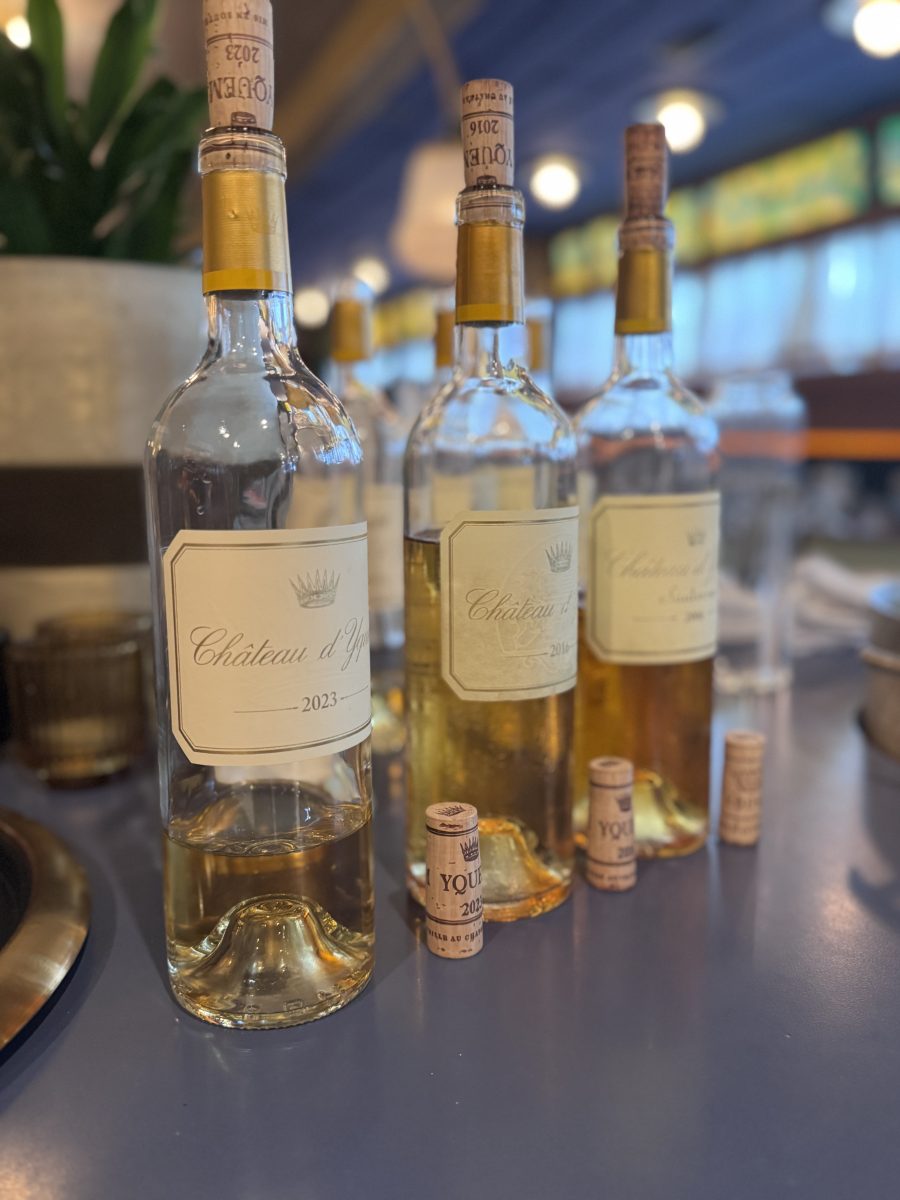
Earlier this year, I was invited to partake in a rather exclusive tasting of Château d’Yquem in Houston, where we would be tasting the much acclaimed 2023 vintage as well as wines from both 2016 and 2006.
Even though, like most wine consumers, my consumption of sweet wine has dropped off precipitously, there was no question I would make time in my week to try three outstanding vintages from one of the world’s truly remarkable wines.
A couple quick notes on Château d’Yquem. It is, without a doubt, the most prestigious wine from the Sauternes region of Bordeaux, in Southwest France. Up until relatively recently, the region produced almost exclusively sweet, unctuous wines, primarily from Sauvignon Blanc and Sémillon. In Sauternes, a beneficial fungus, Botrytis cinerea, which acts to dry out the grapes, concentrating the flavors, aromas, and sugars. Occasionally, Yquem does not have a vintage due to the lack of botrytis, the last was in 2012.
To better understand the effects of botrytis and why Sauternes can be so expensive, roughly speaking, in the rest of Bordeaux, on individual vine produces enough fruit to make one bottle of wine. Pretty straightforward. At Yquem, however, one individual vine, due to the drying effect of botrytis, only produces enough juice to make one glass of Sauternes. In other words, the production of sweet wines in Sauternes is one fifth the size of dry wines, all other factors being equal.
Most producers in Sauternes do not refer to their wines as “dessert” wines, but rather “sweet” wines. The pairing of these wines with dessert is actually a relatively new practice as traditionally, Sauternes was served at the beginning of a meal, either as an apéritif, or, more commonly, paired with a foie gras course.
Often called “Noble Rot”, this fungus is the key to all sweet wines in the region, including Château d’Yquem, which in the 1855 Classification of the wines of Bordeaux, received its own singular distinction of Premier Cru Supérieur (Superior First Growth), placing above all other sweet wines in the region.
I have visited the winery once, several years ago, on a press trip and, well, I was less than impressed. Not with the wine, but rather with the actual visit. Without getting too much into it, the winery is now owned by one of the largest corporations in the world, LVMH (Louis Vuitton Moët Hennessey) and, well, it appears to be run like a corporate entity (at least from a consumer standpoint).
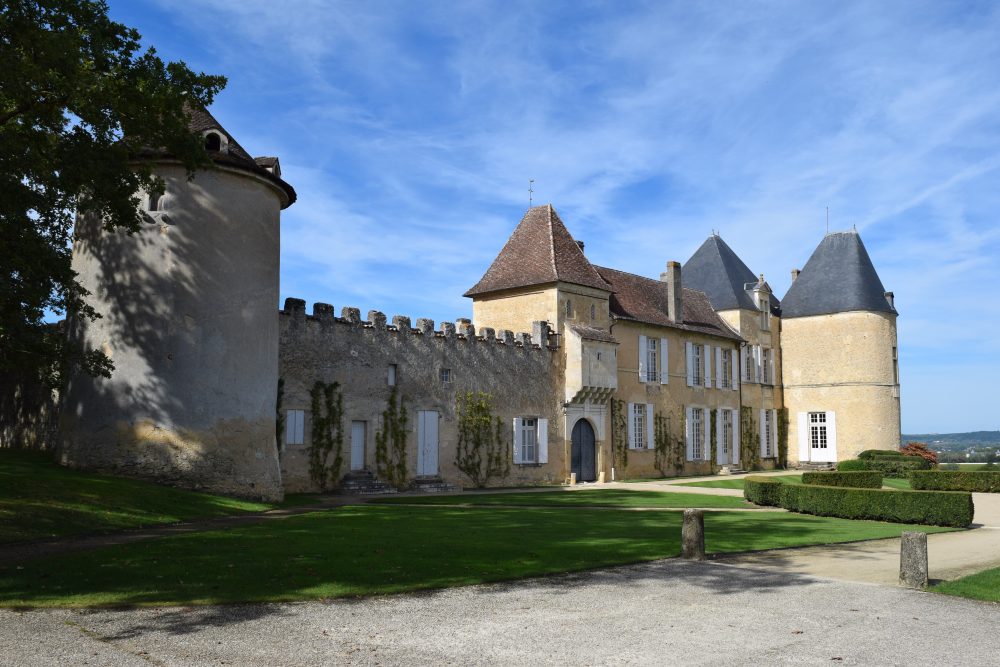
But the wines? Yeah, they are still pretty incredible as I witnessed earlier this year. Here are my tasting notes on the three wines.
2023 Château d’Yquem, Sauternes, Bordeaux, France: Retail $400 (750ml). 70% Sémillon and 30% Sauvignon Blanc. 164 grams of sugar per liter. Considered the vintage of the century. A very hot year. Whoa. Honeyed and rich but also quite bright with lemon notes as well as tropical notes of pineapple and kumquat. Floral about halfway through. Nose finishes with an intense honeyed note. “Because of noble rot, Yquem can have an extended relationship with time. It can be gorgeous when young but also age for decades.” “The beauty of noble rot is to make the sugar disappear”. Rich, nutty, and tart on the palate with a noticeable bitterness (a bit of tannin extracted from the barrel) and a salinity (think salty caramel). Dried apricot. “The finish of Yquem is like the silence after a work by Mozart”. Tasting Yquem is understanding that this is truly one of the world’s great wines. The finish is nearly endless. Whoa. I’ve never given 100 points, but this is really close. This will age wonderfully for 50+ years. Extraordinary. 99 Points.
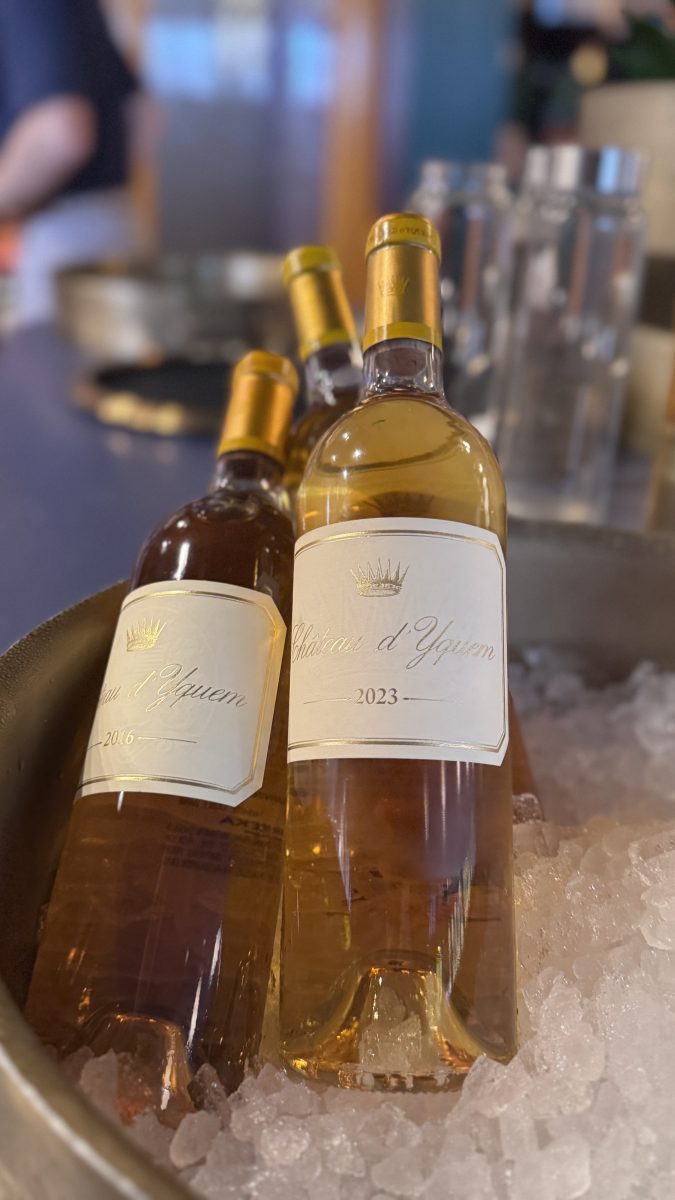
2016 Château d’Yquem, Sauternes, Bordeaux, France: Retail $500 (750ml). 75% Sémillon and 25% Sauvignon Blanc. 135 grams of sugar per liter. Starting to enter the second phase, when its past its youthful exuberance and into the more elegant phase. A bit more golden than the ‘23 with a more subtle but also more complex nose of intense pineapple, both honeyed and confit. Hazlenut. As it warmed, more tropical fruit comes out but also more of an orange marmalade aspect. Rounder and more subtle than the 23 but this is also a doozy. Rich, layered, and stunning. Nutty but more walnut than hazelnut. Whoa. More of a umami salty side here with another incredibly lengthy finish. Could easily go another 40+ years. Extraordinary. 98 Points.
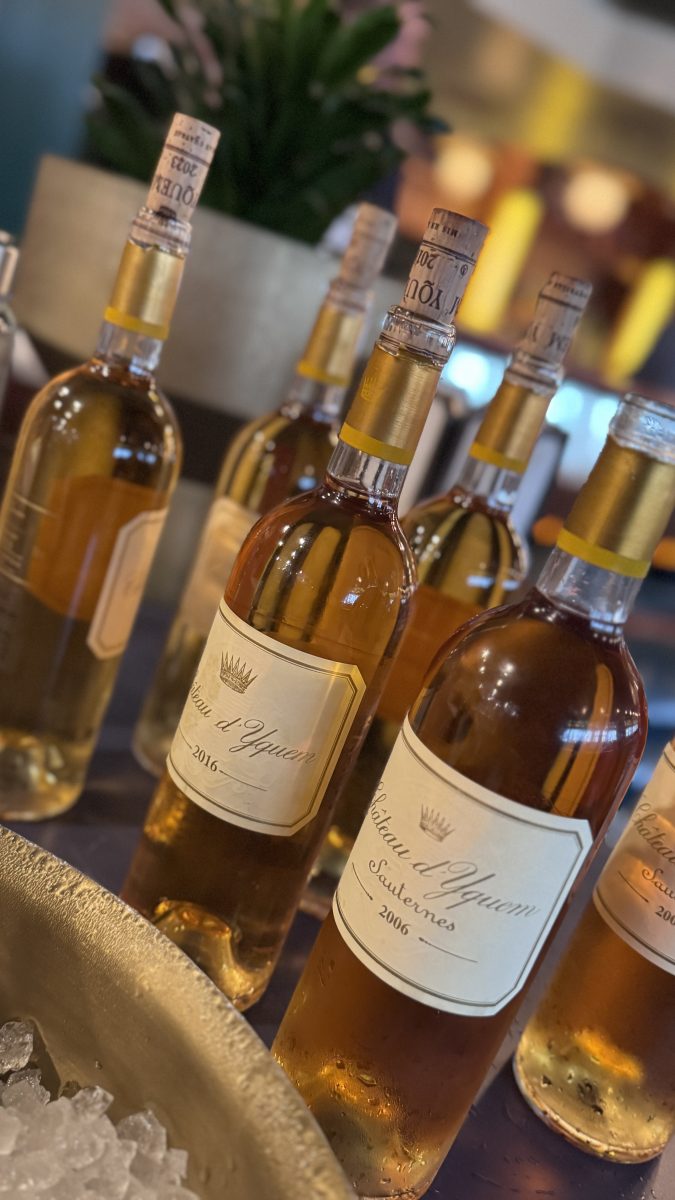
2006 Château d’Yquem, Sauternes, Bordeaux, France: Retail $600 (750ml). 80% Sémillon and 20% Sauvignon Blanc. 122 grams of sugar per liter. 2006 was a much wetter harvest, where fruit flies were a problem. Considerably darker color in the glass than the two previous vintages I tried, but it is more orange than golden. Even more subtle in the glass with an absence of fresh fruit and more of a candied expression. The third phase of Yquem, which moves on to the more tertiary flavors and aromas, with more candied and baked fruit. Really intense on the palate. Concentrated, with candied apricot and reduced and concentrated nuttiness. Whoa. While I prefer the younger, fresher style, this is amazing and, again, has an incredibly long finish. Outstanding. 96 Points.