There are a few things of which I am legitimately afraid: I fear that Michigan will somehow beat the Buckeyes in football this year, I am afraid that the average summer temperature in Philly will reach 110 degrees before I die, and that my wife will wake up one of these days and realize that she is married to a complete jack-rabbit and immediately take steps to rectify that fact. When it comes to wine, I also have a few fears: the next hurricane that hits Philly will overwhelm our terra cotta drain pipe that we have cobbled together with duct tape and spit, leading to a severe flooding of the basement cellar, resulting in numerous bottles floating in the runoff. I also fear that I will get hit by a bus one of these days before I instill in my offspring a love and appreciation for the ridiculous number of bottles down in the basement cellar, and all of my collecting will really look silly as they sell it all off for three packs of gum and a box of Jujubes.
My last great wine related fear is that someone ask me to explain to them the Langueduc wine region in France.
I have travelled considerably in France and if someone asked me to describe just about any French wine region, I could likely hold my own: Burgundy? Check. Alsace? You mean my second home? Loire? No problem. Rhône, Provence? I can muddle through. Champagne? Seriously?
The Languedoc?
Huh?
I recently received some samples from a producer in the Languedoc-Rousillion (Lang-eh-DUCK-Roo-si-YON) and I figured that I needed to learn at least a little bit about the region before I could write about the wines.
It was not easy.
The “Wild, Wild (kind of) West (but mostly South)” is perhaps the best way to describe the Languedoc—there are dozens of individual appellations, some of which I know at least tangentially (Corbières, Rivesaltes) and others that I honestly did not know even existed (Malepère, Cabardès).
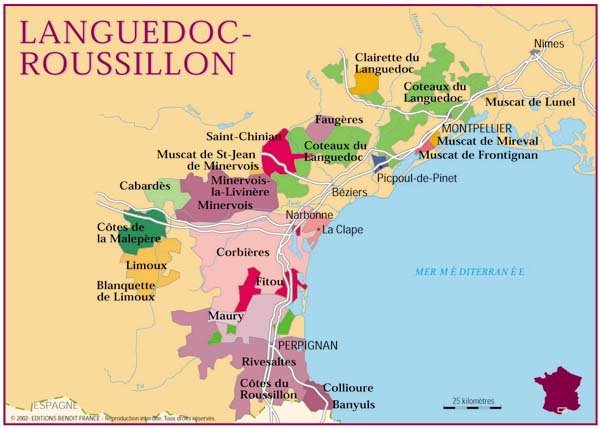
While most regions in France are legally restrained by the varieties that are allowed by law (e.g., Burgundy: Pinot Noir, Chardonnay; Loire: Sauvignon Blanc, Chenin Blanc, Pinot Noir and Cabernet Franc). It seems as though it is no holds barred in the good ole L-R. There are no fewer than six red grapes (including Lladoner—Lladoner? I thought only “llama” started with two L’s) and at least another 12 white (Mauzac? Really?). The key in the L-R seems to be the art of the blend—many of the wines are a blend of 3, 4, 5, even more different varieties. (Sure, there are a ton of grape varieties in the Rhône, but Syrah predominates in the North and Grenache in the South.)
One of the three wines I received, was a GSM (Grenache 20%, Syrah 30%, and Mourvèdre 50%)—a classic Rhône variety blend. The other two? A Pinot Noir and a Malbec–neither a blend and neither a variety appearing on the “typical wine” list that I found covering L-R.
I had some work to do.
Like all of the wine regions of France, there are plenty of rules and regulations for the production of wine in L-R. The problem? In the Languedoc, few seem to give a honey badger about the rules. There seems to be a large number of producers that eschew the traditional (read “required”) grape varieties and plant whatever they think will work the best in the region. While that sounds perfectly “normal” in the U.S., it is just short of blasphemy in France. As a result, these wines are “declassified”—they can’t carry the region’s appellation but must carry the “Vin de Pays” moniker. In most of the other regions of France, this would perhaps prove to be the kiss of death, but in the Languedoc it seems to be embraced more as a right of passage.
As a result, there is a vast array of wines that span the spectrum on both price and quality. There are, no doubt, some values to be found, but the key is knowing where to look. As I have said I am by no means an expert on the region and I only received three wines, all from the same producer, Domaines Paul Mas.
As producers go, Paul Mas, under the leadership of Jean-Claude Mas, has become one of the largest producers in the region (since he took over in 2000, he has more than doubled the Estate’s holdings and increased many-fold the number of vines under contract). Jean-Claude has embraced a more modern approach to both the business aspect of running a winery as well as the wine-making itself.
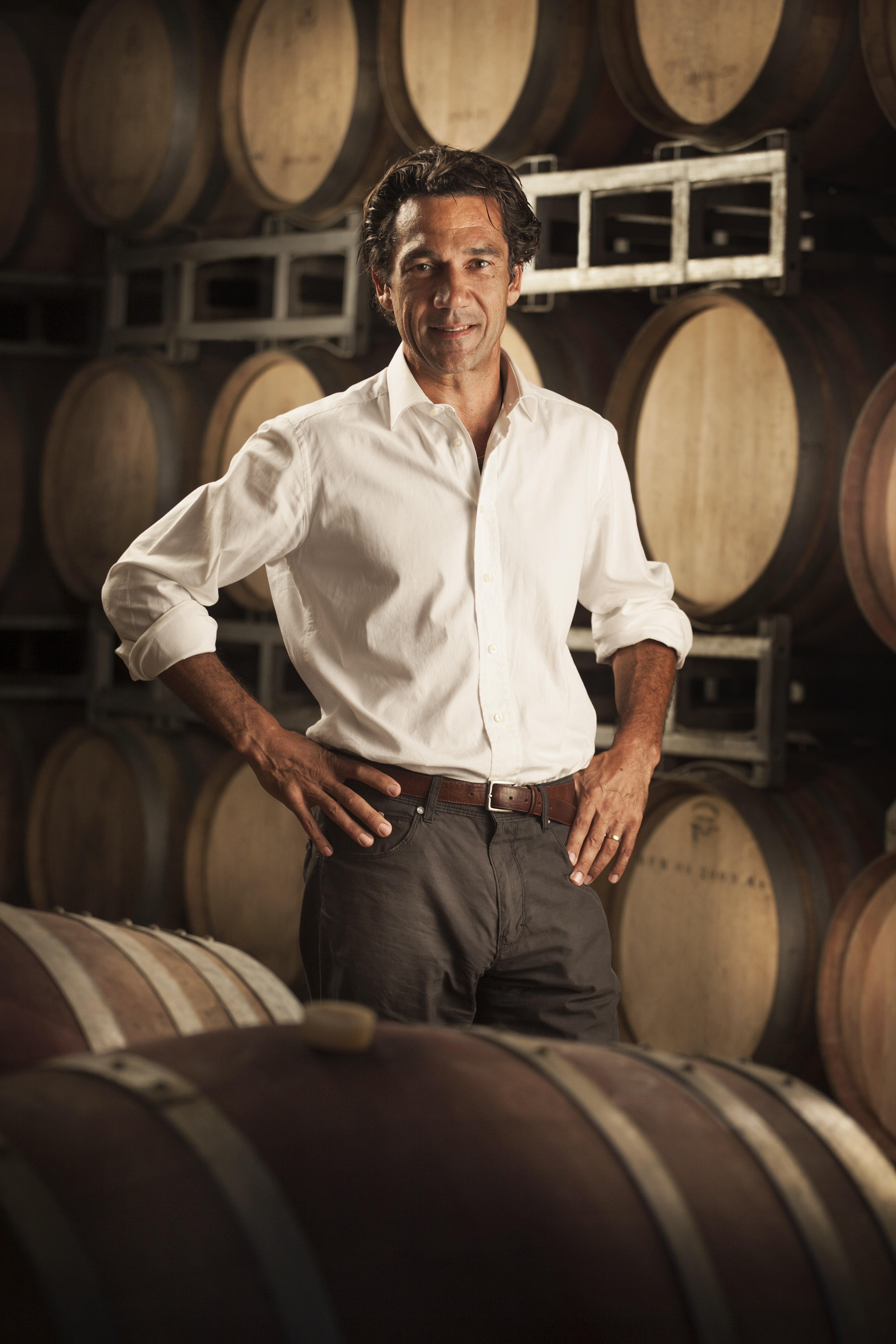
Jean-Claude Mas
The three wines I received were all moderately priced and also in the more fruit-forward “drink me now” style that many modern wines seem to embrace. All three wines are made to be consumed in the short term and at these prices, it would be easy to stock up.
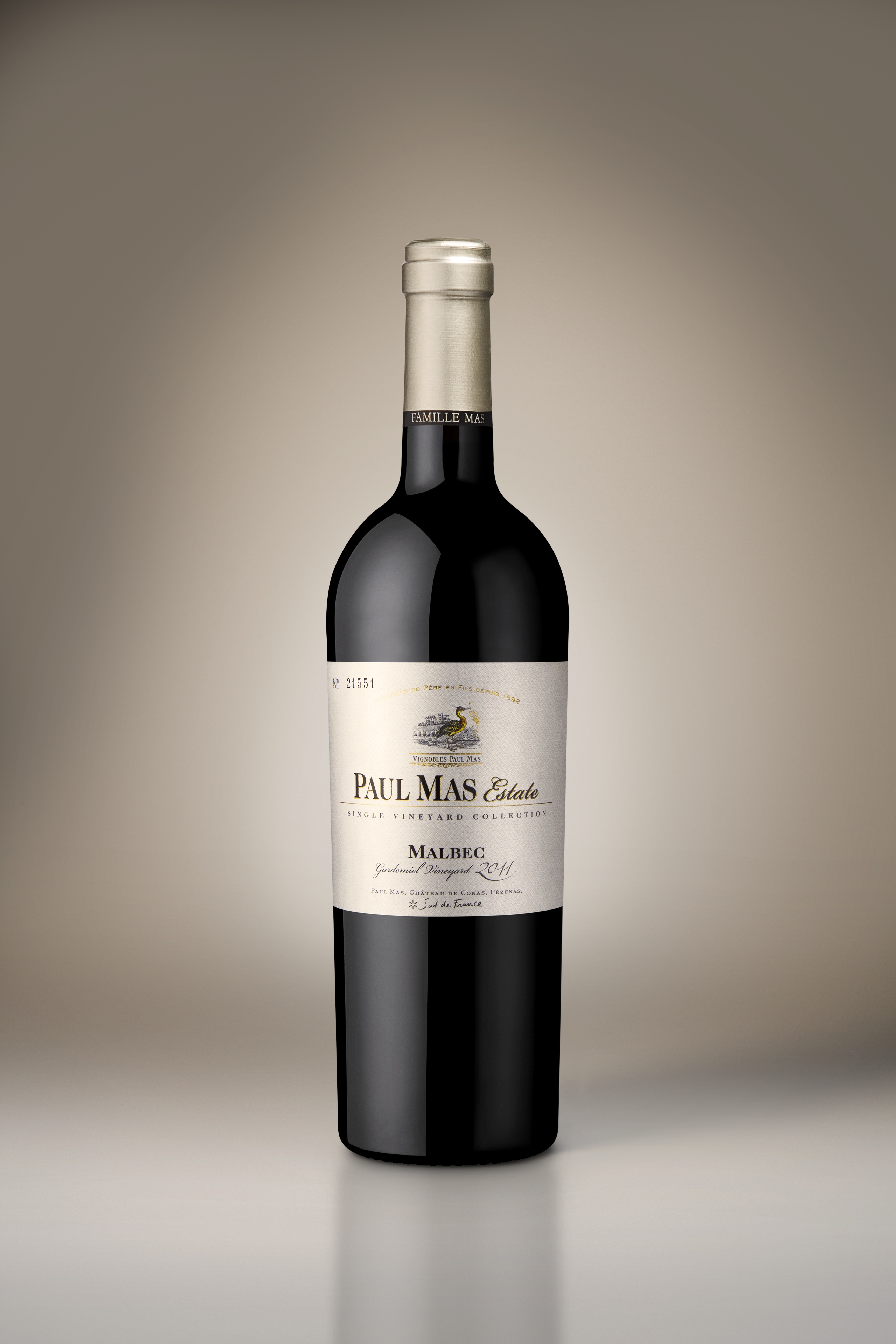 2011 Les Domaines Paul Mas Malbec Single Vineyard Collection Gardemiel Vineyard: Retail $12. I am not a big heavy red kind of guy, and that is certainly what I think of when I hear “Malbec.” The nose on this wine was a bit muted, but the palate certainly was not—big red and black fruit with some licorice and just a hint of spice. I paired this with a grilled Tri-Tip and they both accentuated the other wonderfully. Not the most sophisticated wine, but it was perfect for the meal. Very Good. 87-89 Points.
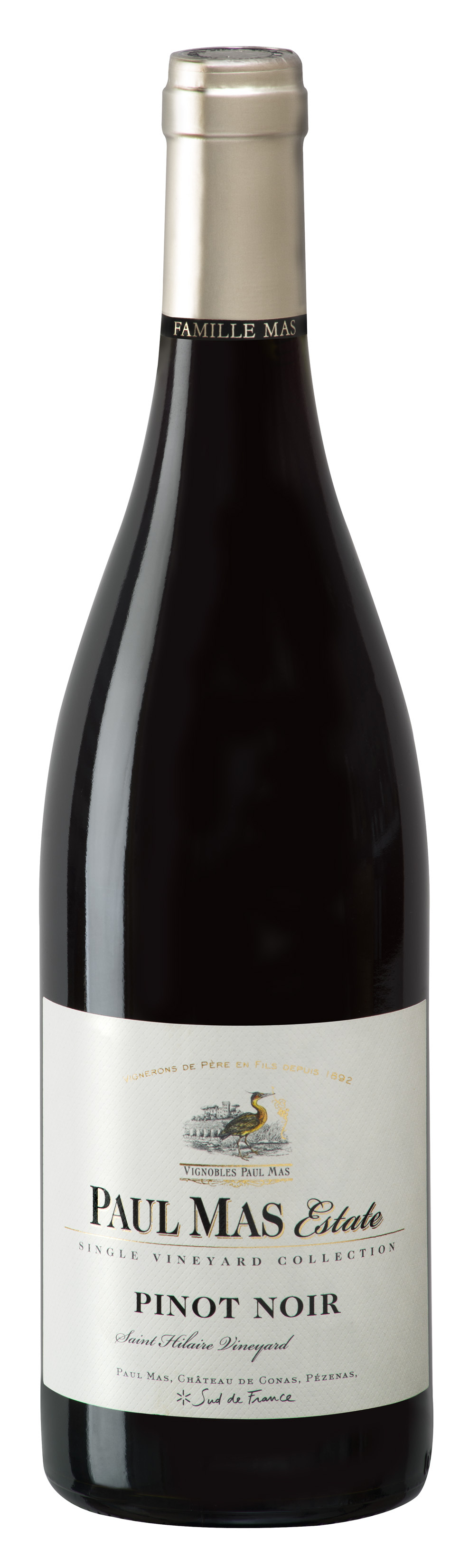 2011 Les Domaines Paul Mas Vin de Pays d’Oc Single Vineyard Collection Saint Hilaire: Retail $10. As I mentioned above, I do not have a lot of experience with wines from the Languedoc, particularly Pinots from the region, so I was excited to give this one a whirl. Really big dark berry fruit with bits of mocha and anise on the nose and the fruit persists on the palate, with a rich, thick mouthfeel, finishing with a little bit of heat on the back end. For me, I have always thought that it is difficult to make a decent Pinot at this price point, but this is a solid effort and for $10? A bit of a no brainer for an every day kind of wine. Good to Very Good. 85-87 Points.
 2011 Les Domaines Paul Mas Coteaux du Languedoc Grès de Montpellier Château Paul Mas Clos de Savignac: Retail $22. I decided at the last minute to pop the cork on this one since I really did not have anything planned for dinner, so it went right into the glass without a decant. Very dark and a bit brooding, but the nose is lively with raspberry and blackberry. On the palate a wave of rich fruit that envelops the mouth. Make no mistake, this is big, in a “new world” way. I like it on its own, but it would be even better with beef straight from the grill. Very Good to Outstanding. 88-90 Points.
In the end? My first real foray into the Languedoc was a success: the wines were easy drinkers with welcoming price points. Now if I can just get through football season without getting hit by a bus….
Thanks to Anne at McCue Marketing Communications for providing the samples.






 the drunken cyclist
Yeah, I have trouble with L-R, too. I’ve had a couple good ones and then decide to try a bunch more, many of which taste like what I imagine the floodwater in your “cellar” would taste. I’ve had better luck with the GSMs than anything else.
LikeLike
It is just so huge and so many just doing what they want (which is a good thing in the abstract, but trying to decipher it all….)
LikeLike
You should go there yourself to try them out. I was in that part of France last summer, and there’s some great cycling, too.
LikeLike
I would certainly love to go there! I imagine the riding must be phenomenal!
LikeLike
My favourite French wine touring occurred in the L-R. I think it had as much to do with the laid back reception you receive, the lack of tasting fees, the hospitality, and the beautifully warm sun and sea. I agree that the variety of styles, varietals, and confusing appellations create a bit of a barrier. I love Saint-Chinian the most but probably as memories drive appreciation. Mas makes wine under another label that escapes me at the moment.
LikeLike
Sounds great! I have had some Saint-Chinian, but it is hard to find over here….
LikeLike
Languedoc-Rousillon is one of my top-value wine regions in the world, up there with Chile and South Africa – I’m a sucker for a GSM mind. Costieres de Nimes, Corbieres, Pic sur Loup and of course Picpoul de Pinet, all excellent. I’ve not been convinced of the Mas wines I’ve tried, but like I say, I’ve gone for value every time. Now, how do I go about getting some of these samples? 🙂
LikeLike
Just had a Picpoul de Pinet last night. There certainly are some gems, but it is not all that easy to find them…. As for your question, shoot me an email. Jeff (at) the drunken cyclist (dot) com
LikeLike
Great post – you really need to work on some of those fears… 😉
LikeLike
Thanks so much! Funny, my therapist says the same thing…
LikeLike
😊
LikeLike
I like laughing. I like learning. I like your posts. Go Bucks!
LikeLike
Thanks so much! OH-
LikeLike
IO!
LikeLike