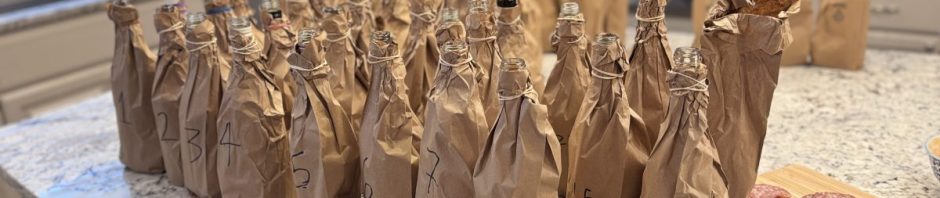
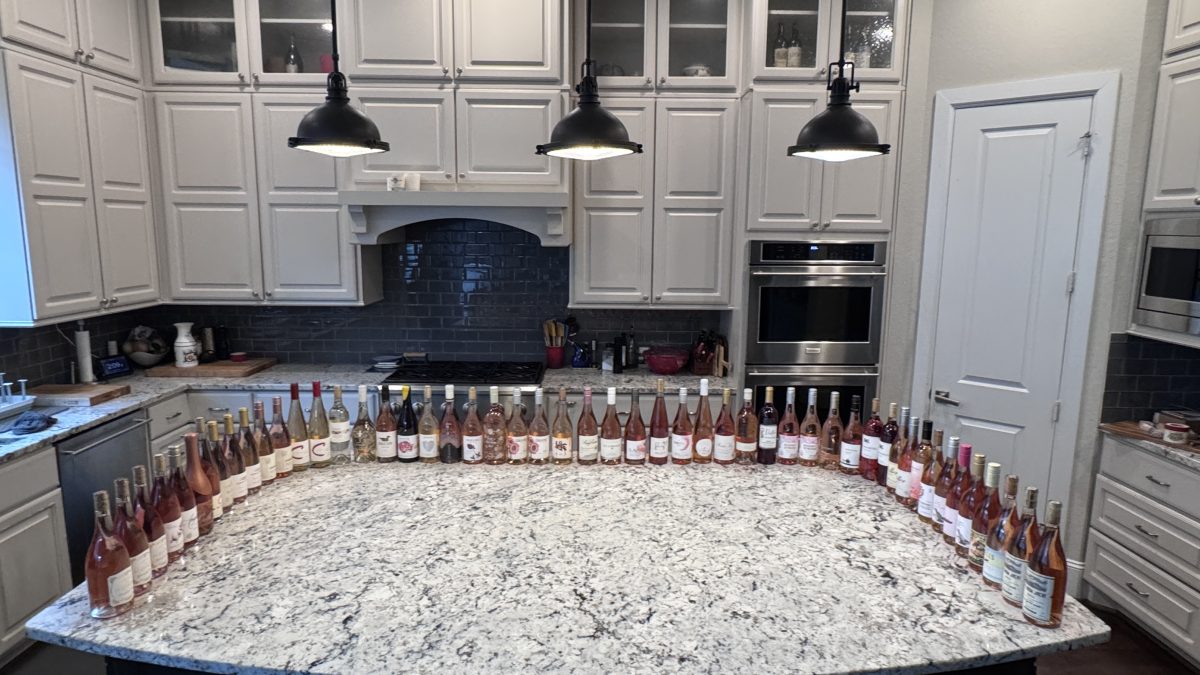
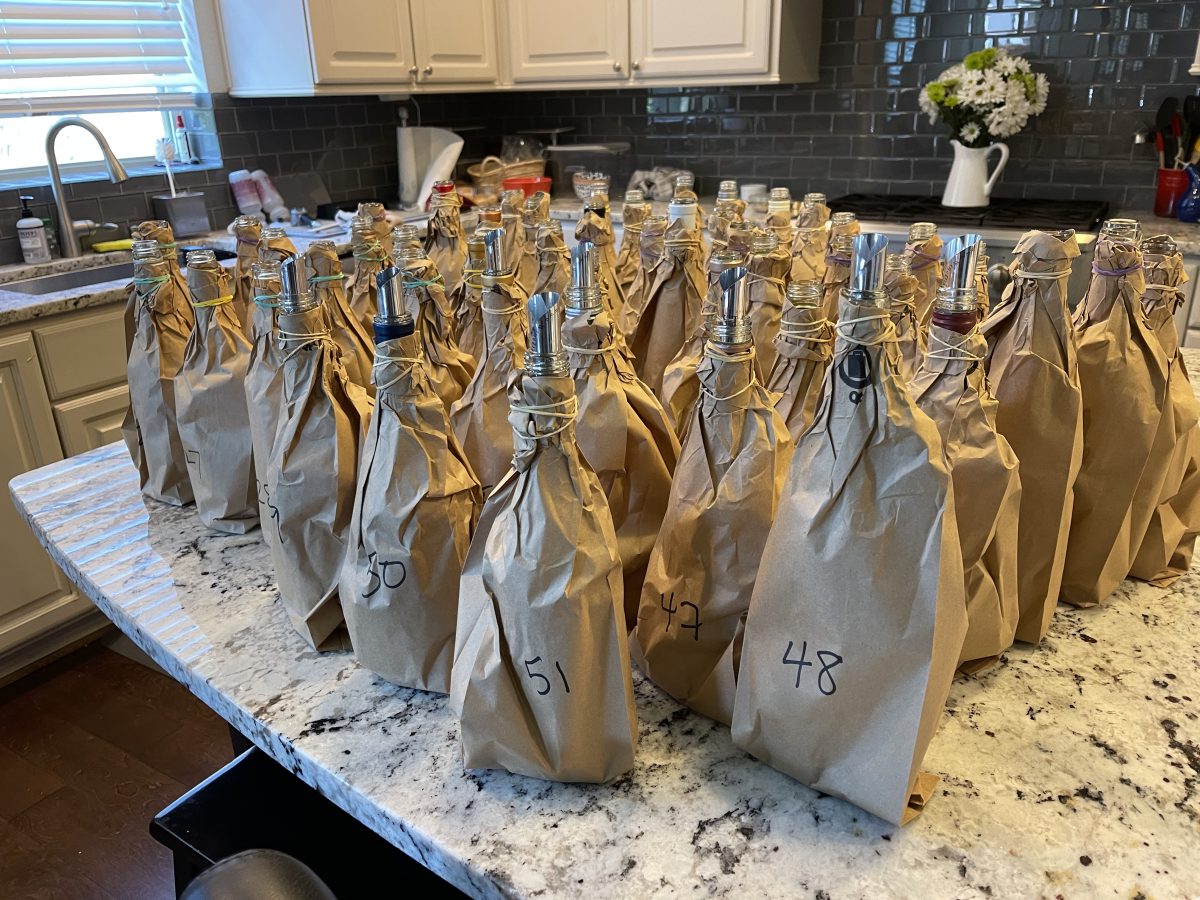
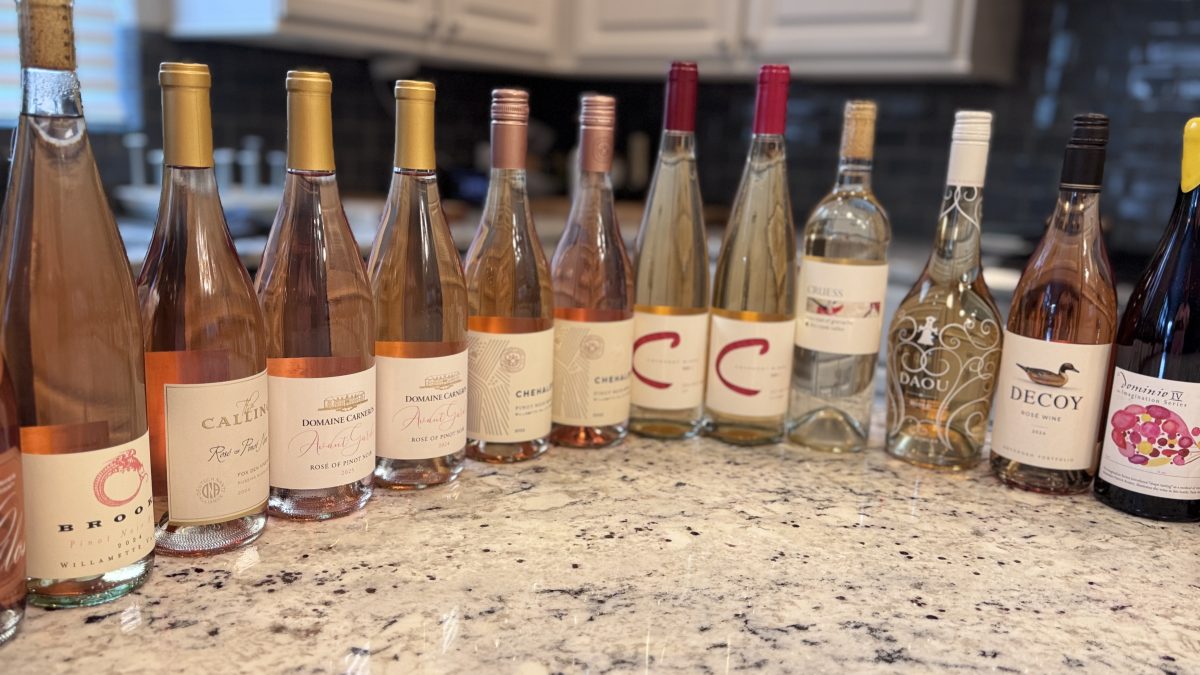
In late May, I invited a few wine professionals here in Houston to my house for what I believe to be the largest blind tasting of American True Rosés, This year we tasted 51 wines, which was one less than last year’s 52, two years ago there were 64, (in 2023 there were 53, 2022: 51, 2021: 68, 2020: 74, in 2019 there were 54, 68 in 2018, and the first year we had 36).
What is a “True Rosé”?
Well, there are essentially three ways to make a rosé wine. The first, which is rarely practiced outside of sparkling wine production, is a simple blend of red wine and white wine. The second, which is widely practiced around the world, is called the Saignée Method where shortly after a red grape crush, a portion of the grape juice (after brief contact with the skins) is bled off (“saigné” means “bled” in French). This bled-off wine is then vinified as if it were a white wine.
The third option is what I call a “True Rosé.” In this process, the grapes are raised, picked, and processed with the intention of making rosé. True Rosés are therefore not a byproduct of red wine production, they are intentionally or purposefully made. They are True Rosés.
Several years ago, just a few days after the Third Annual Largest Blind Tasting of American True Rosés, two articles landed in my inbox. The first was from the online wine publication, Vinepair, and its then Executive Editor Emily Saladino (who has since moved on to be a writer with The Wine Enthusiast and The Washington Post among others) who took a rather meandering look at the current rosé market in the U.S.
Among other puzzling points, Saladino claimed: “At this point, we have absolutely hit peak rosé.” I imagine that she meant that after several years of rather dramatic growth, the U.S. market has become over-saturated with pink wine. She continued, suggesting that the market has nowhere else to go but down since the market is now flooded with hundreds of inexpensive, “bad” rosés.
The other article, by Mitch Frank in the June 30th (2019) issue of Wine Spectator, also took a multi-faceted look at the rosé market (which frankly lacked focus, but that is another matter, perhaps). Among many of his claims, Frank suggested that the current rosé “trend” (which he posited was a step above a”fad”) had likely hit his zenith. He also seemed to imply that rosés, were less serious than other styles of Wine:
And rosé can be a lot of fun, its alluring hues often packaged with eye-catching labels and creative bottle shapes. Market research firm Nielsen claims that 40 percent of rosé consumers are women ages 21 to 34, but the pink wine audience is broader in scope-just search the hashtag “brosé.”
While both articles provided a few interesting points of view despite several unsubstantiated assertions, they seemingly based their opinions on the bottom of the market, wines that cost $10 or less. The Spectator article did mention that many of the “new” rosés on the market were saignées, which “was an afterthought, and the quality of most of it reflected that.” Neither of the pieces spent much time on the wines at the upper end of the spectrum, on intentional or True Rosés, which for me represent the best of the category, both in the present and future.
Too many continue to see rosé as a niche, a fad, a non-serious wine that does not require much thought. Well, if our tastings these past ten years are any indication, there are oodles of wines that prove that the rosés at the top of the genre should also be considered outstanding wines regardless of hue.
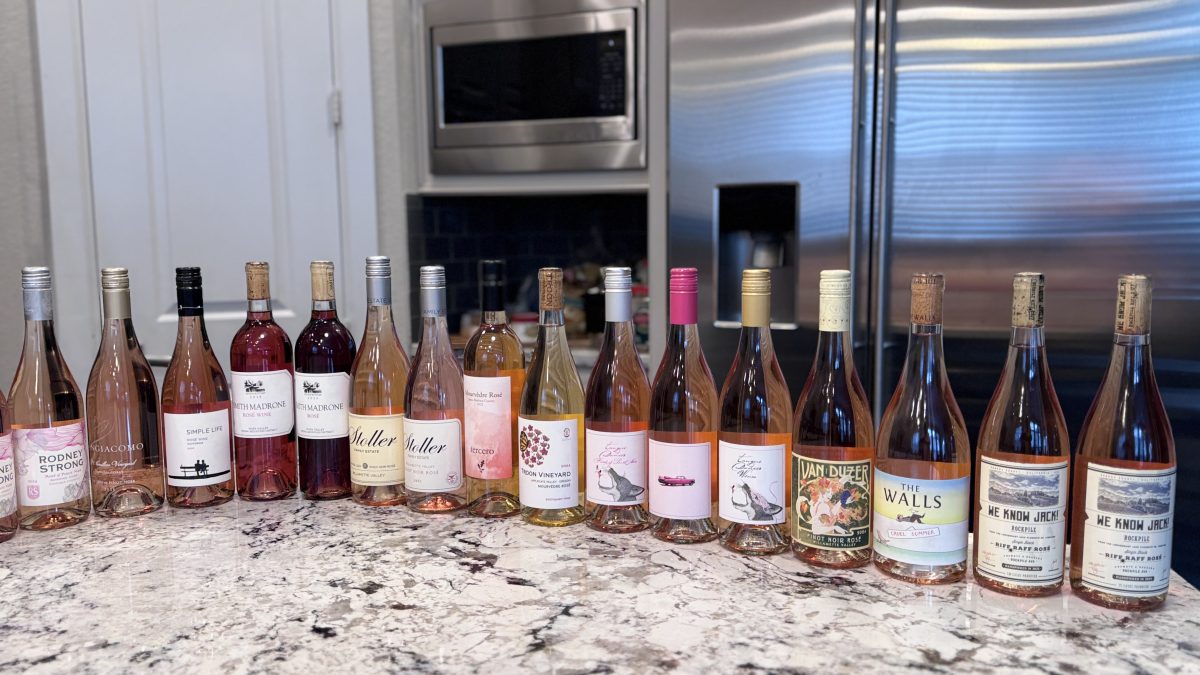
A couple of weeks ago, seven of us tried 51 American Rosés on a glorious Sunday afternoon, trying to find the best. As promised, I am publishing my actual notes from the tasting, which we tasted in 13 flights of 4 wines. Here is the third set of three flights.

2025 Stoller Pinot Noir Rosé, Willamette Valley, OR: Retail $22. Responsible Bottle (469g; 16.6oz). Under screw cap. Classic color and nose, ripe strawberry and Bing cherry, yeah, lovely. The palate might just be the prototypical rosé. Fruity, tart, balanced, layered. Really fantastic. Maybe the most complete wine thus far. Outstanding. 96 Points.
2025 We Know Jack Zinfandel Rockpile Riff Raff Jack Florence Sr. Vineyard, Sonoma County, CA: Retail $34. Very Responsible Bottle (486g; 17.1oz). True Rosé. 100% Zinfandel. Pale orange-ish pink. A bit dirty and flinty on the nose, but the fruit is a bit shy on the palate. The acidity is off the charts and really drives the wine, and it all comes together nicely by the finish. Excellent. 91 Points.
2025 Tongue Dancer Pinot Noir The Sly One Rosé, Anderson Valley, CA: Retail $35. Responsible Bottle (539g; 19oz). Saignée. Pale, medium color with a slightly dirty nose, but also with some ripe melon and a hint of cherry. Really tart and expressive on the palate, the fruit, in fact, is pretty hidden behind all that acid until just before the finish when it comes out to play. Excellent. 92 Points.
2024 Brooks Pinot Noir Rosé, Willamette Valley, OR: Retail $32. Responsible Bottle (598g; 21.1oz). True Rosé. Under cork. Ripe but also a bit mineral with loads of fruit on the nose of this light to medium colored wine. Slightly underripe strawberry, with plenty of tartness and verve on the palate, this is fantastic. Very nice. Outstanding. 93 Points.
*2023 Smith-Madrone Rosé, Spring Mountain District, Napa Valley, CA: Retail $30. Very Responsible Bottle (492g; 17.4oz). 50% Merlot, 50% Cabernet Franc. I really liked this wine the last two years of this “competition” (92 Points both years), but this wine did not show well at all this year, and the panel was all in agreement. Once it was revealed to be a Smith-Madrone, I revisited the wine and determined that this must have been an off bottle in some way. Not Rated.
2025 Domaine Carneros Pinot Noir Rosé Avant Garde, Carneros, CA: Retail $32. Responsible Bottle (519g; 18.3oz). True Rosé. Light pink with an orange tint in the glass with some cherry and strawberry on the nose. Quite fruity on the palate, with decent acidity and good body. Solid pink wine. Excellent. 91 Points.
*2024 Rodney Strong Pinot Noir Rosé, Russian River Valley, CA: Retail $25. Very Responsible Bottle (430g; 15.1oz). Under screw cap. Light pink with an orange tint (same color as the previous wine in this flight). More of a slightly medicinal note here with a tree fruit focus on the nose. Decent fruit on the palate, albeit subtle, with ample tartness and a hint of verve. Excellent. 90 Points.
*2024 Donum Pinot Noir Rosé of Pinot Noir, Carneros, CA: Retail $50. Responsible Bottle (527g; 18.6oz). True Rosé. Light pink with an orange tint (same color as the previous, which seems to be the predominant hue in this year’s tasting). Sweet, ripe melon and fresh peach on the nose with more than ample fruit and a nice tartness on the nicely balanced palate. This is a very nice rose. Excellent. 91 Points.
*2022 Stoller Pinot Noir Rosé, Willamette Valley, OR: Retail $22. Very Responsible Bottle (454g; 1lb). True Rosé. Light to medium color in the glass, again with more of an orange hue. Nice nose of mineral and melon, with a hint of cherry. Classic rosé on the palate: good fruit, nice acidity, balance, verve. Perhaps needs a bit more acidity? Very nice. Excellent. 91 Points.
2025 Tongue Dancer Pinot Noir Rosé de Ville, Sonoma County, CA: Retail $29. Responsible Bottle (540g; 19oz). Saignée. The first “pink” wine in a while with another classic rosé nose of strawberry and a touch of rhubarb. The palate verges on other-worldly with bushels of that red, luscious fruit, plenty of weight and chutzpah, a tartness that balances but also invigorates, and a finish that lingers for days. But above all else? The balance between all the elements makes this stand above the others in this tasting. Just a glorious rosé. Outstanding. 96 Points.
2024 Portree Cellars Touriga Nacional Touriga Rosé, Phillips Vineyard, Texas High Plains, TX: Retail $32. Responsible Bottle (514g; 18.1oz). True Rosé? 100% Touriga National. Every once in a while, I get really excited about a wine that I receive, and this is one of those. I acquired the bottle from a neighbor via the producer, who wanted me to try it. Outside of Portugal, one rarely sees any Touriga, and, even rarer still, as a rosé? Yeah, almost never. Dark in the glass, even really dark, in fact it is almost red with an interesting nose of really dark fruit and a funkiness that I normally don’t associate with rosé. Quite vinous and rich on the palate, this is not your typical rose, but I like it, even a lot, as the fruit is plentiful (albeit not necessarily “fresh” but more so baked), paired with the requisite tartness. This is a serious rosé. Excellent. 92 Points.
2023 Idle Cellars Rosé of Grenache, Sonoma Valley, CA: Retail $30. Very Responsible Bottle (487g; 17.2oz). True Rosé? 100% Grenache. Light, just barely any color here, but a lovely sweet nose of peach, melon, and a hint of strawberry. The palate closely mimics the nose, with a floral aspect as well, but this is certainly more of a tree-fruit driven (peach) rosé, and it is lovely. Excellent. 91 Points.
Note: Wines with one asterisk (*) were second bottles from last year’s tasting. Wines with two asterisks (**) I actually purchased to include in the tasting.
More coming soon!