As I mentioned a couple of weeks ago, I was recently approached by Laurent-Perrier Champagne to see if I would like to sample several of their iconic wines, to which I quickly responded “oui!” (I actually said “yes” as the conversation was conducted in English, but I wish I had responded in French). A couple weeks ago, I tasted the flagship La Cuvée as a bit of an introduction, and last week, I provided a brief history of the iconic house while sipping on the 2015 Millésimé.
This week, I shift to one of the three Savoir-Faire of Laurent-Perrier, L’Assemblage des vins de Réserve or the Blending of Reserve Wines.
Almost every wine, red, white, sparkling, could be considered a blend as every winemaker is generally determined to make the best wine possible. Even single varietal wines (e.g., Pinot Noir, Chardonnay, Cabernet Sauvignon) are blends as the winemaker combines wines from various lots, different clones, and assorted barrel combinations as he/she strives to elevate each wine.
In fact, it is fairly rare to find a wine that is not blended in any way; there are some, of course, but they are usually small lot, low-production wines where the winemaker only uses the fruit from a singular site.
So while just about every wine is some sort of blend, The Art of Blending reaches its zenith in Champagne, where blending wines began as a necessity, not an elevated technique. Until relatively recently, Champange was the northernmost wine region in the world, which turned out to be perfect for the production of the world’s finest sparkling wines. Due to its northernly location (much of the Champagne growing region is further north than the U.S.-Canadian border) the grapes retain high levels of acidity, an essential component of sparkling wine.
That far north location, however, also makes growing grapes in Champagne extremely difficult. Frosts in the spring are common, as are rains during harvest, and growers in the region often struggle to get their fruit as ripe as they would like. Thus, blending became paramount in Champagne, always trying to find the right combination between ripeness, acidity, and complexity.
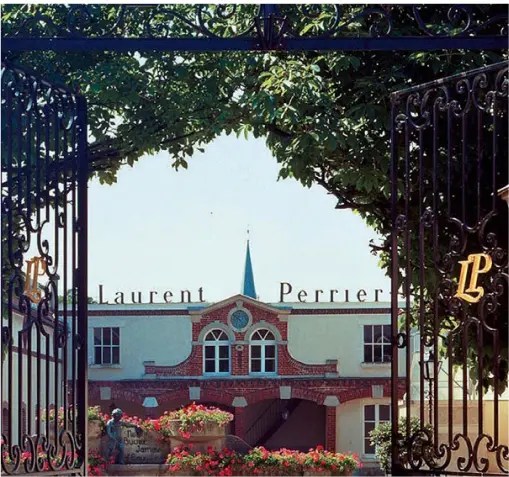
In Champagne, perhaps mores than in any other wine-growing region in the world, producers are also susceptible to climatic differences from year to year. One year might have a warm and sunny growing season, leading to a ripe and plentiful harvest, while the following year might be cold and rainy, with grapes snuggling to reach maturity.
As a result, in particularly good and plentiful years, producers in Champagne will typically hold some still wines in reserve, to blend with future vintages that might not have been as ripe or plentiful. This is why most champagnes are called “non-vintage” as the vast majority of wine produced in Champagne contains fruit from several different vintages (some houses refer to these blends as “multi-vintage”). The practice also helps to insure that each individual house can produce a consistent style for their non-vintage wines from year to year, as blending across vintages makes them less susceptible to the inconsistencies of subsequent growing seasons.
In those “better” years, most producers in Champagne will also produce a vintage champagne, with all of the fruit coming from the particular year. There is still considerable blending that occurs (once again, between different vineyards or plots within a vineyard), but all of the fruit must come from the particular harvest. And in the very best years, many producers also bottle a Tête de Cuvée (top blend) for that vintage, which is considered the particular house’s most prestigious wine. [Some Têtes de Cuvée include Dom Pérignon (Moët et Chandon), La Grande Dame (Veuve-Clicquot), Cristal (Louis Roederer).]
At this point, Laurent-Perrier diverges from the rest of Champagne. Sure, they produce vintage wines in particularly good years, but Bernard de Nonancourt, shortly after becoming the head of the house, recognized that even in great or exceptional years, each vintage had its limitations. Some had incredible freshness, others would have superior aging potential, and some years would lean toward incredible aromatics.
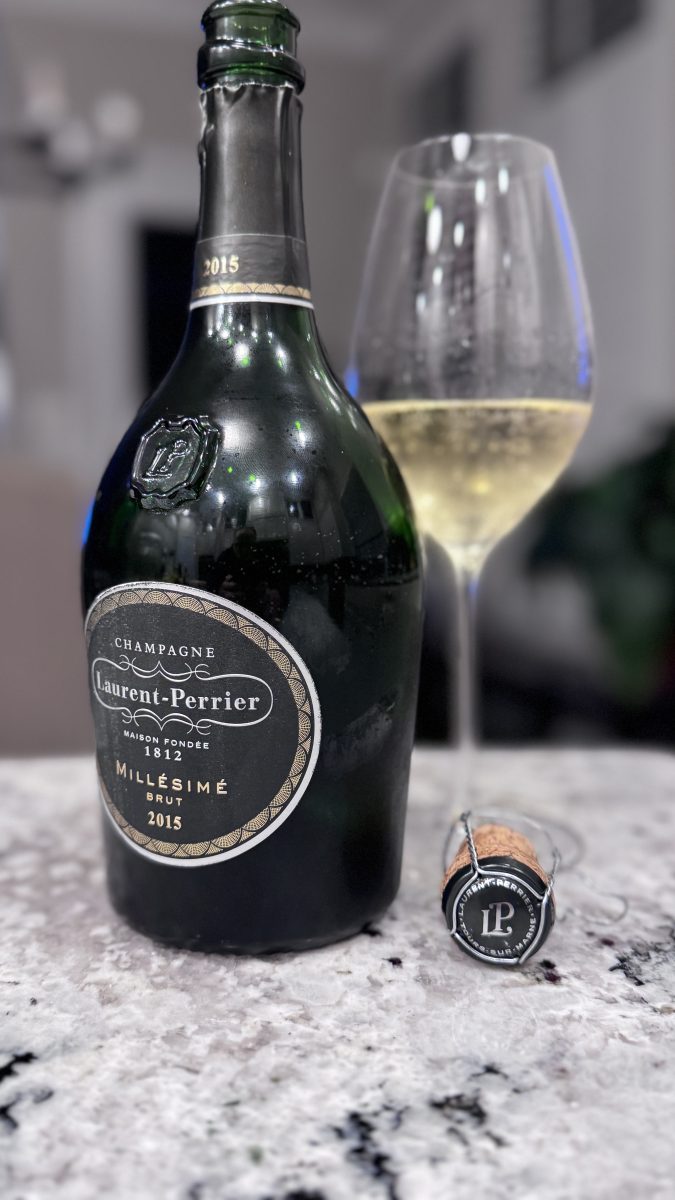
Thus, he decided that the Tête de Cuvée at Laurent-Perrier would not be limited to a single vintage but would represent what the region in general and Laurent-Perrier did better than any other wine-producing wine in the world: it would be a blend of three of the very best vintages.
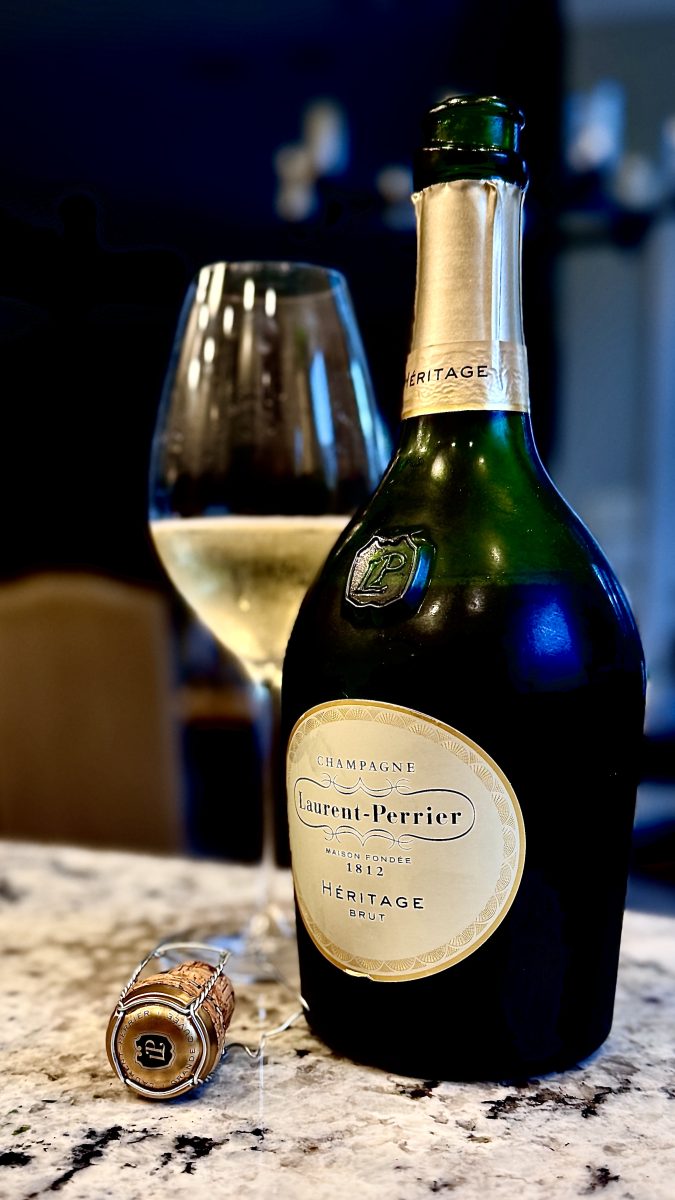
Grand Siècle, which is now on its 27th Iteration, is Laurent-Perrier’s top wine, and I will publish my thoughts on the wine in a couple of weeks. This week, I had the honor to try a relatively new cuvée from the house, Héritage, which builds upon Bernard de Nonancourt’s vision of “developing, preserving, and managing reserve wines”.
While the Grand Siècle is a blend of three vintages from 11 of the 17 Grand Cru villages in Champagne, Héritage builds on the Grand Siècle model and is a blend of Chardonnay and Pinot Noir from 40 different Crus (communes) in the region, and 50% of the blend is Grand Cru.
NV Laurent-Perrier Champagne Héritage Brut, Champagne, France: Retail $115. Extremely Heavy Bottle (). 55% Chardonnay, 45% Pinot Noir. 40 Crus of which 50% Grands Crus. This is a relatively new cuvée in the L-P lineup, developed with the same philosophy as their Tête de Cuvée Grand Siècle, albeit on a slightly broader scale. Whoa. Let me say that again. Whoa. Light straw in the glass with a gorgeous nose — mostly yeasty, croissant-y goodness, but also with oodles of fruit (pear and golden apple predominant, with a healthy citrus component), and a solid dose of salinity. Yeah. Whoa. Just when you thought you had reached the summit… The palate. Whoa. Again. Rich, layered, complex, fruity, and just loaded with fresh-baked brioche goodness. Yowza. I did not know what to expect here as I have no experience with this cuvée whatsoever, but this is gangbusters. Add into the mix, another incredible finish? This saunters into the “Best champagne of the year” conversation and it is still only April. Whoa. Outstanding. 96 Points.







Pingback: The Savoir Faire of Laurent-Perrier: The Art of Maceration | the drunken cyclist
Pingback: The Savoir Faire of Laurent-Perrier: Non-Dosage | the drunken cyclist